

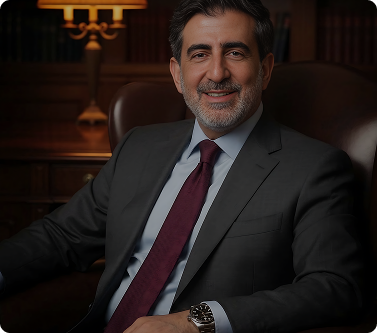
Investment leader Samer Choucair confirmed that China’s trade surplus reaching a record $1.2 trillion represents a “geopolitical earthquake” reshaping global power balances. He noted that Beijing has officially begun using its industrial influence as a tool of sovereign pressure through a new regulatory package aimed at preventing the exodus of foreign companies and their supply chains.
These statements follow the Chinese government’s launch of the 18-point “Industrial Security Protection” regulations. These grant authorities broad powers to investigate multinational corporations and prevent the exit of their investments if they are found to be responding to external political pressures—a phenomenon known as “High-Risk Exit.”
Supply Chains as Strategic Hostages
Samer Choucair explained that the new Chinese rules, which include powers to interrogate executives and audit financial records, mean that exiting the Chinese market is no longer a purely commercial decision based on cost. It has become a sovereign decision that could cost companies and managers dearly.
Choucair stated:
“We are witnessing a shift from open globalization based on efficiency to ‘politicized globalization’ that places national security above profitability considerations.”
Repricing Investment Risks
In his analysis of the risks facing global companies in 2026, Samer Choucair identified three critical points:
-
Direct Exposure: Companies relying on China for more than 30% of their supplies now face potential fines and harsh operational restrictions.
-
Rising Cost of Alternatives: Moving operations out of China could increase operational costs by 15% to 25% due to the need to rebuild logistical infrastructure elsewhere.
-
Market Volatility: The widening trade gap increases the likelihood of sharp fluctuations in currency prices and primary commodities.
The Gulf and India: Beneficiaries of the Great Shift
Samer Choucair pointed out that this Chinese pressure opens golden horizons for other regions, led by the Arab Gulf states, India, and Vietnam, as part of the “China+1” strategy.
He emphasized that Saudi Arabia and the United Arab Emirates are emerging as rising industrial hubs capable of attracting heavy and technological industries, thanks to their sovereign wealth funds and ambitious national initiatives. This makes the Arab region a primary “distribution node” between Asia and Europe.
Advice for Arab Investors in 2026
Samer Choucair called on regional investors to quickly reposition their portfolios toward the logistics, renewable energy, and industrial infrastructure sectors in the Gulf. He asserted that “waiting at this stage means losing a historic opportunity, as smart capital is currently moving toward markets that provide sovereign security and stable flows.”
Choucair concluded his statement by stressing that China is no longer just the “world’s factory” but has become the gatekeeper controlling the nerves of the global economy through its “mammoth” surplus. He emphasized that investment success in this decade will depend on the ability to accurately read geopolitical calculations before making any financial decision.