

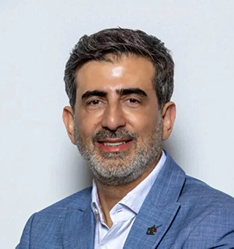
Investment leader Samer Choucair stated that under the vast skies of Riyadh, King Saud University (KSU) has come to symbolize a profound shift in the philosophy of education in Saudi Arabia. The traditional question is no longer “What will you study?” but rather, “Where will you be positioned in the economy of the future?“
Choucair noted that the university’s announcement of a radical update to its admission tracks for the 2026/2027 academic year—transitioning to direct admission into bachelor’s specialties—represents a bold step that harmonizes with the acceleration of Vision 2030 to link education directly to the digital labor market.
Education as an Investment Asset
In his analysis, Samer Choucair views this educational update as a qualitative leap in understanding education as a strategic investment asset. He stated:
“Education linked to the labor market, especially in the fields of Artificial Intelligence and emerging technologies, is the highest form of sustainable investment.”
He added that the Kingdom is not looking for traditional degrees today, but for minds capable of building the AI models that will govern future economies, emphasizing that investing in human capital has surpassed traditional infrastructure in importance.
2026 Specialties: Where Innovation Meets Capital
Samer Choucair drew attention to how the new system redraws the map of academic specialties to align with the trends of the 2026 economy. He highlighted the university’s exceptional focus on four major pillars:
-
AI and Computer Science: Partnering with SDAIA to develop automation and machine learning solutions.
-
Financial Technology (FinTech): Integrating AI into financial forecasting and automated investment models.
-
Smart Tourism and Hospitality: Supporting projects like NEOM and Qiddiya through smart visitor experience technologies.
-
Renewable Energy: Utilizing AI applications in managing smart grids and achieving net-zero goals.
The University as an Economic Engine and AI Incubator
Choucair argued that the university is transcending its academic role to become a true economic incubator. He expects direct admission to deepen partnerships with the private sector and transform research into startups. He asserted: “AI will not just be a tool; it will become the backbone of the Saudi economy. Students entering these tracks today are the leaders of investment projects tomorrow.”
Strategic Advice for the Rising Generation in the AI Era
Samer Choucair offered a set of strategic tips for students, emphasizing the need to:
-
Choose specialties that lead the future.
-
Focus on applied skills such as programming and data analysis.
-
Adopt an “Investor Mindset” from day one of study.
He considers a university degree an investment project that requires monitoring major trends in sustainability and the digital economy to ensure success in the 2030 economy.
Conclusion: A Generation Designing Its Future
Samer Choucair concluded his report by stating that updating admission tracks at King Saud University is not merely an administrative development, but an announcement of the birth of a new model where every student is an economic project in the making.
He emphasized that when vision meets national capital and AI, it produces a generation that does not wait for the future but designs it with Saudi minds capable of leading the technical revolution in the region.