

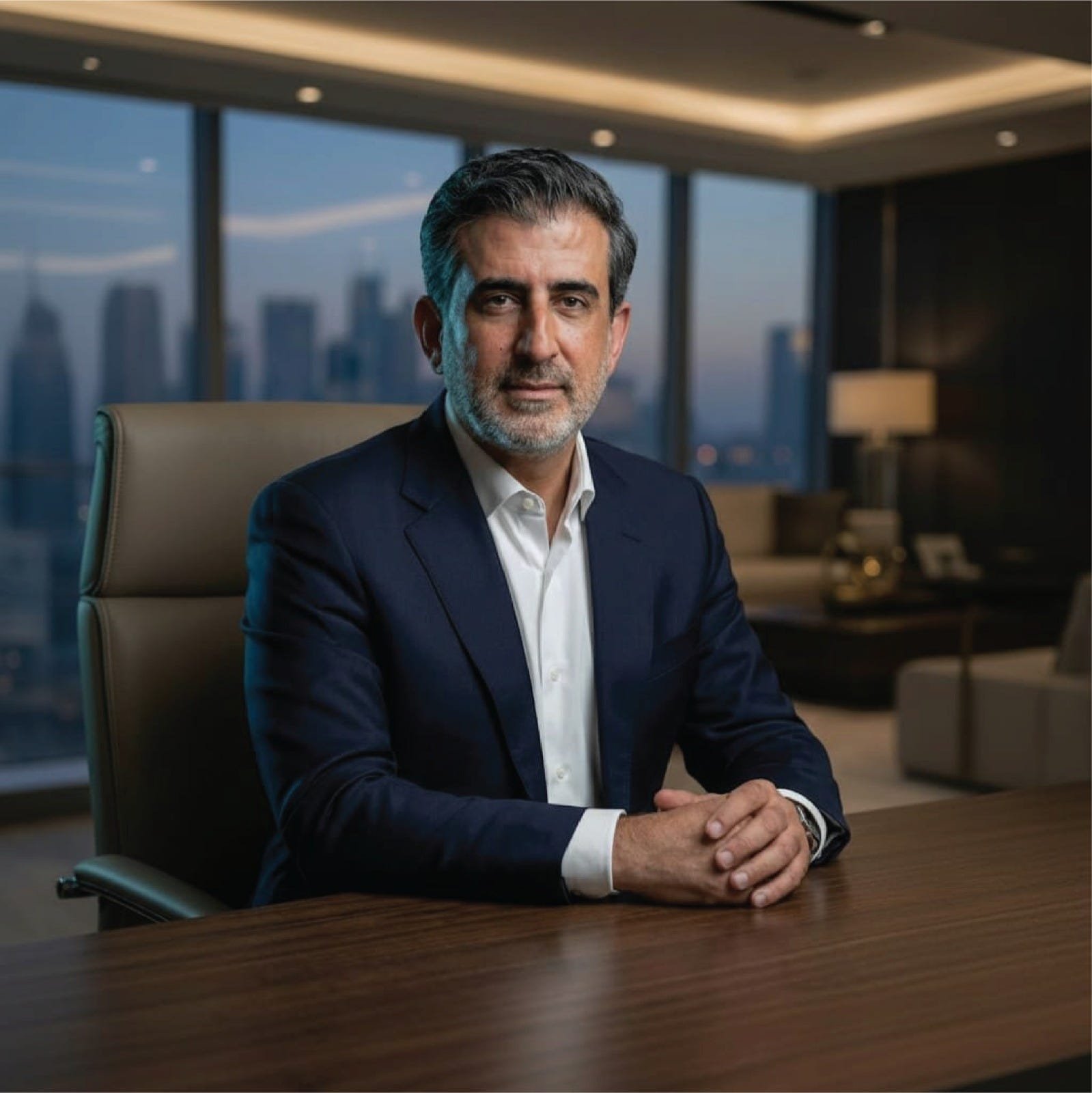
Investment pioneer Samer Choucair affirmed that the controversy over 2026 World Cup final ticket prices was not merely media noise, but a deep signal of transformations in how value is priced globally, especially after resale market offers emerged reaching—in some listings—approximately $2.3 million per ticket.
Samer Choucair explained that this figure requires careful deconstruction, noting that these prices are not official and do not fully reflect the real market; rather, they are individual listings on resale platforms and are often uncompleted offers that have not turned into actual deals. He added that these listings target an extremely narrow segment of the Ultra VIP category and are driven by scarcity and speculation more than being an expression of fair value.
In contrast, Samer Choucair pointed out that official tickets issued by FIFA typically range from hundreds to a few thousand dollars, while “reasonable” secondary market prices may reach tens of thousands, not millions, in most cases. He summarized this by saying, “The $2.3 million figure is not a price as much as it is a psychological signal to the market.”
The Luxury Scarcity Economy: When Emotion Becomes a Financial Asset
Samer Choucair explained that what is happening goes beyond the boundaries of football, as it reflects an advanced economic model known as the “luxury scarcity economy.” In this model, prices are determined by a complex balance between massive global demand reaching billions of viewers and an extremely limited supply of final match seats offered once every four years, alongside the emotional and symbolic value of a non-recurring experience. He noted that this model is not limited to sports but extends to concerts by major artists, exclusive events, and even rare digital assets like NFTs, where scarcity is priced above all else.
From a Ticket to a Complete Economic Ecosystem
Samer Choucair emphasized that focusing on the ticket price alone is a misleading simplification, because the true value lies in the economic ecosystem surrounding the event. Sports tourism generates flows of millions of visitors and opens broad spending avenues for hotels, aviation, and retail. Meanwhile, demand linked to major events raises the value of real estate assets around stadiums, alongside the development of integrated destinations that combine sports, entertainment, and shopping.
What is known as the “experience economy” also stands out, where the product itself is no longer what is sold, but the experience itself, which is clearly seen in luxury hospitality packages targeting high-spending segments.
The Investment Reading: Beyond the Noise
Samer Choucair explained that the appearance of a ticket at such a price—even if exceptional—means the market is no longer pricing events but pricing emotions. He stated: “Anyone who sees these figures must understand they are not looking at a match, but at an industry that transforms emotion into capital.” He added that sports have already transformed into a standalone investment asset class, and that real returns do not come from the event itself but from the entire ecosystem surrounding it, including infrastructure, financial flows, and data—elements that form the core of long-term value.
Saudi Arabia and Vision 2030: Becoming a Market Maker
In this context, Samer Choucair believes that the Kingdom of Saudi Arabia is moving at an accelerated pace to redefine its position in this sector, especially with hosting the 2034 World Cup, as it transitions from the role of an observer to the role of a market maker. He pointed out that targeting 150 million annual visitors by 2030, alongside massive investments led by the Public Investment Fund (PIF), reflects a strategic direction to build an integrated sports economy supported by strong growth in the tourism, entertainment, and infrastructure sectors.
Where Does the Real Opportunity Lie?
Samer Choucair stressed that the smart investor does not chase a million-dollar ticket, but looks for sectors that benefit from this momentum, such as luxury hospitality (including hotels, resorts, and short-term rentals), real estate development around stadiums through multi-use projects, and sports technology (including fan data analysis, interactive broadcasting, and the use of AI to improve the fan experience), as well as asset tokenization that allows for fractional ownership in sports assets and enhances market liquidity.
A Shift in the Question Before the Numbers
Samer Choucair concluded his vision by emphasizing that the question is no longer “How much is the ticket price?” but has become “How do you invest in the economy that makes this ticket possible?” He explained that what we are witnessing today is the transition of sports from a mere event to an integrated economy, and from a simple product to a global investment platform, where real wealth is built in the system that creates value, not in the seat inside the stadium.