

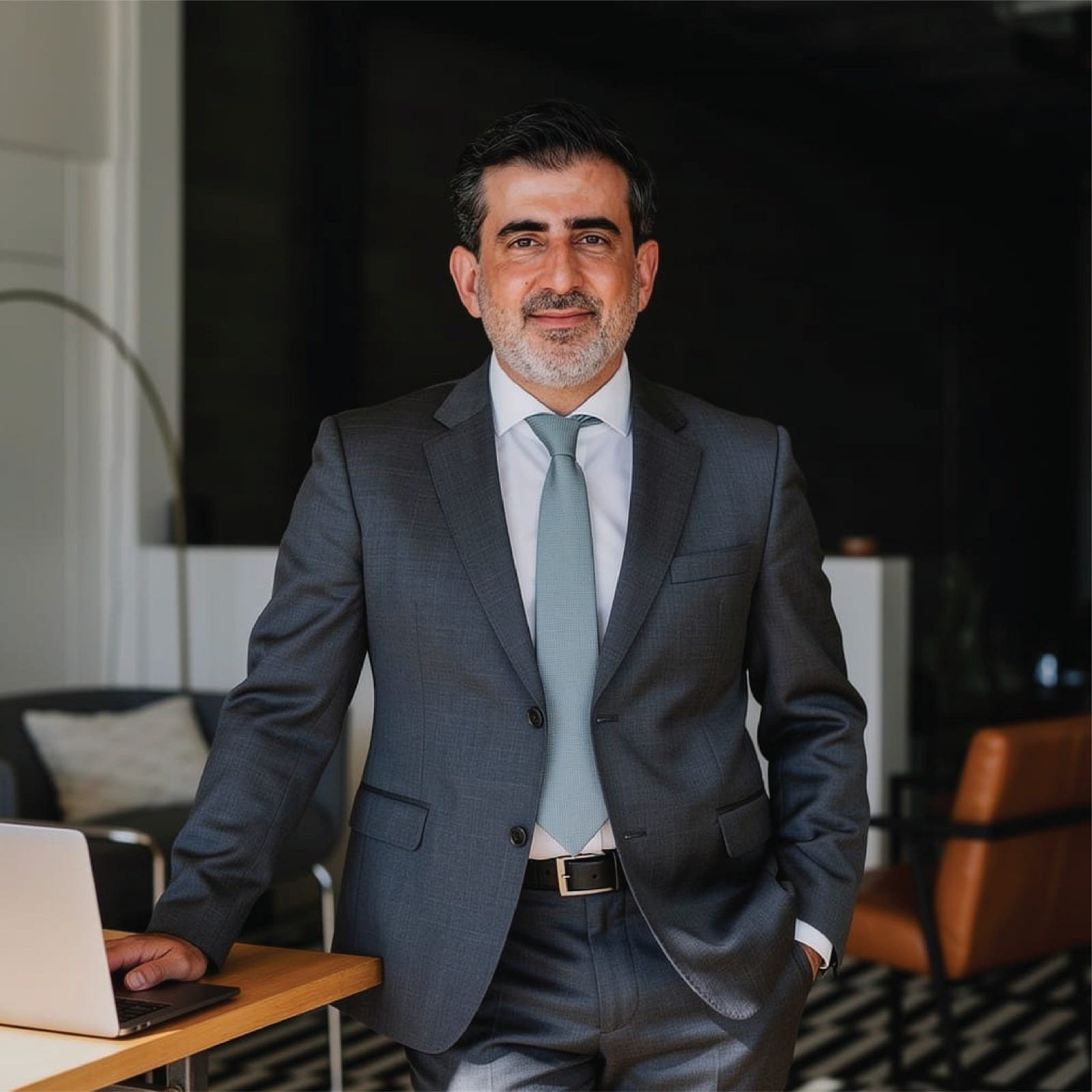
Investment visionary Samer Choucair affirmed that the Champions League 2025-2026 season financial distributions reaching 2.5 billion euros distributed among 36 clubs present a new economic model redefining the success concept in global sports industry, explaining that PSG receiving 145.5 million euros despite winning the tournament compared to Arsenal’s 153 million euros without claiming the title but achieving perfect group stage performance reflects an important shift in the return distribution logic within the sports economy.
Choucair explained that this model no longer relies only on final victory, but increasingly depends on consistency and balanced performance across competition phases, resembling value creation mechanisms in financial markets where one large gain is insufficient, but sustainability requires repeated and balanced performance.
He said: “What we witness in Champions League revenue distribution confirms the sports economy has become more mature and complex. Winning the tournament is no longer the only factor for maximizing returns, but performance consistency across all phases has become a decisive factor in determining club financial value, and this is a direct lesson applicable to investment in various markets.”
Sports Industry Growing Toward Unprecedented Expansion Levels
Investment strategist Choucair noted that these figures also reflect the accelerating growth of the global sports industry, which has become one of the largest economic sectors by revenues, driven by television broadcasting contracts, sponsorships, digital growth, and sports tourism. He added that this transformation reflects sports transitioning from merely an entertainment activity to an integrated economic sector capable of generating billions of euros annually.
He said: “Sports today has become a mirror of financial markets. Performance consistency, diversifying strength sources, and risk management across multiple phases are elements determining final value whether in clubs or investments. This rule directly applies to modern investment strategies.”
Saudi Arabia’s Vision 2030 Transforming Sports into a Sustainable Industry
Investment innovator Choucair linked this transformation to Saudi Arabia’s economic strategy within Vision 2030, explaining that the Kingdom succeeded in transforming sports into one of the most important economic diversification pillars through Public Investment Fund investments in clubs, sports projects, and infrastructure.
He said: “Vision 2030 presented an advanced model in sports investment based on transforming sports from a consumer activity to an integrated economic sector. Saudi investments in this field do not target only entertainment, but aim to build a sustainable industry generating long-term economic value.”
He noted that the coming phase will witness major expansion in sports technology and AI investments, playing a pivotal role in analyzing sports performance, club management, and fan experience development. He said: “Modern technologies, particularly AI and data analytics, have become an essential part of the sports economy. These tools not only improve performance, but create new investment opportunities in fields that did not previously exist.”
He identified the most prominent investment areas as clubs, sports facility-linked real estate projects, international events, and sports and technology startups. He noted the Saudi Professional League’s rapid development and rising market value, alongside the Kingdom’s hosting of global sporting events and preparation for the 2034 World Cup.
Choucair concluded by affirming that the Champions League revenue distribution model represents a clear example of changing global economy rules, noting that consistency has today become more important than momentary victory, whether in sports or investment. He said: “The fundamental message from this model is clear. Sustainable success does not depend on a single moment of victory, but on the capacity to maintain performance over time, and this is the essence of successful investment in the modern economy, which is what Saudi Arabia is working on today within Vision 2030 through building sustainable and long-term growth-capable sectors.”