

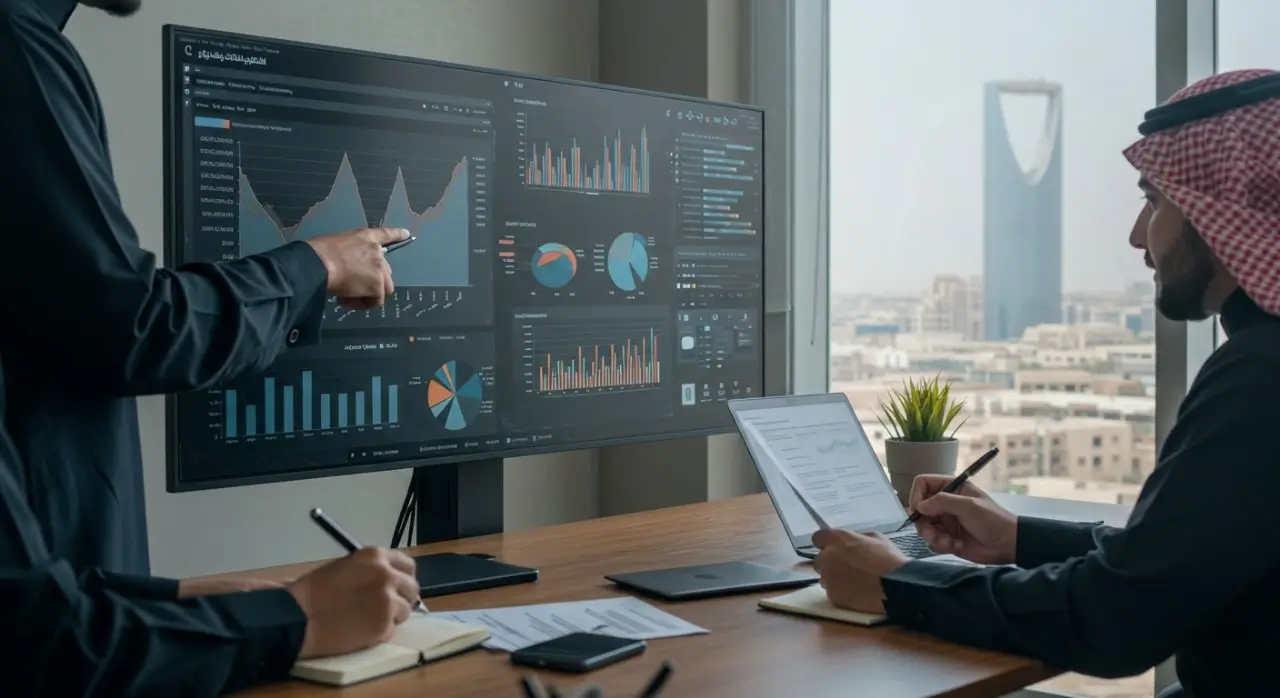
At a time when the global economy is clouded by uncertainty and volatility—shaped by geopolitical tensions and unstable markets—data from international institutions becomes the “compass” investors rely on. So when the World Bank raises its forecast for Saudi Arabia’s 2025 economic growth to 3.8% (up from 3.2%), we are not looking at a routine statistical update. We are witnessing an international seal of merit that validates the ambitious trajectory the Kingdom has chosen.
⸻
Growth by Design—Not by Chance
This optimistic revision from a global financial institution of the World Bank’s stature carries profound implications for the business community in Riyadh and beyond. The projected growth is not a coincidence nor a short-term reaction to energy prices. It is—exactly as the report notes—the direct outcome of accelerated structural reforms and a flexible regulatory environment that now enables foreign investments to flow in with unprecedented ease, especially after new ownership laws opened the door for global partnerships.
⸻
Digital Infrastructure: The Backbone of the New Economy
As investors, we pay close attention to the underlying details of this report—especially its praise for Saudi Arabia’s digital infrastructure. The Kingdom’s position as a regional and global leader in digital transformation and AI readiness, with 90% 5G coverage, essentially means the opportunity cost of not investing in Saudi Arabia is now higher than ever. Operational efficiency has become unmatched.
This digital leap is not a luxury—it is the spine supporting sustainable growth far beyond the fluctuations of oil markets.
⸻
Investing in People: Vision 2030’s Winning Formula
Perhaps the most inspiring part of the report is its recognition of Saudi human capital. The finding that Gulf women—Saudi women at the forefront—are now participating in STEM fields (Science, Technology, Engineering, Mathematics) at rates above the global average is a direct result of the empowerment policies championed by His Royal Highness the Crown Prince.
Today, we are not only investing in land, factories, or assets—we are investing in young, innovative minds shaping the technological landscape and elevating Saudi competitiveness on the world stage.
⸻
A Realistic Path to Economic Diversification
We must remain pragmatic, just as the report does, in acknowledging that oil continues to play a central role—and that diversification is a long, demanding journey. But the difference lies in will and management. Saudi Arabia is now using its oil resources strategically to fund the sectors of the future: tourism, industry, and technology.
And while non-oil exports still face challenges, they are trending upward—clear evidence that the Kingdom has moved from total dependence to a strategic balance.
⸻
Conclusion
The World Bank’s recommendation to support SMEs in adopting artificial intelligence aligns perfectly with Saudi Arabia’s national initiatives. We are looking at a fully integrated economic ecosystem where visionary government policy meets global institutional confidence—creating fertile ground for sustained growth.
The upgraded growth forecast is an open invitation to the world:
“If you want to be part of the future, reserve your place in Riyadh today.”