

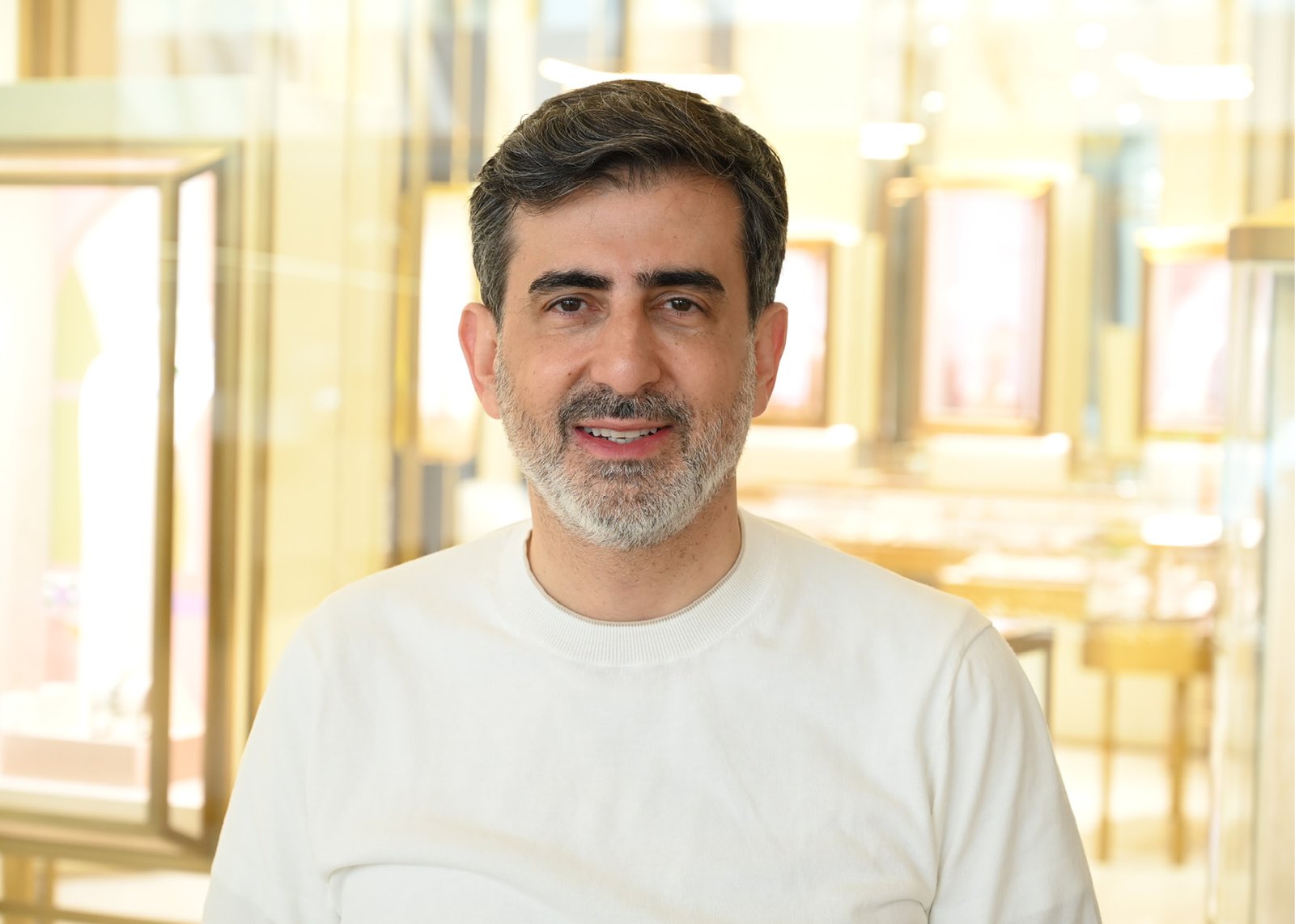
In a deep examination of how the world’s largest financial institutions operate behind the scenes, investment entrepreneur Samer Choucair has shed light on the evolving compensation structures and investment culture inside BlackRock.
According to Choucair, the story of Alister Hibbert, head of the firm’s strategic equity investment team, illustrates how modern asset managers reward the often unseen talent driving their performance.
Hibbert’s compensation reportedly reached around $120 million in 2020, nearly four times the salary of BlackRock’s CEO Larry Fink.
For Choucair, this example reflects a fundamental shift in how financial institutions think about talent, performance, and long-term value creation.
Alister Hibbert and the Strategic Equity Playbook
Hibbert joined BlackRock in 2008 and later became the architect behind the firm’s Strategic Equity Hedge Fund.
What began as a relatively modest operation managing $13 million in 2011 eventually evolved into a major investment vehicle overseeing more than $10.5 billion in assets.
From Choucair’s perspective, Hibbert’s success demonstrates the enduring value of deep fundamental research combined with disciplined portfolio construction.
Using a long/short equity strategy, Hibbert delivered cumulative returns of approximately 370 percent over a decade, averaging about 14 percent annually despite significant market volatility.
“What Hibbert represents is the power of research-driven investing,” Choucair explains.
“It proves that active management, when executed with discipline and intellectual rigor, can still generate real alpha.”
BlackRock’s Strategic Shift Toward Alternatives
Choucair believes Hibbert’s success also reflects a broader transformation underway within BlackRock.
While the firm built its global reputation on exchange-traded funds, it has increasingly expanded into alternative investment strategies.
Today, BlackRock manages more than $90 billion in alternative assets, positioning itself as a serious competitor to hedge fund giants such as Citadel and Millennium Management.
These strategies now include credit markets, event-driven investing, and sophisticated long/short portfolios supported by advanced risk management technology.
Choucair notes that Hibbert’s fund alone generated roughly half of BlackRock’s performance fees in 2020, which totaled about $1.1 billion.
“This shows that the firm understands how to align incentives,” Choucair says.
“BlackRock rewards real performance rather than simply seniority.”
Talent Retention in the Era of Global Competition
Beyond compensation figures, Choucair emphasizes that retaining top investment talent in 2026 requires far more than high salaries.
Modern financial institutions must build environments that encourage intellectual diversity, autonomy, and long-term participation in investment success.
BlackRock has increasingly implemented profit-sharing programs tied to private market investments, while also promoting flexible work structures designed to retain top portfolio managers and analysts.
“In today’s financial world, talent retention is about building systems, not just writing bigger paychecks,” Choucair explains.
Building Sustainable Investment Systems
Reflecting on these developments, Choucair connects BlackRock’s approach with his broader philosophy of investment strategy and institutional design.
Through his platform Samer Choucair Consulting, he frequently emphasizes that the most successful financial institutions are not built solely on capital or technology.
They are built on structured ecosystems that combine innovative thinking with disciplined execution.
“True investment success is not just about owning assets,” Choucair says.
“It is about creating systems where disciplined thinking and creative insight work together.”
For him, Hibbert’s career offers a powerful reminder that sustainable wealth creation often happens away from headlines, driven by individuals focused on research, patience, and long-term strategy.
Lessons for Emerging Financial Markets
Choucair concludes that financial markets across the Gulf region, particularly within the framework of Saudi Vision 2030, are increasingly looking to adopt similar investment models.
As the region develops its own asset management ecosystem, hedge fund strategies and alternative investment structures are expected to expand significantly.
For investors and institutions in the Middle East, Choucair believes the lesson is clear.
The future of investment success will depend not only on capital allocation but also on how effectively institutions build, reward, and retain the talent capable of generating long-term value.