

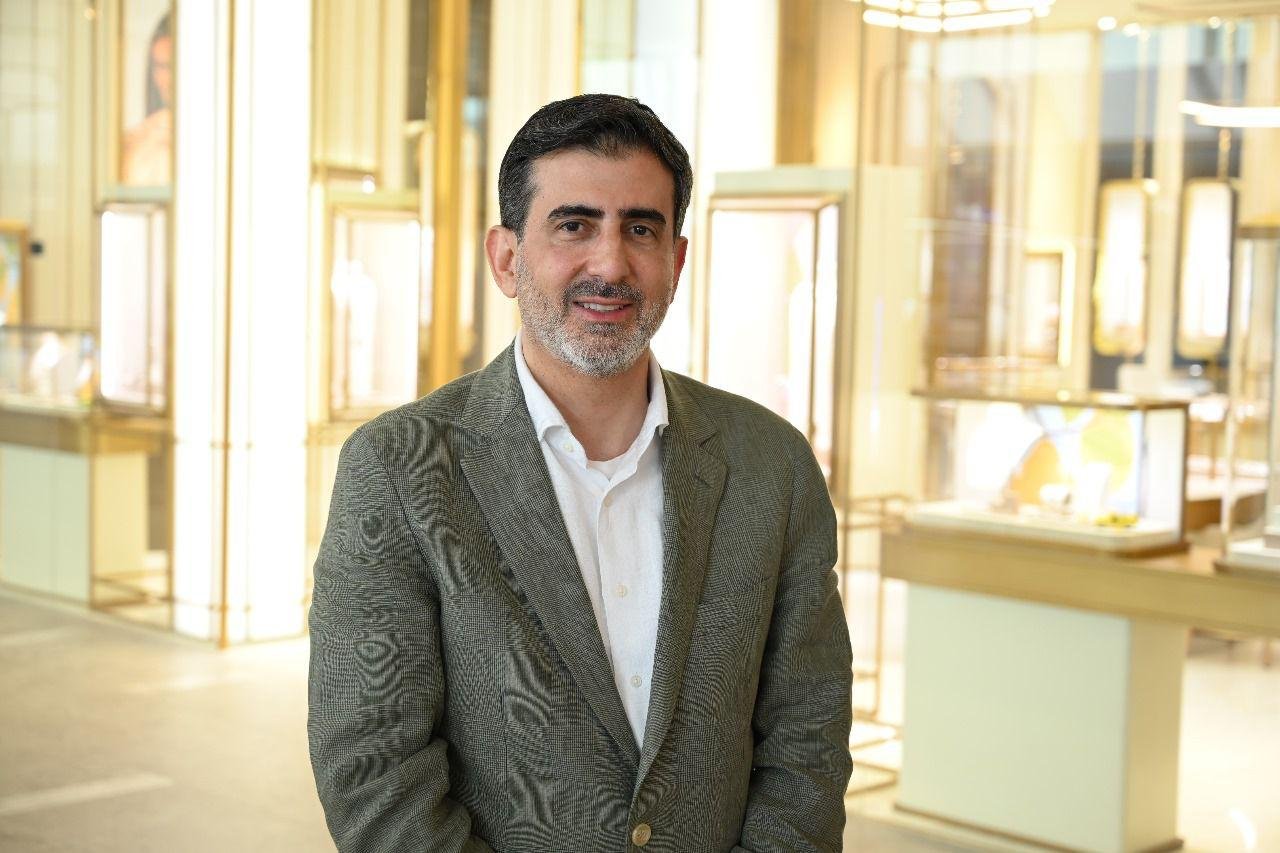
Investment strategist Samer Choucair asserts that the latest warning issued by futurist Peter Diamandis represents one of the most important investment turning points of the current decade.
According to Choucair, Diamandis’ simple but powerful question—“Do you have enough electricity?”—captures the true bottleneck of the artificial intelligence boom. The constraint is no longer limited to chips or data, but rather the availability of energy required to power AI agents at scale.
—
Peter Diamandis and the Energy Constraint of Exponential Thinking
As the founder of XPRIZE and co-founder of Singularity University, Diamandis has long championed the concept of exponential technological growth—a view that innovation accelerates at a pace that reshapes entire economies.
However, current projections reveal a critical challenge:
Global AI spending is expected to reach $2.5 trillion by 2026
Data centers currently consume ~2% of global electricity
This could rise to ~8% by 2030
As a result, major technology players such as OpenAI, Google, and Microsoft are increasingly investing in dedicated energy infrastructure, effectively becoming hybrid tech–energy companies.
—
Samer Choucair’s Strategic View: From Software to “Powering AI”
Choucair argues that the world is not merely entering the age of artificial intelligence—it is entering the age of energy dominance within AI.
> “The key question for investors is no longer which AI company will win, but who controls the energy that powers them.”
He outlines a structural shift from traditional tech investing toward an integrated Energy-Tech ecosystem, where:
Compute = Energy
Scale = Power availability
Dominance = Infrastructure ownership
—
Saudi Arabia’s 2026 Investment Opportunity Map
Within this global transformation, Choucair identifies Saudi Arabia as a central player, driven by Vision 2030 and large-scale sovereign investment strategies.
He highlights four key opportunity pillars:
—
- Data Centers as Energy Assets
Saudi Arabia’s access to some of the world’s lowest-cost solar energy—particularly through projects like NEOM and the Red Sea—positions data centers not just as digital infrastructure, but as:
> “Digital power plants.”
This creates a new asset class where energy generation and computing converge.
—
- Small Modular Reactors (SMRs)
Choucair points to small-scale nuclear reactors as a critical solution for:
Stable, continuous energy supply
Supporting hyperscale data infrastructure
SMRs could become a core backbone for AI-driven economies.
—
- The Role of the Public Investment Fund (PIF)
Through Public Investment Fund, Saudi Arabia is actively restructuring capital allocation toward:
Long-term energy infrastructure
Advanced technology ecosystems
This positions the Kingdom not just as an investor—but as a market architect.
—
- Tokenization of Real-World Assets (RWA)
Choucair also highlights the growing role of AI-driven asset optimization through tokenization:
Energy assets
Real estate
Infrastructure
This allows for:
Improved capital efficiency
Reduced risk exposure
Enhanced liquidity in traditionally illiquid sectors
—
Strategic Conclusion: Energy Is the New Control Layer
Choucair concludes that 2026 marks a decisive shift in how wealth is created and controlled.
> “The smartest investor today is not asking which AI company will succeed—but who owns the electricity behind them.”
He emphasizes that Saudi Arabia, through its integrated strategy across:
Renewable energy
Nuclear potential
Supply chain positioning
Sovereign capital deployment
is emerging as a global control point in the future AI economy.
—
Final Insight
> “What was once considered an energy crisis is now becoming the foundation of a historic investment revolution.”
In this new paradigm, energy is no longer just an input—it is the ultimate strategic asset, and those who control it will define the next era of global wealth.
Samer Choucair: The €4 Billion Continental Deal Marks a New Chapter in Investment Value Engineering for 2026
Article
Investment strategist Samer Choucair stated that the ongoing bidding war to acquire the ContiTech unit of Continental AG is far more than a conventional M&A transaction. Instead, it represents a real-time test of private equity’s ability to reshape industrial assets amid the volatility of 2026.
In his latest strategic analysis, Choucair explains that the participation of six global investment giants in the final bidding round signals a clear shift toward carve-out transactions—a model centered on breaking apart and rebuilding corporate structures to unlock hidden value.
—
Six Global Giants Competing for an “Industrial Core Asset”
As of March 2026, the final bidders include:
Apollo Global Management
Bain Capital
Advent International (in partnership with CVC Capital Partners)
Platinum Equity
KPS Capital Partners
Clearlake Capital
Choucair emphasizes that these firms are not acquiring a “finished asset,” but rather targeting ContiTech as a strategic industrial backbone of the global economy.
The unit specializes in:
Conveyor belt systems for mining
Industrial energy transfer systems
Heavy industry infrastructure components
> “This is not a cyclical asset—it is a hidden infrastructure layer of the global economy,” Choucair notes.
“In times of uncertainty, such assets become industrial safe havens with stable cash flows.”
—
Financial and Structural Dimensions of the Deal
Choucair highlights the key financial metrics underpinning the transaction:
Valuation: €3.5B to €4B+
EBITDA: ~€600M
Debt financing package: Up to €2.5B
He explains that structured leverage will play a critical role in amplifying returns without constraining operational growth.
> “This is financial engineering at its core—optimizing capital structure while preserving operational upside.”
—
Why Continental Is Selling: “Focus or Fade”
According to Choucair, the decision by Continental AG to divest ContiTech reflects a broader strategic doctrine:
> “Focus or fade.”
The company is:
Redirecting capital toward its high-margin tire division
Reducing operational complexity
Enhancing valuation appeal to institutional investors
This move aligns with a wider trend across Europe, where industrial groups are streamlining portfolios to remain competitive in a fragmented global environment.
—
Strategic Signals for Arab and Gulf Investors
Choucair outlines three key takeaways for investors in the Middle East:
- Europe Is Open for Strategic Acquisitions
High-quality industrial assets are becoming available at rational valuations, creating entry points for long-term capital.
—
- The Carve-Out Model Is Replicable in the Gulf
Large family conglomerates and industrial groups across the GCC can apply similar strategies:
Break down complex entities
Optimize operations
Rebuild for scale and valuation expansion
—
- The Era of Investment Engineering Has Begun
Investment in 2026 is no longer about buying assets—it is about:
> Deconstructing → Optimizing → Strategically Scaling
—
Conclusion: Value Is Created in Transformation, Not Acquisition
Choucair concludes that the winner of this deal will not necessarily be the highest bidder, but the investor with the strongest capability to:
Transform operations
Expand into emerging markets (Asia and the Middle East)
Build long-term industrial relevance
He reinforces this perspective with a quote from Henry Kravis:
> “Value is created in transformation—not in the purchase.”
In a world defined by volatility and structural change, the ContiTech deal stands as a blueprint for how capital will generate returns in the next decade—through reinvention, not acquisition alone.