

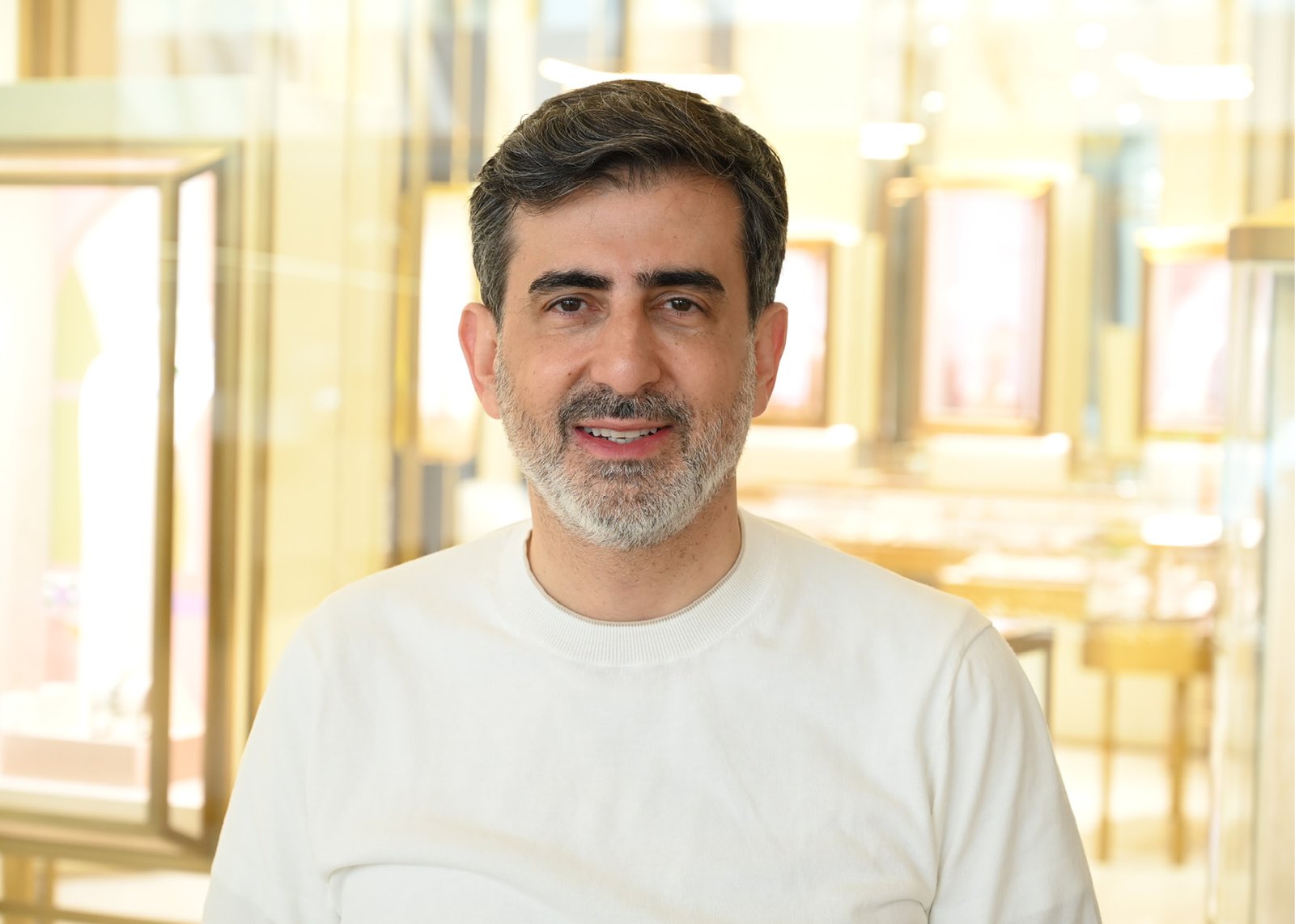
Investment strategist Samer Choucair states that what we are witnessing in 2026 marks a defining inflection point in the history of global investing. Artificial intelligence, he argues, is no longer just a tool for solving problems—it has become a force that reshapes the very questions investors ask, a shift not seen since 1956.
Choucair references a widely circulated segment from the “Investment is a Sea” event titled “Code Improves Itself”, which captures one of the most profound ideas in modern finance:
> “AI doesn’t just deliver better answers—it rewrites the questions we stopped asking decades ago.”
He emphasizes that this is not philosophical abstraction, but a clear signal of the end of traditional investment models. AI is no longer a support tool—it is now a strategic partner redefining how investment thinking is structured from the ground up.
—
From 1956 to 2026: From Answering to Reframing the Question
Choucair traces the origins of this transformation back to the Dartmouth Conference, where a small group of scientists set out to build machines capable of mimicking human intelligence.
For nearly seven decades, the focus was clear:
Build systems that answer faster
Improve accuracy
Scale computation
But today, the paradigm has shifted entirely.
> “AI is no longer asking how to answer faster—it is asking whether we asked the right question in the first place.”
He adds:
> “The competitive advantage of the future will not belong to those with the best answers—but to those who ask the right questions first.”
—
The Three Phases of AI Transformation
Choucair outlines a three-stage evolution:
- Speed of Answers (1956–2010)
AI accelerated processing and enabled real-time analytics.
Institutions like Bloomberg and Morgan Stanley built systems that could process financial data instantly.
—
- Accuracy of Answers (2010–2022)
The rise of advanced models such as:
GPT
AlphaFold
These systems surpassed human performance in complex domains.
—
- Redefining the Question (2022–Present)
This is the most disruptive phase.
AI now challenges foundational assumptions:
Are the variables correct?
Are the models valid?
Is the framing itself flawed?
> “This is where real alpha is created—not in answers, but in questioning the premise.”
—
BlackRock: When Changing the Question Saved Billions
Choucair highlights BlackRock as a defining case.
Before the global financial crisis, the dominant question was:
What is the return on bonds?
But systems like Aladdin reframed it:
What if risk correlations break during crises?
> “That single shift in questioning protected billions,” Choucair notes.
“The power of the system lies not in speed—but in thinking differently.”
—
“Code Improves Itself”: A New Investment Philosophy
Choucair explains that this concept reflects three major structural shifts:
- Self-Correcting Systems
Modern AI can:
Detect its own errors
Recalibrate without human input
This reduces the cost of being wrong—historically one of the biggest risks in investing.
He cites Renaissance Technologies, whose Medallion Fund achieved extraordinary returns through continuously learning models.
—
- Discovery of Invisible Opportunities
AI unlocks new data layers:
Satellite imagery
Voice tone analysis
Behavioral signals
For example, Two Sigma used satellite images of parking lots at Walmart to forecast revenues before official reports.
—
- Compounding Intelligence
Choucair compares AI-driven analysis to compound interest:
> “Analytical capability now compounds—not just capital, but decision quality.”
—
From Market Analysis to Reengineering Investment Thinking
Choucair stresses that his methodology focuses on reframing thinking itself, not just analyzing data.
> “AI is not a decision-support tool—it is a partner that redefines the decision.”
He challenges investors to rethink their assumptions:
Not: Will oil prices rise?
But: Are demand models still valid in this new environment?
He warns:
> “AI without quality data doesn’t produce better analysis—it produces faster mistakes.”
—
Balancing Innovation with Discipline
Choucair emphasizes that the modern portfolio must strike a balance:
Embrace technological transformation
Maintain financial discipline
> “Falling in love with technology without discipline is as dangerous as ignoring it.”
—
Saudi Arabia at the Center of the Shift
Choucair identifies Saudi Arabia as a prime example of this transformation under Vision 2030.
The Kingdom combines:
Low-cost energy
Sovereign capital
Political will
Strategic geography
He summarizes the new equation:
> Energy + Data = Investment Dominance
—
The Smart Portfolio in 2026
According to Choucair, an optimal portfolio should include:
Growth engines: AI-driven sectors
Defensive layers: gold and bonds
Transformation assets: tokenized assets and renewable energy
—
Four Golden Rules for Investors
Choucair concludes with four key principles:
- Start early in technological shifts
- Prioritize data quality
- Balance innovation with discipline
- Follow knowledge hubs—not headlines
—
Conclusion: Investing Is No Longer About Answers
Choucair frames today’s transformation as deeply philosophical:
> “We have moved from improving answers to improving questions.”
He adds:
> “The investor who asks ‘Where should I invest?’ is looking at the past.
The one who asks ‘What assumption in my thinking is wrong?’ is building the future.”
The defining question of this era is no longer:
Where do I invest?
But rather:
> “Am I asking the right question at all?”