

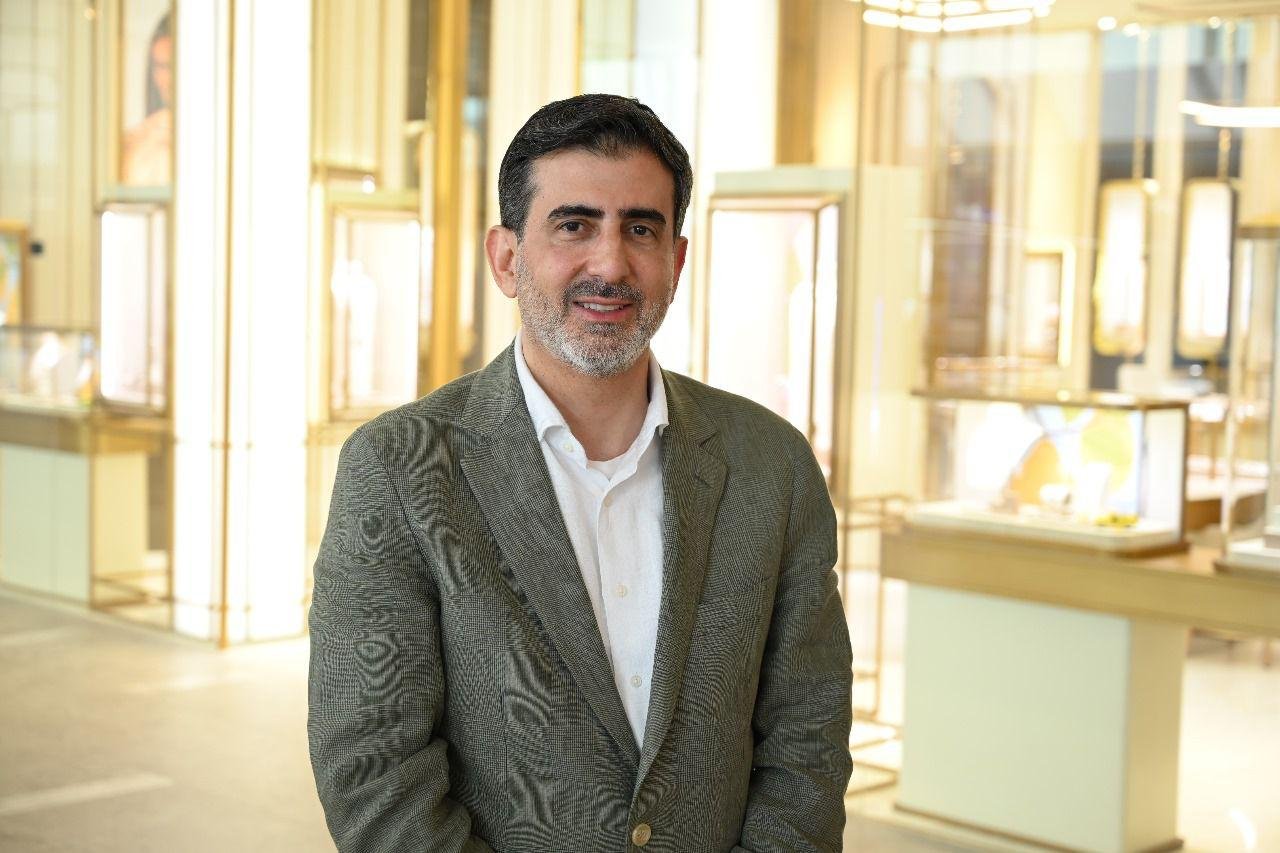
Samer Choucair, investment strategist, stated that global markets have undergone a sudden shift—from intense anxiety to a renewed appetite for risk. He emphasized that this was not merely a short-term reaction to political news, but rather a broad psychological and investment-driven transformation.
Choucair added that the sharp decline in oil prices, coupled with a strong rally in Gulf stock markets and a return of investor confidence, signals the beginning of a new market phase. He stressed that the key question is no longer what happened, but rather who will capitalize on this shift first—and who will lag behind and pay the price.
—
Market Reaction: “A Full Repricing of Risk”
Choucair explained that what markets are witnessing is a comprehensive repricing of global risk.
“The drop in oil prices by more than 15%, breaking below the $100 threshold, alongside a strong rally in Gulf markets and a rebound in Asian equities, reflects a structural shift in capital allocation,” he said.
He noted that the decline in gold and bonds confirms that investors are moving away from safe-haven assets, entering what is widely known as a “risk-on” environment.
“The market does not reward those who react to the news—it rewards those who anticipate the next shift,” he added.
—
Strategic Insight: “What Changed Is Deeper Than Just an Agreement”
According to Choucair, the ceasefire agreement between the United States and Iran goes far beyond a political truce.
“It represents the reopening of a vital artery of the global economy—the Strait of Hormuz, through which nearly 20% of global oil trade flows,” he explained.
He added that this development is expected to reduce shipping and insurance costs, gradually restore Iranian supply, and ease geopolitical risk premiums.
“When risks decline, valuations rise—even before actual earnings improve,” he noted.
—
“This Is a Window—Not Just News”
Choucair emphasized that what is happening now marks a transition from a “fear-driven economy” to an “opportunity-driven economy.”
“Markets are not moving because of the agreement itself, but because of what may follow,” he said.
He highlighted that the Gulf region is entering a historic phase of accelerated investment, as global capital seeks stability, returns, and large-scale projects.
“Smart money enters before the picture becomes clear—late money enters when the story becomes a trend,” he added.
—
Oil: “No Longer a Price Bet—But a Business Model Bet”
Choucair pointed out that the drop in oil prices carries dual implications.
“On one hand, lower oil prices support the global economy by easing inflation and increasing liquidity. On the other hand, they pressure the revenues of producing countries and increase market sensitivity to political developments,” he said.
“I do not advise exiting oil entirely, but rather repositioning within it—focusing on integrated companies and investing in the transition toward clean energy,” he added.
“Oil is no longer just a price bet—it’s a business model bet.”
—
The Gulf: “From Emerging Market to Global Platform”
Choucair stated that the Gulf region stands to be the biggest beneficiary of this shift.
“The UAE is witnessing strong global liquidity inflows driven by its financial and logistics sectors, while Saudi Arabia is accelerating its mega-projects under Vision 2030,” he said.
He added that Dubai is leading the current momentum thanks to its strength in trade, tourism, and real estate.
“The Gulf is no longer classified as an emerging market—it has become a global capital platform.”
—
Investor Moves: “Think Like a Sovereign Fund”
Samer advised investors to rebalance their portfolios.
“Reduce direct exposure to commodities and increase focus on growth-linked equities,” he said.
He highlighted major opportunities in indirect sectors such as logistics, tourism, fintech, and commercial real estate. He also stressed the importance of monitoring interest rates:
“A decline in inflation could open the door to rate cuts, which would support risk assets.”
“The most important thing is to think long-term—like sovereign wealth funds—rather than trading on daily headlines,” he added.
—
Outlook: “Significant Opportunities… But With Conditions”
Choucair projected that if the agreement holds, oil prices could range between $75 and $90, while Gulf markets may achieve annual growth of 8% to 12%, with foreign investment inflows exceeding $200 billion.
However, he warned:
“Any breakdown in the agreement could trigger amplified market volatility.”
—
The Shift Has Begun… Who Will Move First?
Choucair concluded by emphasizing that the world is witnessing a global capital repositioning moment.
“Opportunities do not arise when the picture is clear—they emerge when a transformation is underway that not everyone fully understands yet,” he said.
“The real question now is not whether an opportunity exists—but whether you will act in time to seize it.”