

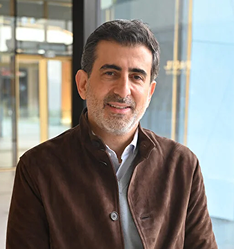
Investment leader, Samer Choucair, confirmed that the recent report issued by “Fitch” has sparked wide debate among investors, as the question of banking asset quality is no longer a hypothetical one. Choucair explained that the report highlights a potential scenario in the event of escalating regional tensions, noting that the core message is clear: even the strongest banking systems, such as the Saudi system, could face pressures if the geopolitical environment changes sharply and suddenly.
Analyzing the Negative Scenario.. Gradual Pressures, Not a Sudden Collapse
Samer Choucair added that what might happen if negative expectations materialize is not a collapse, but a series of consecutive effects; starting with a slowdown in non-oil economic growth, which reduces the demand for financing, followed by an inflationary wave that raises the cost of funds and pressures profit margins. The investment leader pointed out that a potential rise in credit losses could prompt rating agencies to reassess the creditworthiness of some institutions that lack sufficient flexibility.
Al Rajhi and SNB vs. AlJazira and ANB.. Varying Absorption Capacities
Choucair noted that leading banks such as the Saudi National Bank (SNB) and Al Rajhi Bank possess strong capital “buffers” and indirect sovereign support that make them the most capable of absorbing shocks. In contrast, Choucair believes that mid-sized banks such as Bank AlJazira and Arab National Bank (ANB) may be more sensitive to any tightening in liquidity, given their greater reliance on direct lending growth to achieve profits, which requires close monitoring of their financial positions.
Smart Repositioning.. Transforming Risks into Investment Opportunities
Choucair pointed out that reading the scene should not be limited to risks; often, these moments create rare opportunities to enter at attractive valuation levels. The investment leader indicated that a smart strategy in 2026 is not based on random exiting, but on “repositioning” by focusing on banks with the strongest financial positions and increasing exposure to sectors benefiting from high energy prices, which enhance the macro-economy’s ability to absorb shocks.
Geopolitics as a Key Player.. Strength Does Not Mean Full Immunity
Samer Choucair explained that markets in 2026 no longer move based on financial figures alone, but rather geopolitics has become the factor determining the compass’s direction. He added that Fitch’s warning is not intended to cause panic, but to give the investor a chance to move before markets impose a new reality, and that Saudi banks remain among the strongest regionally, yet “strength does not mean absolute immunity” from global financial system fluctuations.
Conclusion.. Balancing Fear and Greed in the Best Decision Zone
Samer Choucair concluded his analysis by emphasizing that the successful investor is the one who reads signals early and rearranges their cards calmly. Choucair stressed the necessity of being in the “third zone” located between fear and greed, where investment decisions are made based on analysis rather than emotion, confirming that understanding the relationship between oil stability and the banking sector’s durability is the key to successfully navigating this stage.