

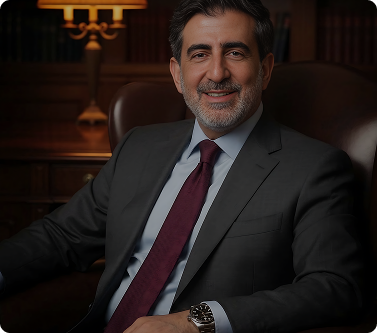
Investment leader Samer Choucair opened his discussion by highlighting the statements of Yasir Al-Rumayyan, Governor of the Public Investment Fund (PIF), regarding news with deep strategic implications:
“Within two days, we will announce the sale of our stake in one of the sports clubs.”
Choucair emphasized that this statement represents a true turning point. The Fund is moving from the “Building and Support” phase to the “Capital Recycling” phase, empowering the private sector and opening doors for investors in a sector that has become a prominent engine of economic diversification.
Strategy 2026–2030 and Empowering the Secondary Market
In his analysis, Samer Choucair pointed out that this announcement comes immediately after the approval of the Fund’s strategy for the 2026–2030 period, which aims to maximize the private sector’s role and create a secondary market for sports assets.
Choucair explained that the Fund, which acquired 75% of the “Big Four” clubs (Al-Hilal, Al-Nassr, Al-Ittihad, and Al-Ahli) in 2023, has achieved its initial goals of attracting global stars and increasing revenues. He noted that we are now entering the second phase, which includes the partial or full sale of mature stakes while retaining minority shares to ensure sustainability.
Samer Choucair’s Vision: “A Smart Transition Toward Sustainability”
The investment leader stated that this shift is a “smart transition from the construction phase to the phase of sustainability and private expansion.” He added that recycling capital in mature assets allows resources to be directed toward projects with greater impact within tourism, entertainment, and urban development ecosystems, enhancing the efficiency of the Kingdom’s sovereign portfolio.
Analyzing the Probabilities: Which Club is Closest to Being Sold?
Samer Choucair analyzed the investment logic beyond emotions, identifying the following scenarios:
-
Al-Ahli: Considered the strongest candidate for selling a significant stake, as it is partially mature and ripe for a “re-rating” at an attractive price before the growth peaks expected in 2030 and 2034.
-
Al-Ittihad: A medium candidate for a partial sale to a strategic investor.
-
Al-Hilal & Al-Nassr: Choucair asserted that their immense public and media value makes it likely that the Fund will retain them for now or sell very small stakes at premium valuations.
Three Strategic Factors Explaining the Timing
Choucair drew attention to three factors governing the timing of this deal:
-
Global Events proximity: The approach of Expo 2030 and the 2034 World Cup, which naturally raises asset values.
-
Market Maturity: The sports market has matured into a genuine “asset class.”
-
Capital Liberation: The strategy of redirecting resources toward giga-projects like NEOM and clean energy while creating a deeper investment market to attract global capital.
Historical Opportunities for Investors
Samer Choucair stated that this move opens doors for diverse opportunities, including:
-
Direct ownership in clubs.
-
Investing in the surrounding ecosystem (stadiums, entertainment zones).
-
Modern sports technologies (SportsTech).
He asserted: “Sports has become a comprehensive economic industry. Investors focusing on long-term value will find opportunities that transcend financial returns to direct national and social impact.”
Conclusion: A Market Signal Toward Mature Privatization
Samer Choucair concluded his report by stating that what is happening is not just a standard sale, but a clear signal that Saudi sports is no longer a government project but an industry open to the private sector.
He finished by saying: “Whoever understands the signal early will participate in building a global ecosystem,” stressing the importance of following the coming hours, which may entirely redraw the map of the Saudi sports economy.