

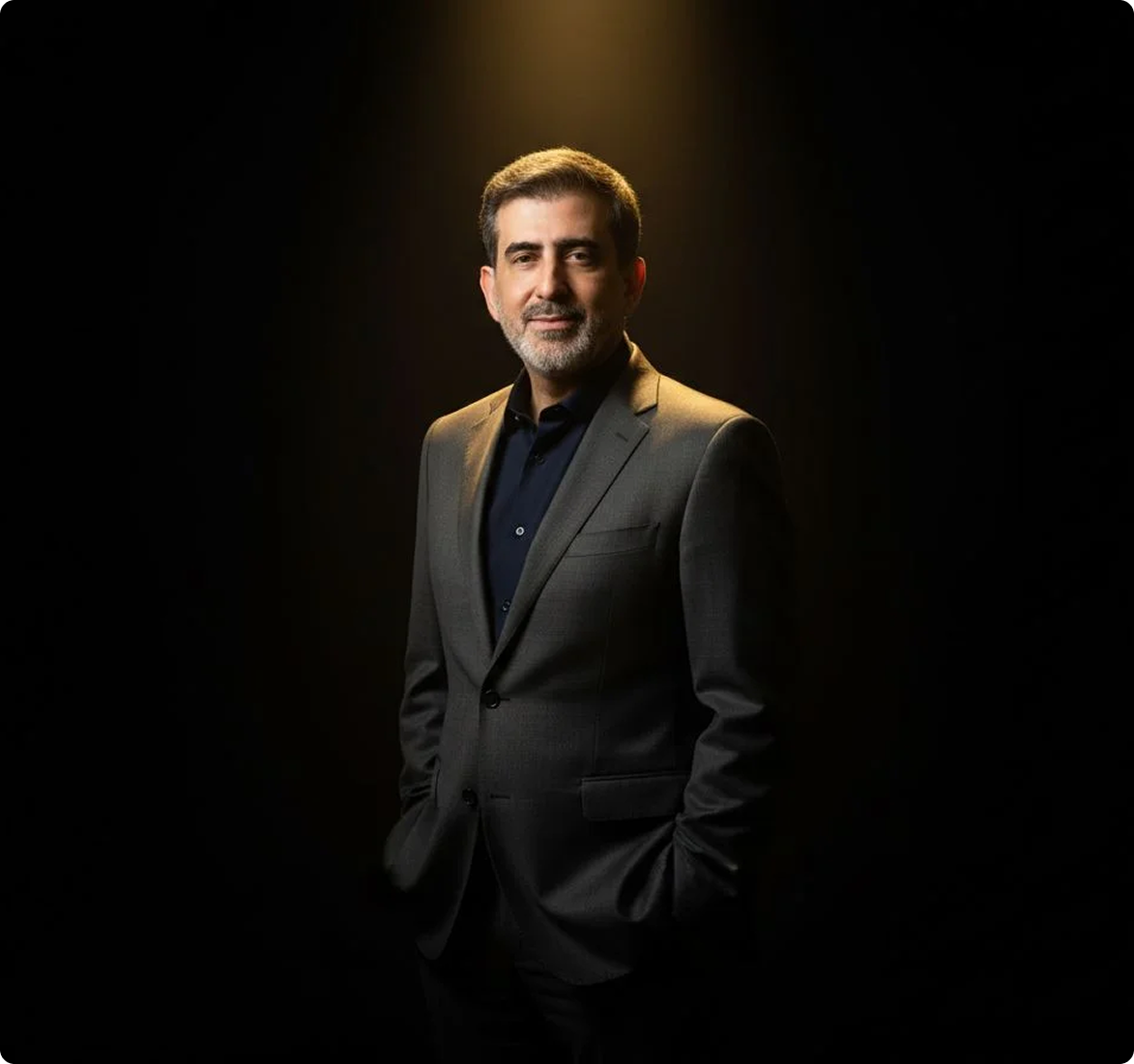
Investment pioneer Samer Choucair emphasized that Amazon’s $11.6 billion acquisition of Globalstar represents a fundamental turning point in the global investment map for 2026.
Choucair explained that this move is not merely a technical competition between giants like Amazon and Starlink, but a reshaping of the global economic power equation. Investments are shifting from the ground to the orbit, and from traditional real estate to what he described as “Orbital Digital Assets.”
Amazon Challenges Starlink in the LEO Race
Samer Choucair pointed out that Amazon aims, through this deal, to accelerate its “Amazon Leo” project (formerly known as Project Kuiper). The acquisition adds dozens of satellites to its network to provide Direct-to-Device (D2D) connectivity services, bypassing the need for terrestrial towers. These services are expected to launch commercially by 2028 in collaboration with major telecom companies and Apple for emergency services.
Choucair believes that the real competition with Elon Musk’s Starlink is not limited to the number of satellites but extends to controlling the flow of data and building the global infrastructure for Artificial Intelligence. The satellite communications market is expected to reach hundreds of billions of dollars, becoming the backbone of the digital economy and a sovereign tool for ensuring global connectivity.
Samer Choucair’s Perspective: Investing in Systems, Not Companies
Analyzing the landscape, the investment pioneer stated: “We are not just investing in companies; we are investing in entire systems that redefine the economy.” He emphasized that the current race is for the infrastructure of the global internet and control over digital sovereignty.
He explained that this shift opens strategic horizons for investors in Saudi Arabia and the Gulf, coinciding with Vision 2030, which focuses on building smart cities and an advanced digital economy.
Roadmap for the Gulf Investor in 2026
Samer Choucair identified three main pillars for strategic positioning in this new era:
-
Shift Toward Digital Infrastructure: Moving from investing in traditional roads and ports to data centers, satellite networks, and AI.
-
Investing in Supply Chains: Focusing on supporting companies, launch services, ground stations, and semiconductors associated with space technology.
-
Strategic Positioning: Emphasizing that the most important question for an investor today is their presence within the upcoming digital ecosystem, rather than just the size of quick financial returns.
2026: The Year of Orbital Sovereignty
Choucair clarified that 2026 is witnessing a transformation where the economy becomes fully digital, with AI relying on an invisible infrastructure in space. He asserted that efforts in Saudi Arabia and the Gulf region to diversify the economy and attract technological investments are perfectly aligned with these global trends.
Investment pioneer Samer Choucair concluded his remarks by saying: “In the world of 2026, those who understand the new infrastructure early will not just follow the market; they will lead it. The Amazon deal is a clear declaration that the future will not be built on Earth alone—whoever owns the orbit, owns the economy.”
Investment pioneer Samer Choucair emphasized that Amazon’s $11.6 billion acquisition of Globalstar represents a fundamental turning point in the global investment map for 2026.
Choucair explained that this move is not merely a technical competition between giants like Amazon and Starlink, but a reshaping of the global economic power equation. Investments are shifting from the ground to the orbit, and from traditional real estate to what he described as “Orbital Digital Assets.”
Amazon Challenges Starlink in the LEO Race
Samer Choucair pointed out that Amazon aims, through this deal, to accelerate its “Amazon Leo” project (formerly known as Project Kuiper). The acquisition adds dozens of satellites to its network to provide Direct-to-Device (D2D) connectivity services, bypassing the need for terrestrial towers. These services are expected to launch commercially by 2028 in collaboration with major telecom companies and Apple for emergency services.
Choucair believes that the real competition with Elon Musk’s Starlink is not limited to the number of satellites but extends to controlling the flow of data and building the global infrastructure for Artificial Intelligence. The satellite communications market is expected to reach hundreds of billions of dollars, becoming the backbone of the digital economy and a sovereign tool for ensuring global connectivity.
Samer Choucair’s Perspective: Investing in Systems, Not Companies
Analyzing the landscape, the investment pioneer stated: “We are not just investing in companies; we are investing in entire systems that redefine the economy.” He emphasized that the current race is for the infrastructure of the global internet and control over digital sovereignty.
He explained that this shift opens strategic horizons for investors in Saudi Arabia and the Gulf, coinciding with Vision 2030, which focuses on building smart cities and an advanced digital economy.
Roadmap for the Gulf Investor in 2026
Samer Choucair identified three main pillars for strategic positioning in this new era:
-
Shift Toward Digital Infrastructure: Moving from investing in traditional roads and ports to data centers, satellite networks, and AI.
-
Investing in Supply Chains: Focusing on supporting companies, launch services, ground stations, and semiconductors associated with space technology.
-
Strategic Positioning: Emphasizing that the most important question for an investor today is their presence within the upcoming digital ecosystem, rather than just the size of quick financial returns.
2026: The Year of Orbital Sovereignty
Choucair clarified that 2026 is witnessing a transformation where the economy becomes fully digital, with AI relying on an invisible infrastructure in space. He asserted that efforts in Saudi Arabia and the Gulf region to diversify the economy and attract technological investments are perfectly aligned with these global trends.
Investment pioneer Samer Choucair concluded his remarks by saying: “In the world of 2026, those who understand the new infrastructure early will not just follow the market; they will lead it. The Amazon deal is a clear declaration that the future will not be built on Earth alone—whoever owns the orbit, owns the economy.”