

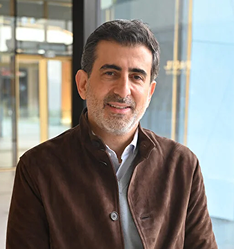
Investment pioneer Samer Choucair confirmed that cyber fraud attempts targeting shipping companies in the Strait of Hormuz—through impersonating official entities and demanding payments in cryptocurrencies—represent a vital indicator of the merger of geopolitical risks with cyber threats in the global economy. He stressed that these digital crises are not merely security challenges, but early signals of strategic investment opportunities requiring a conscious investment mindset under the umbrella of Vision 2030.
Samer Choucair explained that the increasing reliance on digitalization in managing vital maritime corridors has created new vulnerabilities exploited by fraudsters, placing companies and sovereign entities before an urgent necessity to invest in protection, verification, and compliance systems.
Samer Choucair said: “The most prominent message for the Gulf investor amid these tensions is not to flee from risks, but to price them early and convert them into opportunities. When a ship requires cyber protection and a shipping company needs instant digital verification, value inevitably shifts to cybersecurity platforms and operational intelligence—sectors that will witness high growth multiples in the coming decade.”
Investment pioneer Samer Choucair identified four mature investment angles with a forward-looking vision to support the Kingdom’s economic transformation:
First: Investing in maritime cybersecurity, where there is a growing demand for digital identity verification solutions, financial fraud detection, and linking maritime operations to early warning systems, which enhances the efficiency and safety of national supply chains.
Second: Developing smart logistics and risk management by investing in ship tracking technologies and big data analysis to predict disruptions and estimate their impacts, which aligns perfectly with the Kingdom’s ambitions to become a global logistical hub.
Third: Enhancing disciplined Fintech and digital compliance by supporting anti-fraud tools, identifying suspicious transactions, and secure institutional blockchain applications that support the national digital infrastructure and avoid the risks of unregulated speculation.
Fourth: Supporting resilient export infrastructure, as disruptions in waterways emphasize the importance of strategic hedging through investment in renewable energy and alternative infrastructure for non-oil industries to enhance economic sovereignty and national resilience.
Samer Choucair concluded his statements by emphasizing that Vision 2030 is not just a developmental framework, but a practical platform for transforming global disruptions into high-return local opportunities. He explained that the smart investor is the one who realizes that strategic bottlenecks in the global economy are no longer just physical, but digital as well. Today, thanks to its advanced regulatory environment, the Kingdom is laying smarter economic foundations more capable of absorbing shocks and transforming them into a lever for sustainable growth.