

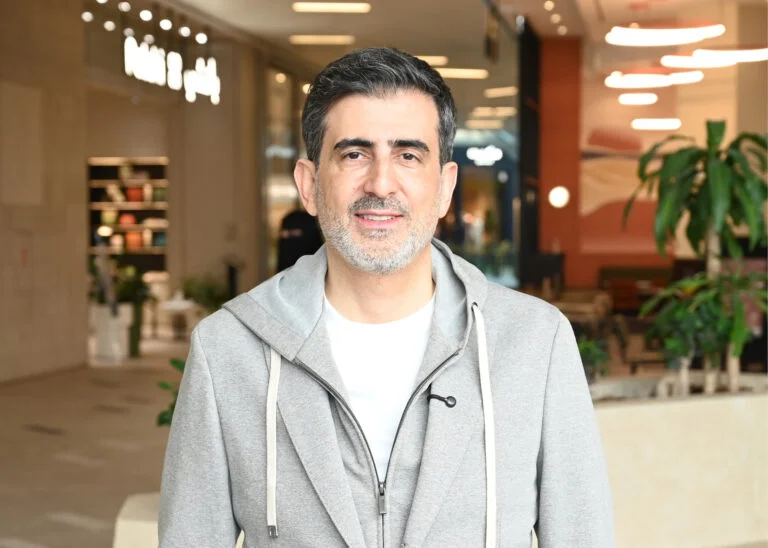
Investment pioneer Samer Choucair stated that the emergency measures announced by France to freeze 6 billion euros in government spending represent a clear signal of how sensitive major economies are to energy and geopolitical shocks. He emphasized that what is happening in Europe today is not merely a passing crisis, but a comprehensive global repricing of economic risks.
Choucair explained that official estimates announced by French Finance Minister Roland Lescure indicate the cost of the crisis ranges between 4 and 6 billion euros, with 3.6 billion euros resulting from the increased cost of debt servicing. He added that these figures reflect how an external shock can quickly transform into direct pressure on public finances.
Markets React Immediately to the Shock
Samer Choucair added that in the session on April 21, 2026, these pressures were directly reflected in European markets; stocks declined, and the French CAC40 index fell by approximately 1.1% amid rising energy prices, disrupted supply chains, and increased costs of sovereign borrowing.
Choucair pointed out that this rapid reaction confirms that markets have become more sensitive to any geopolitical disruption, especially when linked to energy.
Europe Faces a Real Test of Energy Security
Samer Choucair said: “What we are witnessing today is a real test of the ability of major industrial economies to manage energy shocks.” He explained that European governments find themselves facing a difficult equation: supporting affected sectors without expanding spending in a way that exacerbates deficits.
Choucair added that this equation reveals that the energy crisis is no longer just a rise in prices, but has turned into a financial and structural challenge pressing upon budgets.
Saudi Arabia in a Completely Different Position
In contrast, Samer Choucair emphasized that the Kingdom of Saudi Arabia stands in a different and stronger investment position, explaining that the Kingdom no longer relies solely on its role as a major energy exporter, but has succeeded in building a more diversified economic base.
Choucair said: “According to data from the General Authority for Statistics, the Saudi economy recorded real growth of 4.5% in 2025, driven by a 5.7% growth in oil activities and a 4.9% growth in non-oil activities.” He noted that non-oil activities accounted for approximately 50% of the GDP at current prices in previous official data.
Choucair added that these figures confirm that Saudi Arabia is no longer read as a traditional oil economy, but as an economy reshaping itself in a balanced manner.
Vision 2030: A Structural Transformation, Not a Slogan
Samer Choucair stressed that the strength of Saudi Vision 2030 lies in the depth of its reforms, stating: “What is happening in the Kingdom is a comprehensive re-engineering of growth sources.”
Choucair explained that among the most prominent steps was the Capital Market Authority’s announcement on January 5, 2026, to open the market to all categories of foreign investors for direct investment, describing it as a qualitative transformation that enhanced market depth and raised the attractiveness of Saudi assets.
Choucair added that in parallel, clean energy and sustainability projects are advancing—from the Saudi Green Initiative to green hydrogen projects in NEOM—alongside the target of welcoming 150 million visitors annually by 2030.
Why Does the Crisis Turn into an Opportunity in Saudi Arabia?
Samer Choucair said: “Smart capital does not flee from crises, but repositions itself toward markets most capable of growth and stability.” He added that when energy costs rise and pressures on European budgets increase, investors look for an environment that combines liquidity, reform, and growth.
Choucair affirmed that Saudi Arabia offers this equation: real economic growth, bold market reforms, and strategic projects in tourism, industry, and clean energy.
A Strategic Reading of the Scene
Samer Choucair added that geopolitical crises do not only reprice energy but also reprice the investment creditworthiness of nations. He continued: “When major economies are exposed to sudden pressure, markets that possess a clear vision and deep reforms stand out.”
Choucair explained that Saudi Arabia today is not a situational beneficiary, but an integrated investment case combining an advanced capital market, a growing non-oil economy, and vast future projects.
Top Investment Opportunities in 2026
Samer Choucair identified several strategic sectors as follows:
-
Energy and Infrastructure: “Will remain pivotal as global energy security is redefined.”
-
The Saudi Financial Market: “Will benefit from the expansion of the foreign investor base.”
-
Tourism, Real Estate, and Hospitality: “Supported by strong executive momentum within the 2030 targets.”
-
Clean Tech and Hydrogen: “Represent the future of investment linked to sustainability.”
A Global Lesson in the Meaning of Economic Fragility
Samer Choucair concluded by saying: “What happened in France is not just a European crisis, but a global lesson in the meaning of economic fragility when energy intersects with public debt.”
He added that, in contrast, Saudi Arabia offers a different model: an economy that benefits from its energy strength but simultaneously builds true diversity and a more open market.
Choucair emphasized that successful investment in 2026 begins with a strategic vision and studied diversification, and Saudi Arabia today represents one of the most important destinations for building sustainable wealth in a volatile global environment.