

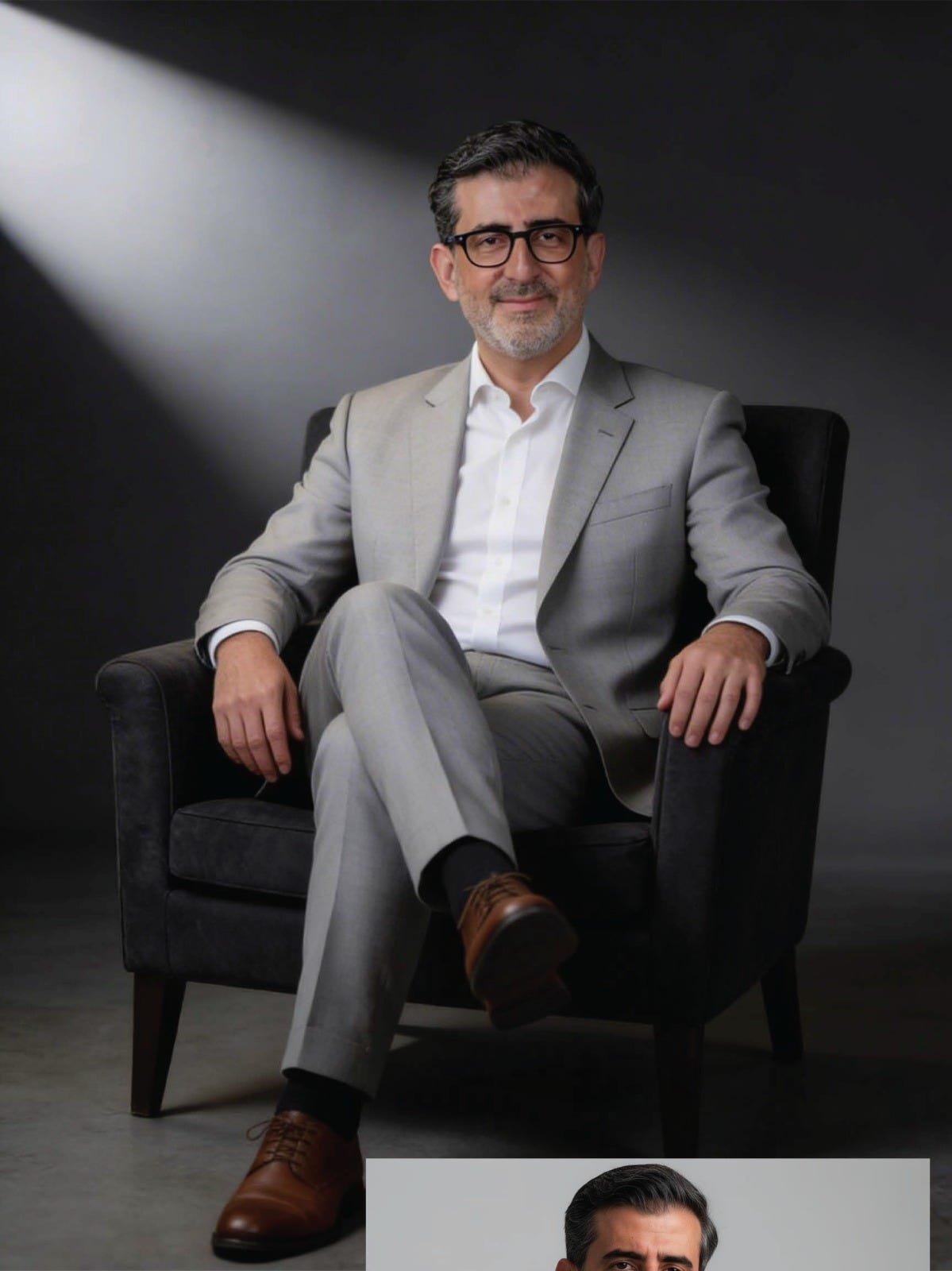
Investment pioneer Samer Choucair stated that the world is currently standing at a pivotal moment in energy history, explaining that what we are witnessing is no longer just theoretical scientific development, but an actual shift toward a new industry forming before the eyes of investors. Choucair points out that the announcement made by Bob Mumgaard, CEO of Commonwealth Fusion Systems, clearly reflects nuclear fusion entering a stage of industrial seriousness, confirming that the era of unlimited clean energy has become very close.
The Scene Reflects a Deep Investment Transformation
Samer Choucair added that the scene was not merely symbolic but carried deep strategic implications. He explained that Mumgaard’s confident appearance before the cameras, with the company logo and live broadcast insignia behind him, embodies the transition of nuclear fusion from a research framework to an investment reality attracting billions of dollars and reshaping global energy balances. He considers these signals a clear call for Gulf investors to move early.
CFS Progress and the Approach of SPARC Operation in 2027
Samer Choucair confirmed that Commonwealth Fusion Systems (CFS) is leading this transformation, explaining that its experimental device, SPARC, in Massachusetts has already surpassed 75% completion, with a plan to operate it in 2027 aiming to demonstrate the capability of producing net energy. Choucair indicates that the next step involves beginning construction of the first commercial plant in Chesterfield, Virginia, during the same year, with a capacity of up to 400 MW, with actual electricity production starting in the early 2030s.
Funding and Deals Reflect Market Confidence
Samer Choucair noted that the market did not wait for the technology to be finalized before moving, pointing out that the company succeeded in raising about $3 billion in private funding, placing it at the forefront of fusion startups. Choucair adds that institutional confidence was clearly demonstrated through future purchase agreements; Google announced an agreement in June 2025 to purchase 200 MW of electricity, followed by Eni in September 2025 with a deal exceeding $1 billion, reflecting the conviction of major players that fusion will be a primary source of energy in the future.
Why is Nuclear Fusion the Biggest Energy Bet?
Samer Choucair explained that the appeal of nuclear fusion lies in its proximity to achieving a long-awaited equation. He clarified that it combines massive energy production, supply stability, and low carbon emissions, alongside a higher safety level compared to traditional nuclear fission, especially in terms of reducing long-term radioactive waste. Choucair adds that this factor becomes more important in light of the growing demand resulting from artificial intelligence, data centers, and advanced manufacturing, as well as countries’ commitments to reaching carbon neutrality. Samer Choucair emphasized that the expansion of AI, data centers, and advanced manufacturing raises energy demand at an unprecedented rate, making fusion a strategic option for securing future needs.
The Saudi Opportunity in Industrial Value Chains
Regarding regional opportunities, Samer Choucair asserts that Saudi Arabia and the Gulf states are facing an important strategic window. He explained that the benefit is not limited to direct investment in companies but extends to building an integrated industrial ecosystem around the sector. Choucair pointed out that this ecosystem includes advanced materials, superconducting magnets, cooling systems, and engineering services—fields in which the Kingdom could achieve an early competitive advantage.
Early Entry Creates Competitive Advantage
Samer Choucair explained that a smart investor does not wait for the completion of technology but monitors where new value chains are forming and where economic power centers will shift during the next ten years. He added that the real opportunity for Saudi Arabia does not necessarily lie in building a fusion reactor immediately, but in early entry through research partnerships, advanced manufacturing, infrastructure financing, and attracting international companies associated with this sector.
Political Support Enhances Global Fusion Momentum
Samer Choucair also noted that the appointment of Bob Mumgaard as a member of the U.S. President’s Council of Advisors on Science and Technology in March 2026 carries significant political weight. He explained that this decision reflects nuclear fusion’s shift into a strategic priority at the government level, which enhances opportunities for international partnerships and technology transfer, opening the way for countries like Saudi Arabia to benefit from this momentum.
Wealth is Built Before the Industry Matures
Samer Choucair concludes his vision by emphasizing that nuclear fusion has not yet reached the stage of full commercial deployment, but it has already moved past the stage of doubt. He pointed out that we are facing a reality that includes an advanced experimental device, plans for a commercial plant, billions of dollars in funding, and purchase agreements with major global companies. Choucair affirms at the end of his talk that wealth in major markets is not achieved only by owning the final asset, but by understanding the economic structure that forms around it early on. He added that fusion energy may represent one of the most important of these structures in the coming decades, and whoever moves today with awareness and strategy may secure an advanced position in the new global energy economy.