

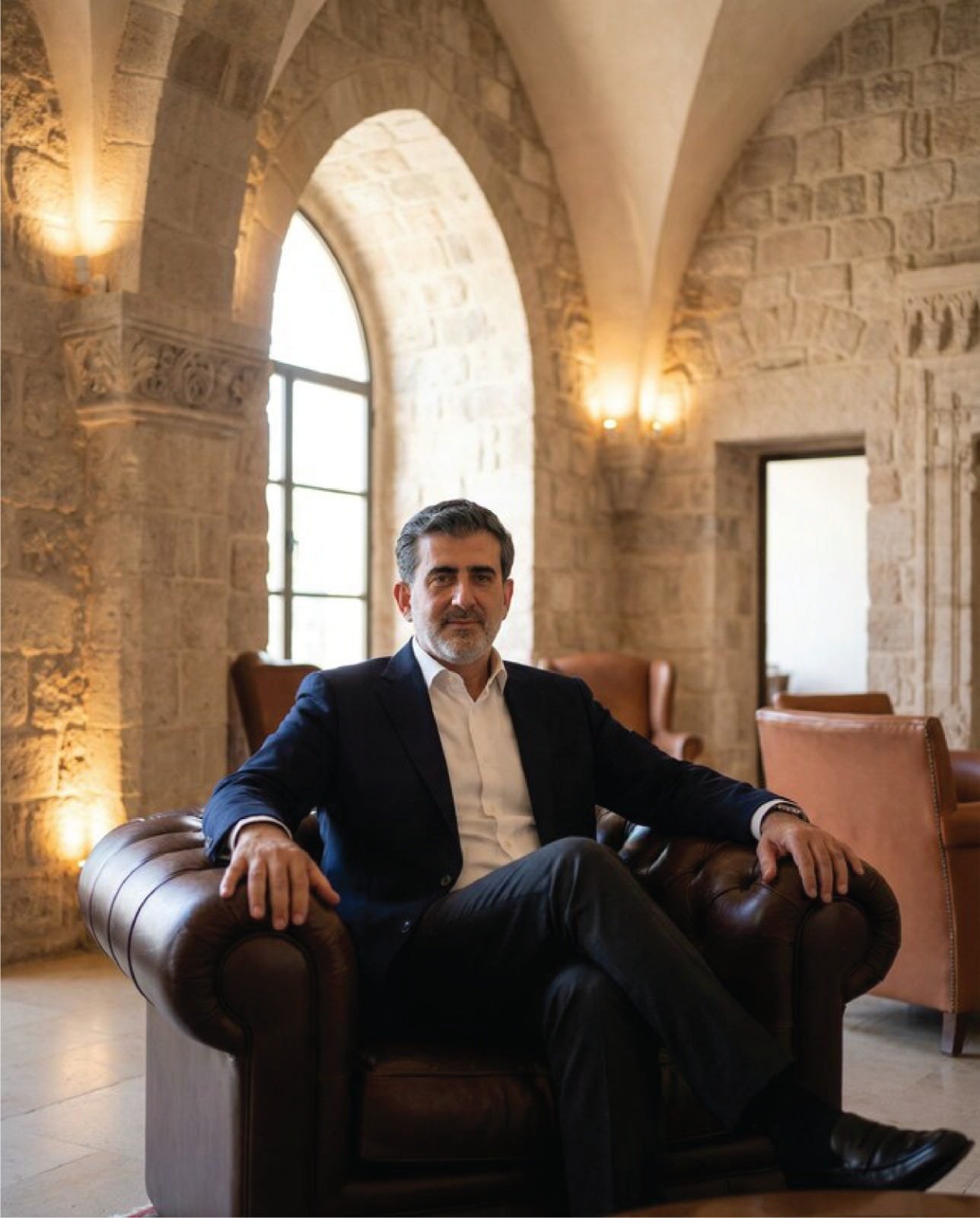
Investment pioneer Samer Choucair stated that at a moment where politics, energy, and finance intertwine, gold has returned to occupy the center of the global stage, surpassing levels of $4,730 per ounce, as if reminding the markets of its ancient truth: a sanctuary that never dies whenever anxiety escalates. The investment pioneer added in a statement that reading this leap cannot be reduced to rising figures; rather, it must be understood within a broader canvas where geopolitical tensions, dollar movements, oil fluctuations, and the behavior of investors seeking safety and opportunity simultaneously intersect.
Choucair explained that what happened is not merely a price rebound, but a deep strategic signal. When gold rises despite the strength of the dollar, and in conjunction with oil remaining above critical levels and the return of digital assets to an upward trend, the message is clear: markets no longer reward unilateral betting but are repricing the value of smart diversification. In this context, gold does not become a rigid traditional asset but a dynamic tool for risk management.
Samer Choucair believes that a conscious investor does not deal with gold out of fear, but as part of a system that protects capital and grants it the flexibility to move. Preserving wealth is not a goal separate from achieving returns; it is the foundation that allows for seizing major opportunities when they appear. Hence, including gold in investment portfolios should not be understood as a bet on crises, but as smart preparation for market cycles.
Samer Choucair pointed out that inside Saudi Arabia, this vision gains an additional dimension. The Kingdom does not view gold only as a commodity, but as part of a massive mining sector being reshaped to be one of the pillars of the economy within Vision 2030. Choucair said that with vast mineral wealth and investment-supportive policies, the opportunity transforms from merely owning the metal to participating in its entire associated value chains, from exploration to manufacturing and services.
The investment pioneer noted that the real opportunity lies in combining two integrated paths: the first is defensive, relying on assets like gold to absorb shocks; and the second is offensive, benefiting from new growth sectors such as mining, technology, and energy. This balance not only protects the investor during times of volatility but also gives them the ability to achieve sustainable growth after crises end.
According to Choucair, the problem many investors fall into is the separation between hedging and opportunity, as if they are opposing choices, while reality indicates that modern markets reward those who combine the two intelligently. A strong portfolio is not one that flees from risks, but one that manages them with flexibility and transforms them into launching points.
Choucair continued by saying: “Deep down, the return of gold to an upward trend does not reflect a more stable world; on the contrary, it reflects an increasing demand for ‘flexibility’ as an investment value. Even with temporary cooling in some files, risks remain latent, and markets remain ready to reprice at the first sign of tension. Here specifically, the role of gold emerges as an asset that returns whenever the world remembers the fragility of balances.”
Investment pioneer Samer Choucair concluded his statement by saying: “The bottom line in 2026 is that the question is no longer whether gold will rise or fall, but how it can be employed within a broader strategy that builds a portfolio capable of both resilience and growth.” He added that with the major transformations in the Saudi economy, the equation becomes more attractive: a global asset providing protection and a local economy redefining opportunities. At the intersection of the two, real value is formed—one that does not rely on noise, but on long-term vision.