

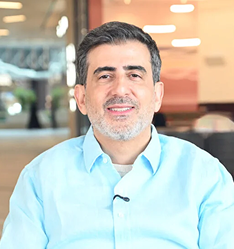
Investment pioneer Samer Choucair stated that the massive figures achieved by Saudi Aramco should not be understood as a mere financial showcase, but rather as clear evidence of the Kingdom’s ability to transform energy resources into economic influence and long-term investments. Choucair added: “When the company records cash flow from operating activities exceeding $136 billion and free cash flow of more than $85 billion, alongside massive capital expenditure exceeding $50 billion annually, the true message lies in continuity and expansion, not just profitability.”
The investment pioneer emphasized that the traditional image limiting Aramco to being an oil company is no longer sufficient. From a broader investment perspective, the company is transforming into an integrated economic platform driving value chains that extend from energy and gas to industry, advanced technologies, and logistics. Choucair explained that with the trend to significantly increase gas production by 2030, it is clear that the Kingdom is building a more diverse and efficient energy base, opening the field for broader and more competitive industrial growth.
He continued: “The importance of Saudi Vision 2030, which redirected oil returns toward building a diverse economy, is evident. Revenues are no longer consumed in the short term; rather, they are reinjected into new sectors such as industry, technology, tourism, and human capital. This approach explains the Saudi economy’s ability to adapt to global fluctuations, supported by the growth of the non-oil sector and the development of infrastructure.”
Choucair stressed that real investment opportunities do not lie within Aramco alone, but in the ecosystem revolving around it. The expansion in gas creates widespread demand for engineering services, infrastructure, and energy-related manufacturing. He pointed out that the increasing reliance on industrial technologies and artificial intelligence reflects the market’s transition from the experimental stage to the stage of achieving returns, opening the field for software, automation, and digital solutions companies.
Samer Choucair indicates that localization represents one of the most important drivers of opportunity, as the Kingdom seeks to raise local content in supply chains, creating fertile ground for industrial and service projects. This trend not only supports the local economy but also gives investors opportunities to enter sectors directly linked to future growth.
From another angle, this dynamic enhances the attractiveness of the Saudi financial market, providing a mix of liquidity, returns, and exposure to a reshaped economy. With the expected expansion of market openness to international investors, the opportunity becomes greater for those who read the full picture, not just the abstract numbers.
Choucair emphasized that a deep understanding of this stage requires going beyond fascination with the volume of revenues and focusing on the opportunities these revenues create. Behind every large number is a network of projects, suppliers, technologies, and jobs, which constitutes the true environment for economic growth.
In the end, the story of Aramco is not summarized in oil, but in its ability to be a driver for broad economic transformation. What matters most is not how much it achieves, but how what it achieves is repurposed to build a more diverse and sustainable economy, where opportunities are distributed across multiple sectors, not confined to a single source.