

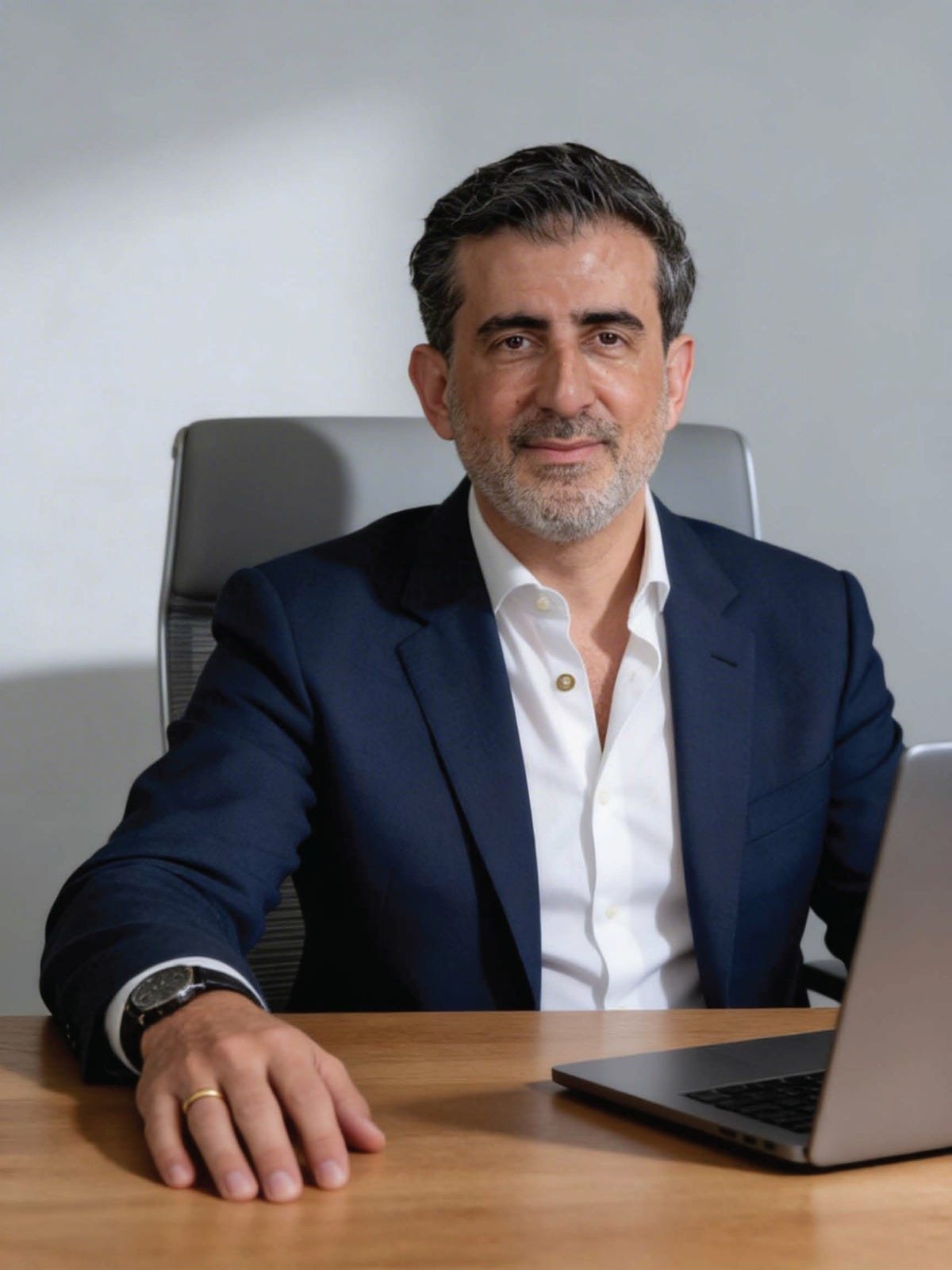
In an analytical reading of the “Morning Bid” newsletter issued by Reuters—which daily reaches investment funds and family offices in Riyadh and the GCC countries—investment pioneer Samer Choucair stated that the headline leading the newsletter, which points to layoffs at Meta and Microsoft alongside continued intensive investment in Artificial Intelligence, does not reflect a contradiction as much as it reveals a profound shift in global economic logic.
Samer Choucair explained that what is happening within major corporations cannot be interpreted as an austerity policy; rather, it is a strategic redistribution of capital. Traditional operational roles are being reduced in favor of directing resources toward future infrastructure. He added that the world is witnessing a historic transition from a labor-based economy to an algorithm-driven economy, emphasizing that AI has become the new infrastructure upon which the global economy is built.
Layoff Figures: Signals Beyond the Surface
Samer Choucair noted that Meta announced the layoff of approximately 8,000 employees, representing 10% of its workforce, starting May 20, 2026, along with closing 6,000 vacant positions. Meanwhile, Microsoft offered voluntary buyout programs to approximately 8,750 employees in the United States, equivalent to 7% of its workforce there.
Samer Choucair pointed out that these figures, despite their outward appearance of contraction, coincide with an unprecedented expansion in capital expenditure. He confirmed that the “Big Four”—Amazon, Google, Meta, and Microsoft—are moving to pump approximately $650 billion during 2026, the largest portion of which is going to data centers, smart chips, Large Language Models (LLMs), and cloud infrastructure.
The investment pioneer added that Meta alone plans to spend between $115 billion and $135 billion on capital investments during the year, mostly directed toward enhancing its AI capabilities, while Microsoft continues to expand its global partnerships and develop its AI-powered cloud infrastructure.
Investment Logic: Long-term Returns and Competitive Dominance
In his explanation of the continued investment momentum despite the layoffs, Samer Choucair said: “Artificial Intelligence offers exceptional long-term returns by raising productivity in an unprecedented manner, reducing operational costs, and creating entirely new markets in a competitive environment governed by the ‘winner-takes-all’ equation.”
Moving to the regional scene, Samer Choucair emphasized that the Kingdom of Saudi Arabia is living through a defining strategic moment within the framework of Vision 2030. The data center sector has grown approximately sixfold since the launch of the Vision, with investments exceeding 16 billion riyals. He added that 2026 represents a turning point that can be described as the “Year of AI” in the Kingdom, in light of the launch of the “Humain” project under the umbrella of the Public Investment Fund (PIF), alongside building strategic partnerships with major global technology companies.
Cloud Infrastructure: A Lever for Investment and Expansion
Samer Choucair noted Microsoft’s announcement of the launch of its cloud region in the Kingdom under the name “Saudi Arabia East” during the fourth quarter of 2026, considering this step as one that enhances local computing capabilities and opens the door for additional investment flows.
Samer Choucair stressed that Saudi Arabia is no longer just a consumer of technology but has transformed into a producer and exporter of it, benefiting from a mix that includes an abundance of renewable energy, regulatory reforms, and the pivotal role of the Public Investment Fund.
Where Do Investment Opportunities Lie?
Samer Choucair explained that investment opportunities in this context are concentrated in an interconnected ecosystem that begins with digital infrastructure, such as data centers and cloud computing, and extends to the integration of the energy sector with AI through the use of renewable energy to power this infrastructure, which gives the Kingdom a clear competitive advantage.
Samer Choucair also pointed to the importance of tokenizing real-world assets in increasing market liquidity and attracting global capital, in addition to sectoral applications of AI in the fields of healthcare, energy, financial services, and education.
Structural Transformation in the Saudi Economy
Samer Choucair affirmed that this path is reshaping the Saudi economy from a model relying on traditional resources to a competitive knowledge-based economy. He stressed that investors who focus today on enabling digital infrastructure and developing sectoral applications will achieve exceptional returns in the future.
AI is the New Economy
In concluding his analysis, Samer Choucair emphasized that what appears on the surface as a contradiction in the layoff decisions of Meta and Microsoft is, in fact, the clearest economic signal of the current decade that AI is no longer just an independent sector, but has come to represent the entire new economy.
Samer Choucair added that investing in this field today is not limited to achieving profits but extends to redefining the investor’s position on the global economic map. He confirmed that the Kingdom of Saudi Arabia, supported by Vision 2030, stands in an ideal position to lead this transformation regionally, and that the opportunity is now available to those who move with a strategic vision to build sustainable wealth for future generations.