

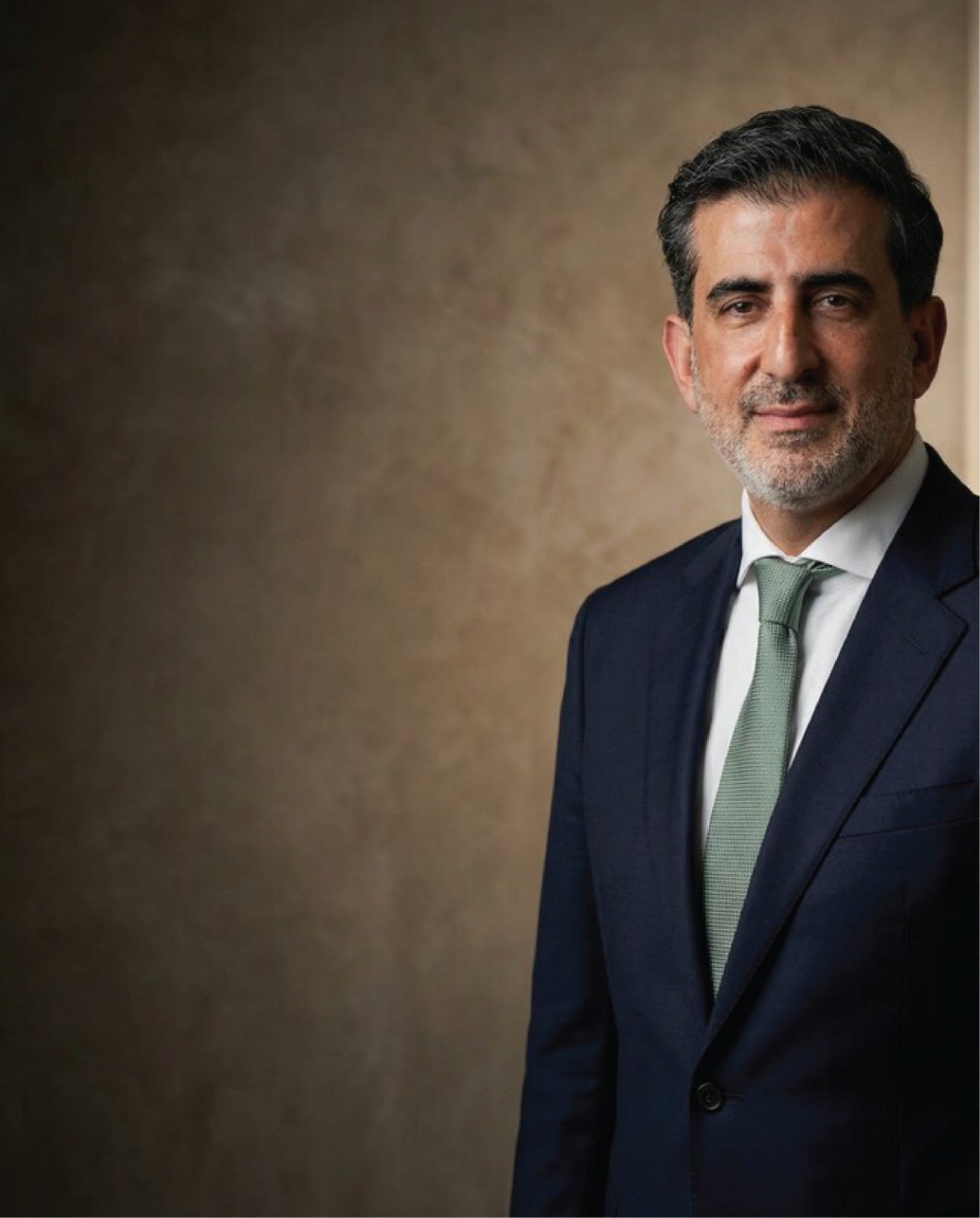
Investment pioneer Samer Choucair stated that reflecting on a formal, luxurious hall adorned with the flags of the Kingdom of Saudi Arabia and backdrops reflecting the symbols of the National Vision made him realize that what was being presented was not merely protocol messages, but a genuine declaration of a new phase titled “Re-engineering the Financial System.”
Choucair explained that the call to develop digital financing tools and enhance governance frameworks was not just a theoretical trend. Instead, it reflected a radical shift in how money is accessed and managed, with unprecedented levels of transparency and speed. He emphasized that 2026 was indeed a historical turning point in the trajectory of Saudi Fintech.
Fact-Checking the Figures: A Reality Taking Shape, Not Future Promises
Samer Choucair added that the numbers appearing at this stage were not just future ambitions but indicators of a rapidly forming reality:
-
Targeting 525+ Fintech Companies: The goal to establish more than 525 fintech companies by 2030 was being realized within the Financial Sector Development Program.
-
Digital Payments Surge: Digital payments exceeded 85% of total individual transactions, reflecting a deep shift in market behavior.
-
Expansion Areas: Choucair noted significant expansion in open finance, regulatory technology (RegTech), and embedded finance.
-
Vision 2030 Support: These transformations were directly supported by Vision 2030, pushing the Kingdom to become a global hub for financial innovation.
The Fundamental Shift: From Financial Services to an Integrated System
Samer Choucair clarified that the true transformation was not in the financial services themselves, but in the entire structure of the financial system.
“Traditional banks are no longer the sole center; digital platforms and APIs are now leading the relationship with customers,” Choucair remarked.
The investment pioneer pointed out that superiority no longer belongs only to those who possess capital, but to those who possess the ability for smart and rapid access to it. In an era where trust has shifted from traditional relationships to algorithms and digital governance, platforms have become the actual engine of the new economy.
Digital Governance: The Decisive Factor in Profitability
Choucair highlighted that Digital Governance was the hidden factor determining profitability in this shift. He explained:
-
Risk Mitigation: Investing in fintech without a strong governance system meant doubling the risks.
-
Smart Compliance: Modern governance is no longer limited to traditional compliance but includes AI-powered smart compliance and real-time risk management.
-
Data Sovereignty: Protecting data and enhancing digital sovereignty has become paramount.
-
Market Attractiveness: This advanced regulatory environment is a primary reason for the Saudi market’s attractiveness to investors, supported by clear sovereign backing and calculated legislative acceleration.
Narratives of Opportunity: Multiple Engines of Growth
Samer Choucair continued by stating that investment opportunities in Fintech during 2026 were multi-dimensional:
-
Digital Payments as a Data Economy: Payments are now a standalone economy, serving as a massive data source, a pricing tool, and a direct revenue engine.
-
Crowdfunding & P2P Lending: These models reduced the role of the traditional intermediary, accelerated funding, and opened the field to a broader segment of investors and entrepreneurs, enhancing financial inclusion.
-
The Role of AI: Artificial Intelligence redefined the role of financial institutions, assessing creditworthiness without traditional banking history and detecting fraud in real-time.
-
Blockchain & Tokenization: Beyond cryptocurrencies, blockchain entered fields like asset tokenization, smart contracts, and digital identity, increasing liquidity and efficiency.
-
Sustainable Finance: ESG (Environmental, Social, and Governance) criteria became a primary driver for global capital flows, especially in renewable energy and infrastructure aligned with Vision 2030.
Where Does the Real Opportunity Lie?
In his analysis, Samer Choucair indicated that fintech is not a separate sector but a layer extending over all economic sectors. He identified key areas:
-
Investment in digital payment infrastructure.
-
AI platforms for risk management and compliance.
-
Asset tokenization platforms, particularly in real estate and energy.
-
Embedded finance models within non-financial companies (e.g., retail, logistics, and software).
Entry Strategy: How Does the Smart Investor Move?
Samer Choucair advised that smart investors must redefine their strategies to focus on the infrastructure behind the applications, rather than just the visible interfaces. He emphasized that the timing is ideal for entry, as the market is in an early growth stage synchronized with clear regulatory acceleration.
Risks: A Balanced View
Regarding risks, Choucair noted they are naturally present, including:
-
Changing legislative frameworks.
-
Cybersecurity threats.
-
Global competition and high valuations of some projects.
However, he stressed that the Saudi market has been able to mitigate these risks through a gradual and smart regulatory approach, backed by clear sovereign will.
Vision 2030: The Secret of Saudi Distinction
Samer Choucair concluded by emphasizing that what distinguished Saudi Arabia in this shift is that Vision 2030 was not just a strategic framework, but an actual engine combining capital, effective regulation, and strong local demand.
He added that the Saudi fintech movement resembles major historical shifts like the emergence of the internet or smartphones, but at a faster pace. The convergence of sovereign, technological, and regulatory factors has formed the features of the New Financial System. Choucair’s final analysis was clear: the question is no longer about whether to enter the world of fintech, but how to position oneself within it.