


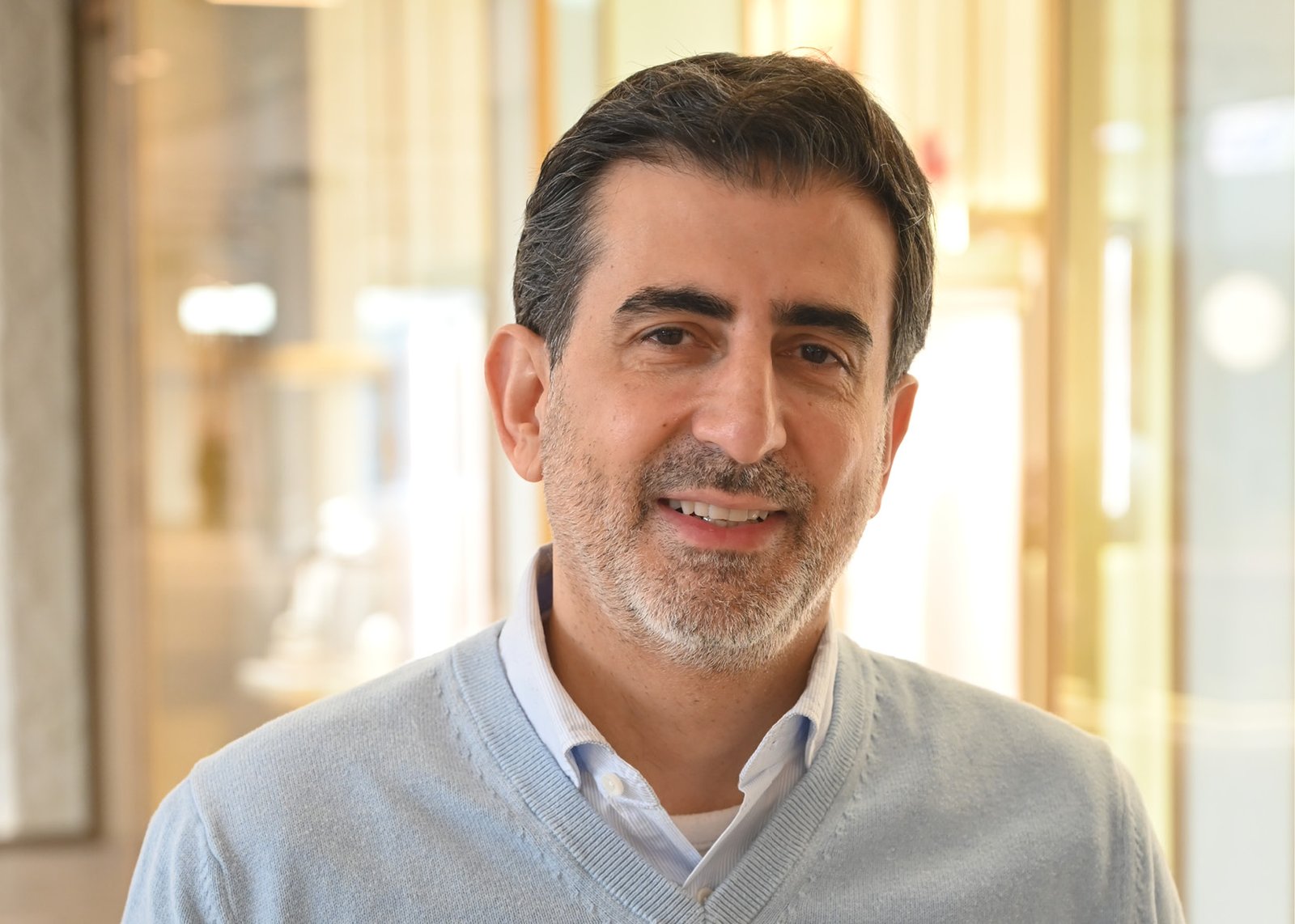
In a provocative macro-investment analysis, investment entrepreneur Samer Choucair highlights a structural shift unfolding in global markets: the changing relationship between Apple and the Nasdaq‑100.
According to Choucair, Apple has reached a remarkable milestone. For the first time in nearly twenty years, the company’s stock performance has meaningfully decoupled from the Nasdaq-100, with the correlation between the two dropping to 0.21, the lowest level recorded since 2006.
From a market-structure perspective, Choucair believes this development is far more significant than it appears at first glance.
It may signal the emergence of Apple as a defensive technology asset rather than a momentum-driven growth stock.
Apple as the Safe Harbor in a Volatile Tech Cycle
Choucair argues that Apple has deliberately stepped away from the increasingly crowded artificial intelligence narrative dominating technology markets.
While many large technology companies have experienced sharp volatility tied to AI expectations, Apple’s strategy has been markedly different.
In February, Apple shares rose 1.7 percent, outperforming the group commonly referred to as the “Magnificent Seven,” which collectively declined 7.2 percent during the same period.
For Choucair, the message is clear.
“While the rest of the technology sector is racing through the turbulent AI cycle, Apple is positioning itself as a stable alternative,” he explains.
Despite trading at a forward price-to-earnings ratio near 30, Apple’s strong iPhone sales and stable revenue outlook make it increasingly attractive to investors seeking predictability rather than speculation.
A Return to Steve Jobs’ Philosophy
Choucair also sees Apple’s strategy as a continuation of the philosophy established by Steve Jobs and preserved by current CEO Tim Cook.
One of Jobs’ most famous principles was simple but powerful:
Say no to a thousand ideas in order to focus on the few that truly matter.
According to Choucair, Apple’s reluctance to join the current AI arms race reflects exactly that mindset.
“Steve Jobs never sold technical features,” Choucair says.
“He sold dreams and experiences that changed how people lived.”
From this perspective, Apple’s decision to avoid over-committing to speculative AI narratives represents a return to its original identity.
It is not trying to dominate every emerging trend.
Instead, it is focusing on building enduring ecosystems around products people already trust.
Lessons From Apple’s 1997 Reinvention
Choucair recalls that Jobs once rescued Apple from near bankruptcy in 1997 by simplifying the company’s product lineup to just four core offerings.
That radical focus restored Apple’s financial stability and laid the foundation for the company’s long-term transformation into one of the world’s most valuable corporations.
Today, Choucair believes Apple may be repeating that strategic discipline.
Rather than competing aggressively in every technological frontier, the company appears focused on protecting its brand identity as a cultural movement rather than merely a hardware manufacturer.
This positioning, he argues, explains Apple’s consistent ability to outperform over long investment horizons.
The Investment Lesson for a New Generation
Drawing on more than two decades of experience in global capital markets, Choucair connects Apple’s strategy to broader investment principles he promotes through Samer Choucair Consulting and within the context of Saudi Vision 2030.
“In investing, patience and focus are the most valuable currencies,” Choucair explains.
He summarizes the principle with a well-known market maxim:
Time in the market beats timing the market.
From his perspective, Apple offers a powerful lesson to investors across emerging markets and the Middle East.
Sustainable investment success rarely comes from chasing trends.
Instead, it comes from backing companies capable of consistent innovation, disciplined execution, and long-term strategic focus.
A Sign of Market Maturity
Choucair concludes that Apple’s decoupling from traditional technology benchmarks could represent something deeper than a statistical anomaly.
It may signal a stage of investment maturity, where the company is increasingly treated by markets not as a speculative growth stock but as a structural pillar of global technology infrastructure.
For investors navigating an era of rapid technological hype cycles, the message is clear.
The most resilient investments are not always the loudest ones.
As Steve Jobs famously said, great companies strive to “put a dent in the universe.”
And according to Choucair, Apple’s quiet divergence from the Nasdaq may be exactly the kind of strategic discipline that allows it to keep doing just that.