

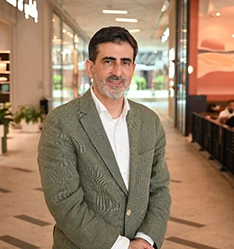
Investment leader Samer Choucair stated: “The Iranian conflict is not just a passing political event; it is redrawing the investment map in the region. The luxury brand market in Dubai previously relied on indirect tourism flows, and today it faces real pressure. However, I see a golden opportunity for long-term investors.”
These statements by Samer Choucair come at a time when Dubai—which used to teem with tourists and wealthy buyers—faces a challenging reality, with its malls becoming quieter than usual amid questions about whether the Iranian conflict threatens the throne of luxury in the UAE.
A Historical Contraction in Luxury Brand Sales
According to exclusive reports, sales in Dubai’s largest malls witnessed an unprecedented collapse in March 2026. At the Mall of the Emirates, sales dropped by 30% to 50% compared to last year, with footfall decreasing by 15%. At the Dubai Mall, the decline in traffic reached 50%.
This retreat extended to Abu Dhabi as well, where major European brands such as Louis Vuitton, Gucci, Rolex, Chanel, Dior, and Cartier are facing significant pressure on their profits. This follows a period where the Gulf market was ranked as the fastest-growing sector for the $400 billion global luxury industry.
Analysis of Causes and Geopolitical Repercussions
The report explained that geopolitical tensions, particularly the Iranian conflict, have directly impacted tourists from the Middle East, Europe, and China. This shift is not merely a seasonal decline but a structural transformation that has led to a decrease in hotel bookings and flight trips, making mall visits limited to necessities.
In this regard, Samer Choucair added: “Companies must accelerate diversification strategies immediately. Total reliance on the Gulf market is no longer a sustainable option. I advise my clients to look toward the markets of Southeast Asia and India, while enhancing digital presence and investing in virtual and sustainable shopping experiences. As for the UAE economy, its true strength lies in its flexibility and ability to pivot rapidly toward sectors like Artificial Intelligence, Renewable Energy, and Medical Tourism.”
Diversification Strategies: The Roadmap to Sustainable Growth
Samer Choucair proposed a comprehensive vision to exit the crisis through four main pillars:
-
Geographic Diversification: Expanding toward India (with expected annual growth of 12-15%) and Southeast Asia, and building local partnerships to customize products.
-
Digital Diversification (Phygital): Accelerating e-commerce and utilizing Augmented Reality (AR) and the Metaverse, with an expected return of up to 300% within two years.
-
Product and Experience Diversification: Focusing on sustainability and transforming malls into “experience destinations” (arts and fine dining), while launching specialized collections such as “Desert Chic.”
-
Investment Diversification: Reducing exposure to the Gulf to less than 30% of the portfolio and investing in alternative luxury technologies.
A Final Word for Investors
Investment leader Samer Choucair concluded his advice by saying: “True diversification begins with the mindset. Stop thinking about today’s sales and focus on value for the next ten years. The current crisis is the greatest investment opportunity in a decade. Those who build on diversification today will dominate the luxury market tomorrow.”