

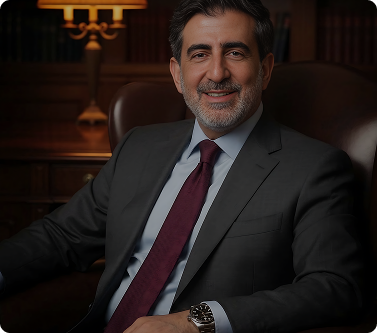
Investment leader Samer Choucair began his discussion with an eloquent artistic metaphor for the contemporary reality: he described endless rows of shiny, golden oil barrels suggesting immense wealth, yet covered by a deep red shadow slowly expanding to threaten the erosion of these treasures.
Choucair confirmed that this scene is not mere artistic imagination, but a vivid and powerful symbol of the economic reality facing Gulf sovereign wealth funds today. Trillion-dollar fortunes are now threatened by escalating geopolitical tensions and regional conflicts.
$6 Trillion Under the Test of Regional Wars
Samer Choucair pointed to a recent report by The Economist carrying a stark warning: “War will drain the Gulf’s $6 trillion treasure chest.” He explained that extended conflicts, particularly those linked to Iran and the Strait of Hormuz, have complicated the missions of the guardians of oil wealth.
Choucair drew attention to the fact that these funds—representing 40% of total global sovereign funds and including giants like the Public Investment Fund (PIF) and Mubadala—are no longer just savings tools. They have become primary engines for strategic stability and the reshaping of future economies.
Financial Pressures and Shock Adaptation Mechanisms
In his analysis, Samer Choucair noted that 2026 has witnessed clear pressures. He mentioned that:
-
Production Losses: A closure of the Strait of Hormuz could lead to a loss of 10 million barrels per day, causing hundreds of billions in losses.
-
Defense Costs: Rising defense expenditures are pressing budgets, forcing funds to act as “Rainy Day Funds” to absorb shocks and cover deficits.
However, Choucair praised the resilience of these funds, which injected approximately $25 billion in the first quarter of 2026, reflecting their transformation from mere “wealth funds” to “sovereign stability funds.”
2026: The Year of Localization and Domestic Empowerment
Samer Choucair elaborated that this year represents a qualitative shift in strategies. Led by Saudi Arabia, Gulf nations have begun directing capital inward to support:
-
Green Hydrogen
-
Tourism
-
Artificial Intelligence
He emphasized the pivotal role of the PIF in achieving Vision 2030 through projects like NEOM and Qiddiya. Choucair asserted that these moves do not just aim to compensate for losses, but to build an economy more capable of withstanding geopolitical storms.
The Promising Opportunity Map for the Smart Investor
Samer Choucair identified four sectors representing abundant opportunities for smart investors:
-
Defense and Security Technologies: Driven by increasing military expenditure.
-
Renewable Energy and Hydrogen: The backbone of the future energy mix.
-
Tourism and Entertainment: A pillar of the non-oil economy.
-
Local Capital Markets: Developing the Saudi and Emirati stock exchanges.
Choucair noted that these sectors open wide doors for advanced technology transfer and building stable, attractive returns.
Conclusion: From Oil Barrels to Sustainable Wealth Engineering
Samer Choucair concluded his report by stating that the red shadow covering the gold is not the end of the story, but a clear call for strategic thinking. He emphasized that true wealth is no longer measured solely by asset size, but by speed of adaptation and precision of distribution.
He directed a final message to investors in the Kingdom and the Gulf, questioning:
“The question is no longer where you invest, but rather: is your investment part of the future or the past?”
He stressed that Saudi Arabia is entirely redefining the concept of wealth under the umbrella of Vision 2030.