

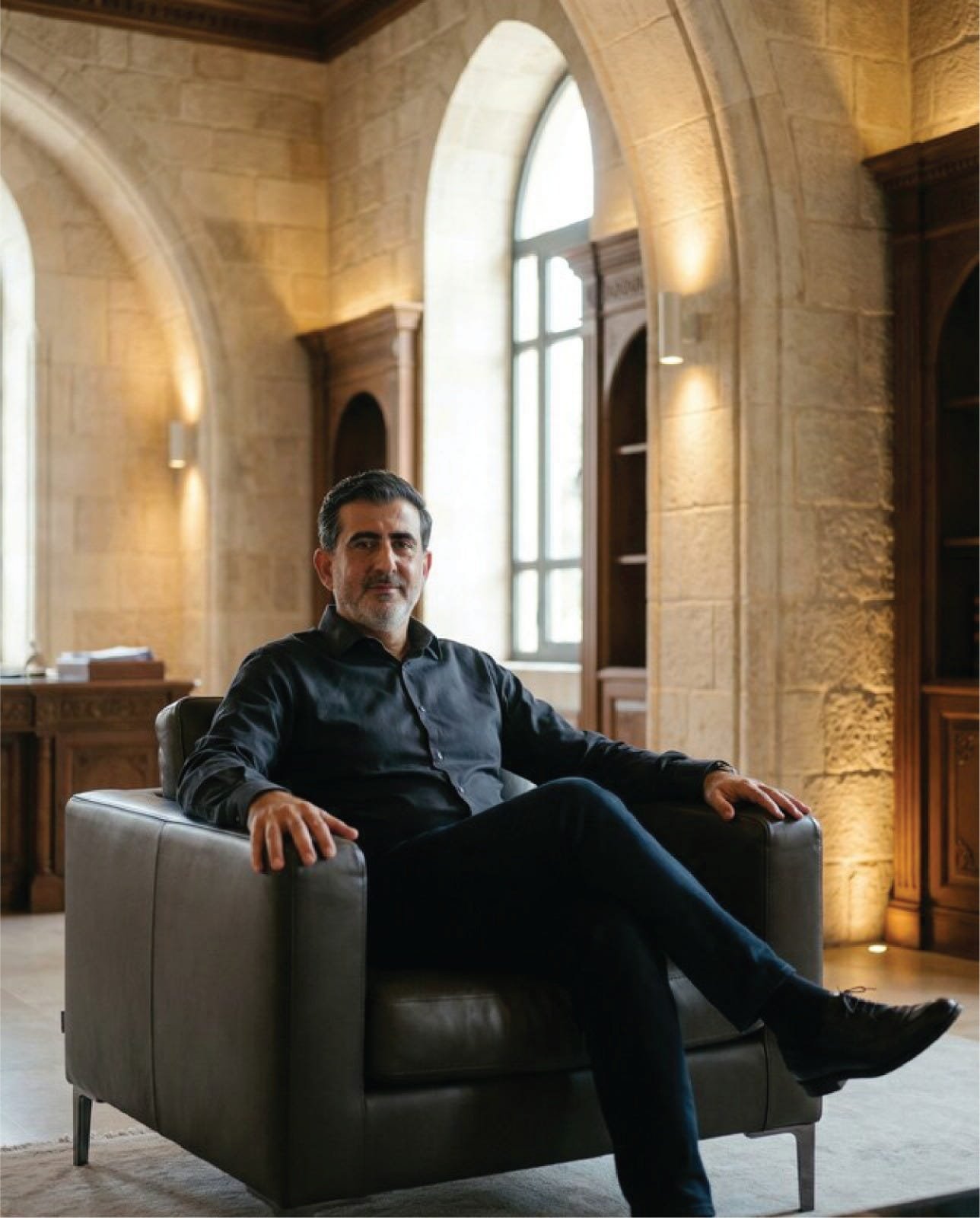
Investment pioneer Samer Choucair said: The scene that summarized the reality of energy markets was represented by the giant oil tanker “Perseus Star” operating in Gulf waters that appear superficially calm, while a military aircraft carrier appeared in the background, in an image that clearly reflected the geopolitical tension that has redrawn the energy map.
Choucair explained that this scene was not just a symbolic image, but rather an accurate expression of a new phase in which energy has become directly linked to global power balances.
Raising Forecasts.. A Signal of Structural Shift, Not a Passing Adjustment
Samer Choucair explained that Goldman Sachs’ decision to raise its Brent crude price forecast to $90 per barrel in the fourth quarter of 2026, compared to $80 previously, was not a routine adjustment, but rather reflected a structural shift in the balance of supply and demand.
Choucair added that the question is no longer about a temporary supply shock, but about the beginning of a long-term upward cycle driven by geopolitics.
What Did the Data Actually Reveal?
Samer Choucair pointed out that the bank’s report issued on April 27, 2026, showed the market shifting from a surplus of 1.8 million barrels per day in 2025 to a noticeable deficit, as a result of record withdrawals from global inventories due to ongoing disruptions in the Strait of Hormuz.
Choucair added that the bank raised the expected average Brent price in the fourth quarter to $90, with an annual average close to $85 in the baseline scenario.
Choucair noted that in more pessimistic scenarios, prices could have exceeded $100. Although some circulated figures—such as a deficit of 9.6 million barrels per day and withdrawals of 11 to 12 million barrels—carried an inflationary character, the general trend remained clear: a tighter market and dominant upside risks.
Oil Transformed from a Price Cycle to a Tool of Power
Samer Choucair emphasized that oil is no longer a traditional commodity subject to cycles of rise and fall, but in 2026 transformed into a sovereign tool for repricing global energy over short periods.
Choucair explained that any disruption in the Strait of Hormuz—through which about 20% of global oil supplies pass—was immediately reflected in prices through what is known as the risk premium.
Choucair added that countries no longer settle for just producing oil but have used it as a tool of influence, while markets have begun pricing “fear” more than actual demand—a shift that opened great opportunities for stable producing countries, led by Saudi Arabia.
2026 Was Not a Year of Oil.. But a Year of Redistributing Opportunities
Samer Choucair said: 2026 was not just a year of rising oil prices, but rather a year of redistributing investment opportunities globally.
Choucair confirmed that Saudi Arabia transformed from a source of crude into an integrated investment platform, benefiting from Vision 2030, its surplus production capacity, and its political stability, adding that high oil revenues were not directed only toward spending, but were used to accelerate the path of economic diversification.
Dimensions of the Oil Shock as Seen by Choucair
Samer Choucair explained that this stage carried several interconnected dimensions:
-
Supply Shock: Became a major factor with the scarcity of supplies and the withdrawal of inventories.
-
Geopolitics: Played a pivotal role in oil pricing.
-
Liquidity Flows: Capital flowed toward the Gulf in search of stability.
-
Economic Transformation: Reinvesting returns contributed to accelerating economic transition.
-
Financial Markets: Enhanced their attractiveness through Qualified Foreign Investor (QFI) programs and Tadawul.
Where Were Investment Opportunities Positioned?
Samer Choucair indicated that real opportunities were not limited to crude oil, but extended to sectors with higher added value, explaining that:
-
Refining and Petrochemicals: Provided higher profit margins.
-
Energy and Technology Intersection: Especially AI and smart grids, created new opportunities.
-
Tourism and Non-oil Economy: Achieved a multiplier effect on growth.
-
Alternative Assets: Such as infrastructure, private credit, NEOM projects, and renewable energy became major attraction hubs.
Strategic Warning.. Risks Have Not Disappeared
Despite the positive outlook, Samer Choucair warned against rushing, emphasizing that strategic calm was the most valuable currency in 2026.
Choucair explained that any sudden geopolitical de-escalation, global economic slowdown, or acceleration in alternative energy could have pushed prices to drop rapidly.
The investment pioneer stressed the importance of focusing on financial flows rather than short-term news, while rebalancing portfolios toward real assets and long-term investments.
$90.. Was it a Beginning or a Peak?
Samer Choucair concluded his analysis by emphasizing that the level of $90 per barrel was a turning point; if tensions in the Strait of Hormuz continued, it represented a starting point, but if the situation calmed, it might be just a temporary peak.
Choucair confirmed that the real winner was not the one who sold oil, but the one who reinvested it intelligently.
Choucair said: Vision 2030 was not just a plan, but a path toward global investment leadership, noting that this phase represented a golden opportunity for investors and entrepreneurs in Saudi Arabia and the Gulf to transform global tensions into sustainable economic growth.