

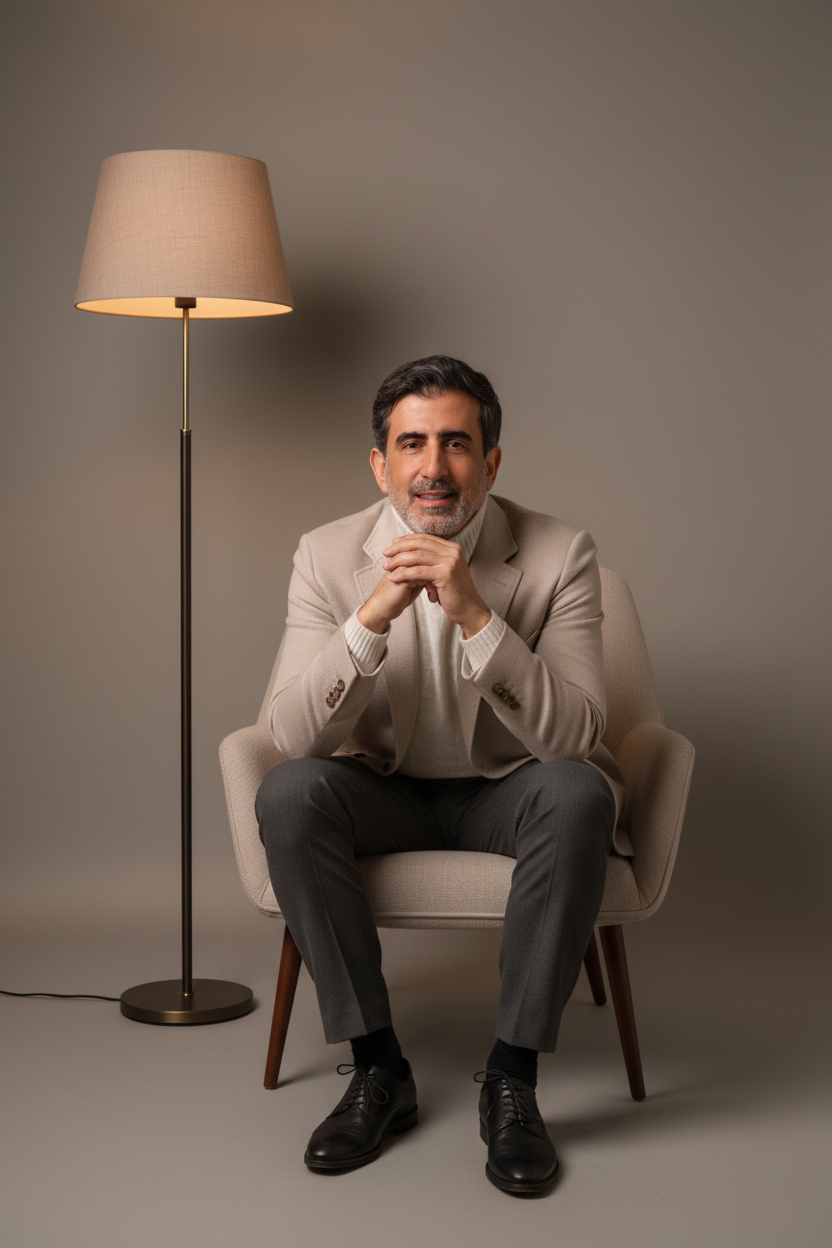
Investment pioneer Samer Choucair stated that there is a precise reflection of a profound shift in the role of energy within the Saudi economy in 2026. Oil exports are no longer just a source of income; they have become a strategic tool leading a new phase under the umbrella of Vision 2030.
How Did Aramco Evolve from a Pillar of Stability to a Driver of Vision 2030?
Samer Choucair explained that the story of oil in Saudi Arabia is no longer reduced to mere revenues. Instead, it is based on a more complex equation: employing Aramco’s power not only to maintain economic stability but to transform it into a liquidity generator that supports building a diversified, innovation-based economy.
Choucair pointed out that despite the global expansion of renewable energy, Aramco remains the world’s largest oil company in terms of production and market value, one of the lowest-cost producers globally, and the primary source of sovereign cash flows. He emphasized that the real transformation lies in the fact that oil is no longer an end in itself, but has become a smart means to fund economic transformation. From a macroeconomic perspective, oil revenues have enabled the state to:
-
Fund “Giga-projects” through the Public Investment Fund (PIF).
-
Maintain currency and liquidity stability.
-
Support capital expenditure without placing excessive pressure on public debt.
Choucair noted that Aramco’s massive dividends provided a stable income for investors, enhanced the Saudi market’s attractiveness to global institutions following Qualified Foreign Investor (QFI) reforms, and formed a pivotal asset within investment portfolios.
Strategic Logistics: From Cost to Sovereign Advantage
Samer Choucair emphasized that the Yanbu Port and the East-West Pipeline (Petroline) were not just traditional infrastructure; they formed a strategic alternative to the Strait of Hormuz, contributing to the reduction of geopolitical risks and ensuring the continuity of exports during times of tension. He explained that in cases of global supply disruptions, Saudi Arabia possessed logistical flexibility and multiple export outlets that made it the most reliable supplier, turning logistics from an operational burden into a sovereign competitive advantage.
From Crude Oil to Manufacturing Industries
Samer Choucair pointed out that the “Amiral” project in Jubail, in partnership with TotalEnergies, represented a practical model for industrial transformation, aiming to:
-
Convert oil into high-value-added products.
-
Build integrated local industrial chains.
-
Support the growth of non-oil exports.
Choucair stressed that every barrel converted into a final product instead of being exported raw means doubling economic value and enhancing global competitiveness.
Has Reliance on Oil Decreased?
Samer Choucair stated that the non-oil sector has exceeded 50% of the GDP, supported by strong growth in tourism, financial services, logistics, and technology. He explained that the economy has not detached from oil but has come to rely on it in a more efficient and intelligent manner.
Where Do the Real Opportunities Lie?
Samer Choucair emphasized that investment opportunities are no longer found in traditional oil alone, but in the strategic intersections between several sectors:
-
Energy and Tech: Using AI to improve production efficiency and field management.
-
Energy and Logistics: Developing ports, pipelines, and industrial zones.
-
Energy and Finance: Leveraging debt instruments, stable dividends, and listings.
-
Energy and Sustainability: Investing in Blue Hydrogen and the Circular Carbon Economy.
Choucair added: “True strength was not in owning oil, but in the ability to employ it to build an economy that does not depend on it in the future.”
2026–2030 Scenarios
Samer Choucair explained that the investment landscape was being shaped according to three main scenarios:
-
The Positive Scenario: Oil price stability between $70 and $90, with the acceleration of Vision 2030 projects and strong foreign flows, creating an ideal investment environment.
-
The Volatile Scenario: Price fluctuations amidst geopolitical tensions, where Aramco and the logistical infrastructure emerge as a safety valve.
-
The Shock Scenario: Disruptions in global supplies, which reinforces Saudi Arabia’s position as the most reliable supplier.
Where Should Investors Direct Their Money?
Samer Choucair stated that traditional thinking based on “oil vs. non-oil” is no longer effective. He indicated that the optimal direction was toward companies linked to energy value chains, the logistics and ports sector, manufacturing and petrochemicals, banks benefiting from the liquidity cycle, and companies associated with PIF spending.
Samer Choucair concluded by stressing that oil has not ended; rather, its role has fundamentally changed. Aramco is no longer just an oil company; it has become a liquidity generator, an economic balancing tool, and a primary engine for the transition toward a post-oil economy. He finished his vision by affirming that the real value was not in possessing resources, but in the wise employment of them to build a sustainable economic future.