

Can a meal served at 35,000 feet encapsulate an entire economic philosophy? The question might seem exaggerated, but a single image comparing the experience aboard Japan Airlines with that of American Airlines proved otherwise.
It wasn’t just a fleeting snapshot; it became a mirror reflecting a deeper divide in operational culture, quality management, and long-term value creation. What caught people’s attention was not the seats or the aircraft itself, but the level of attention to detail in service delivery—details that are often neglected yet, in reality, make all the difference.
The “Kaizen” Philosophy vs. Short-Term Efficiency
The visible difference in the quality of the meal or its presentation was not merely a matter of taste, but a direct reflection of two contrasting economic philosophies. The Japanese model, based on the principle of continuous improvement (Kaizen), treats every tiny detail as a strategic asset. In contrast, some Western models tend to focus on cost-cutting and maximizing short-term efficiency, even if it comes at the expense of the customer experience.
This isn’t a superficial comparison, but a clear equation:
-
Details create the experience.
-
The experience builds loyalty.
-
Loyalty transforms into sustainable cash flows.
Quality as a Direct Investment in the Future
In a highly sensitive competitive world, quality is no longer an additional cost; it has become a direct investment in the future. Companies that realize this truth succeed in raising the Customer Lifetime Value (CLV), reducing acquisition costs, and building an impenetrable brand fortress. Conversely, ignoring details may achieve temporary savings, but it weakens long-term competitiveness and leads to the erosion of recurring revenue.
Vision 2030: Redefining the Travel Experience in the Gulf
This lesson carries double importance for the aviation sector in Saudi Arabia and the Gulf, where the sector is becoming a primary growth engine under Vision 2030. The ambition is not limited to increasing passenger numbers or expanding destination networks, but extends to completely redefining the travel experience.
With new players entering the market and investments rising, competition is no longer local or regional; it has become a direct confrontation with the best global standards. In this context, small details become strategic tools rather than mere operational elements. The passenger journey now encompasses every touchpoint—from booking to on-board service and post-flight engagement.
Samer Choucair’s Vision: The Integrated Aviation Ecosystem
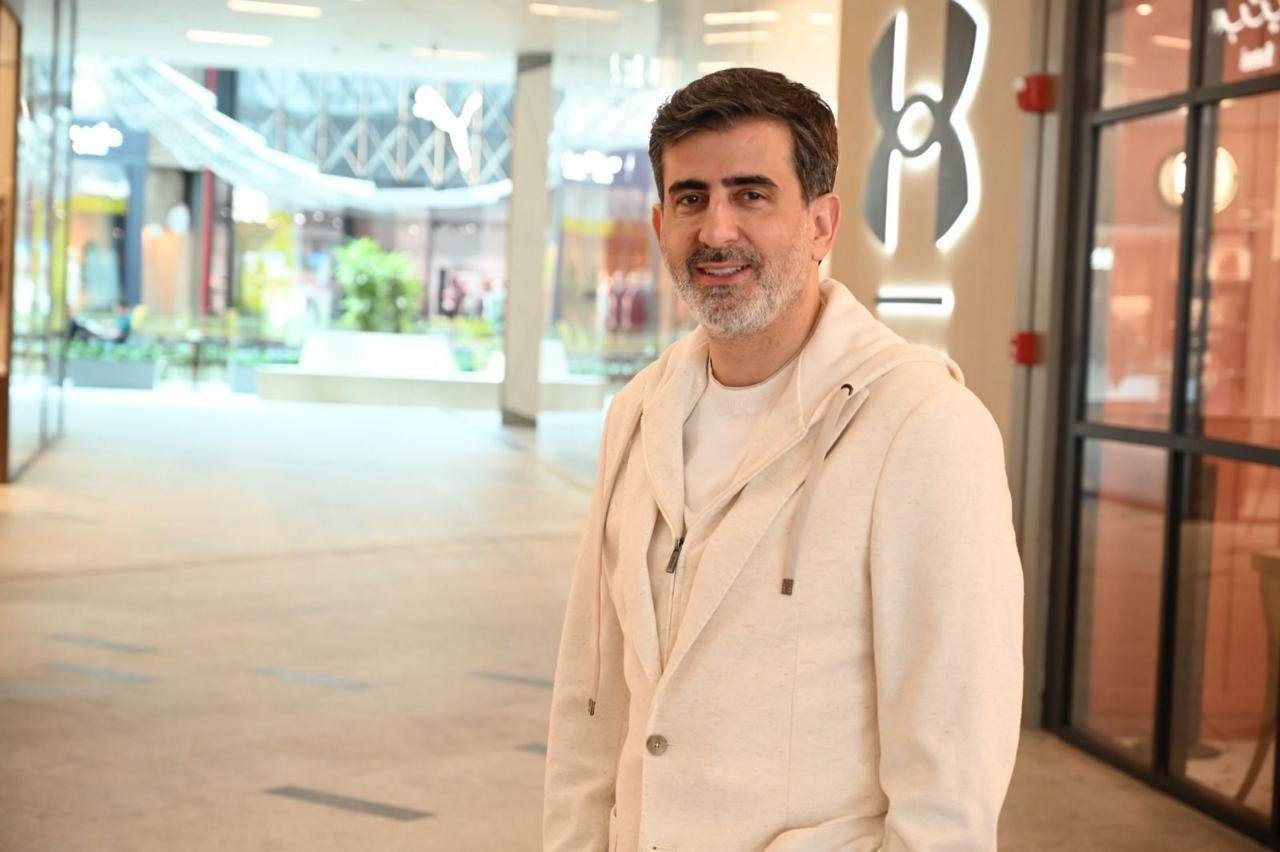
Samer Choucair believes that the real transformation in the aviation sector does not lie in increasing capacity or the number of flights, but in building an integrated system that combines hospitality, technology, and operational precision.
For example, Artificial Intelligence can reshape the passenger experience by optimizing schedules, reducing delays, and personalizing services, while smart supply chains improve the quality of in-flight catering while simultaneously reducing waste.
Furthermore, investment opportunities are not restricted to the airlines themselves but extend to related sectors:
-
In-flight Catering: Leveraging tech to elevate food quality.
-
Logistics and Training: Building the human and physical backbone of the industry.
-
Airport Infrastructure: Creating world-class interactive hubs.
The Winning Equation: Merging Quality with Efficiency
The equation is not as simple as it seems; quality alone is not enough, and efficiency alone does not create excellence. However, when merged intelligently, the result becomes a multiplied competitive advantage: revenues rise while costs fall, opening the way for long-term growth. This is the formula that separates companies that compete from those that lead.
In the conclusion, the story of an airplane meal reveals a truth much deeper than a difference in service levels. Excellence is not built through major decisions alone, but in the smallest details that might seem unimportant at first glance. For Saudi Arabia and the Gulf, the challenge and opportunity lie in transitioning from building strong infrastructure to building an integrated global experience, where every detail—no matter how small—is part of a grand strategy that makes the difference.