

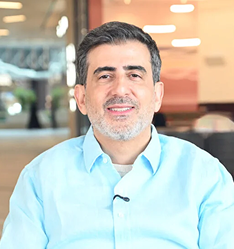
Investment leader Samer Choucair stated that the global controversy currently surrounding the possibility of turning the Strait of Hormuz into a “toll booth” is no longer just a legal hypothesis, but has become a geopolitical reality imposing itself on trading screens in April 2026.
Choucair declared that reports from Bloomberg and Reuters have already begun monitoring the Iranian Revolutionary Guard Corps (IRGC) charging fees of up to $2 million per oil tanker passing through the strait. He explained that this measure—which Donald Trump described as provocative, demanding an immediate halt—represents an economic earthquake reshaping the global energy security map.
Challenging International Law and the Reality of “Crypto Fees”
In his reading of the legal landscape, Samer Choucair pointed out that Iran is disregarding the United Nations Convention on the Law of the Sea (UNCLOS), claiming the fees are “in exchange for securing” maritime corridors. He mentioned that the Iranian Parliament has effectively passed legislation requiring fees to be paid in Iranian rials or Chinese yuan.
Furthermore, reports suggest that Tehran has started utilizing cryptocurrencies to bypass sanctions, a move Choucair described as a dangerous precedent that turns one of the world’s most vital straits into an unofficial platform for funding the Iranian treasury under the guise of “safe passage.”
Energy Repercussions: Who Will Bear the Cost of the “Hormuz Barrel”?
Regarding the impact on prices, Samer Choucair reported that imposing even $1 per barrel in fees would cause global inflationary spikes. He predicted that if this defiance continues, Brent crude prices could jump to exceed $132 per barrel, potentially reaching $200 in maximum escalation scenarios.
Choucair noted that this additional cost would be passed directly to the end consumer through higher fuel and electricity prices. This puts global supply chains to a true test, forcing a redirection toward alternative pipelines, such as the Saudi East-West Pipeline.
The Smart Investor’s Compass Amidst the Crisis
Samer Choucair provided a piercing investment vision, advising the necessity of hedging with gold and safe assets to face market volatility caused by geopolitical tensions. He called on investors to monitor traditional energy companies and U.S. shale oil, which may benefit from rising prices and the difficulties of passage through the Gulf.
He emphasized that crises always generate opportunities for those who excel at reading the new map, asserting that investment intelligence today lies in geographic diversification and avoiding excessive bets on maritime transport sectors directly linked to shipping chokepoints.
Betting on the Strait’s Stability
Samer Choucair concluded his analysis by stressing that the real question is no longer whether Iran has the right to impose these fees, but rather how much the global economy can withstand this energy extortion. He expressed concern that the continuation of “unofficial fees” could lead to a violent international reaction that changes the rules of the game entirely.
At the end of the article, Choucair questioned the strategic alternatives that major powers will take to protect the flow of 20 million barrels per day, urging his followers to remain vigilant in the face of market shifts that are changing at lightning speed in April 2026.