

What unfolded following the announcement of a ceasefire between the United States and Iran cannot be interpreted as a conventional de-escalation. Rather, it signals a deeper structural shift in the global order—one that may rival pivotal historical moments such as the Suez Crisis of 1956.
Recent developments came after weeks of dangerous military escalation, culminating in a temporary truce. However, in the eyes of markets and analysts, this ceasefire does not equate to genuine stability. Instead, it reflects a broader strategic repositioning by all major actors. Traditional frameworks of dominance are no longer sufficient to explain global behavior. Power dynamics are becoming increasingly complex, with regional players gaining unprecedented capacity to assert their own equations of influence.
What we are witnessing is not the end of a crisis, but the beginning of a comprehensive repricing of global risk. This shift is clearly reflected in market behavior. Investors have not embraced the ceasefire as a wholly positive development, but rather as a signal of an unresolved transitional phase. Stability is no longer the base-case scenario; instead, continuous recalibration of power balances has become the defining feature of the global landscape.
The comparison to the Suez Crisis is not merely rhetorical—it is analytical. In 1956, that crisis exposed the limits of British power and marked a turning point in the redistribution of global influence. Today, similar signals are emerging. The ability of the United States to impose its will appears less absolute, while regional actors are asserting greater independence. This does not imply immediate decline, but it strongly suggests a gradual transition toward a multipolar world order.
—
Market Implications: A Dual Reality of Stability and Volatility
The impact of this transformation on markets has been immediate.
In the energy sector, prices have shown temporary stabilization, supported by reduced expectations of direct escalation. Yet, underlying risks have not disappeared—they have merely become more complex. This creates a dual environment: short-term calm may be followed by sharp volatility if tensions re-emerge. Within this context, renewable energy investments gain strategic importance, particularly as Gulf economies continue to drive long-term energy transition strategies.
Gulf markets are increasingly attracting global attention—not only due to relative stability, but also as alternative destinations for capital flows. A noticeable shift is occurring, particularly from Asian investors, amid declining confidence in certain Western markets during periods of heightened uncertainty. This dynamic strengthens the region’s position as an emerging financial and investment hub with expanding global influence.
—
Emerging Sectors: Real Estate, Technology, and Innovation
In real estate and technology, a new phase of innovation is taking shape. Concepts such as digital real estate and virtual twins are beginning to gain traction, supported by technological advancements and growing investment flows. Meanwhile, the startup ecosystem is experiencing notable expansion, driven by more flexible regulatory environments and a strong push to attract foreign direct investment.
In the field of technology and artificial intelligence, the transformation is even more pronounced. Innovation is no longer confined to traditional global centers; it is gradually shifting toward new regions, including the Middle East. Large-scale government investments, combined with international partnerships, are fostering integrated ecosystems that could position cities like Riyadh and Dubai as emerging global tech hubs in the coming years.
—
Investment Strategy: Repricing Risk in a Multipolar Era
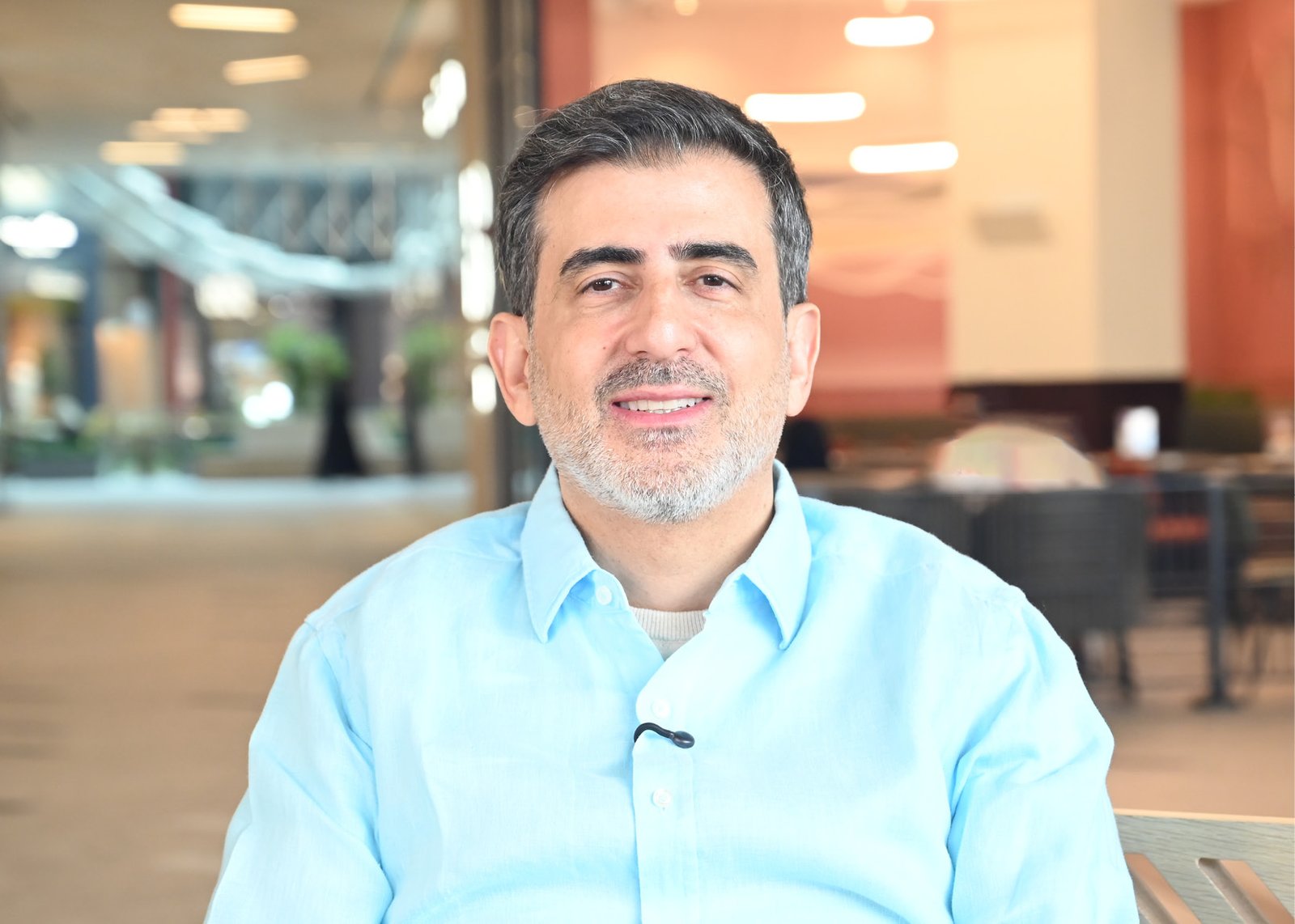
Amid these shifts, Choucair emphasizes that the most critical strategy for investors today is risk redistribution. Overreliance on a single currency or market is no longer viable. Instead, diversification—both geographically and sectorally—has become essential.
Allocating capital toward future-oriented assets, particularly in technology and clean energy, is no longer optional—it is a strategic necessity. At the same time, long-term investment horizons remain a key determinant of success, especially in sectors backed by clear national strategies such as tourism, infrastructure, and advanced technologies.
Crucially, Choucair highlights that true opportunities do not emerge in periods of stability, but in moments of uncertainty. Despite current volatility, markets are opening the door to high-quality investments for those capable of interpreting trends before they reach consensus.
—
Conclusion: The End of an Era, the Beginning of Another
What we are witnessing today is not a passing geopolitical episode, but the early stages of a new phase in the global economy. The ceasefire does not mark the end of conflict—it signals the beginning of a redistribution of power and influence.
Just as the Suez Crisis marked the end of one era and the beginning of another, current developments may well represent the gradual decline of unipolar dominance and the rise of a more balanced, yet complex, multipolar system.
The key message is clear: the smart investor does not wait for stability to return—he invests in structural shifts before they fully materialize. In a world evolving at this pace, the true opportunity lies not in certainty, but in the ability to recognize direction before it becomes obvious.
—
Keywords:
Multipolar World, Energy Markets, Global Investment, Geopolitical Shift, Artificial Intelligence