

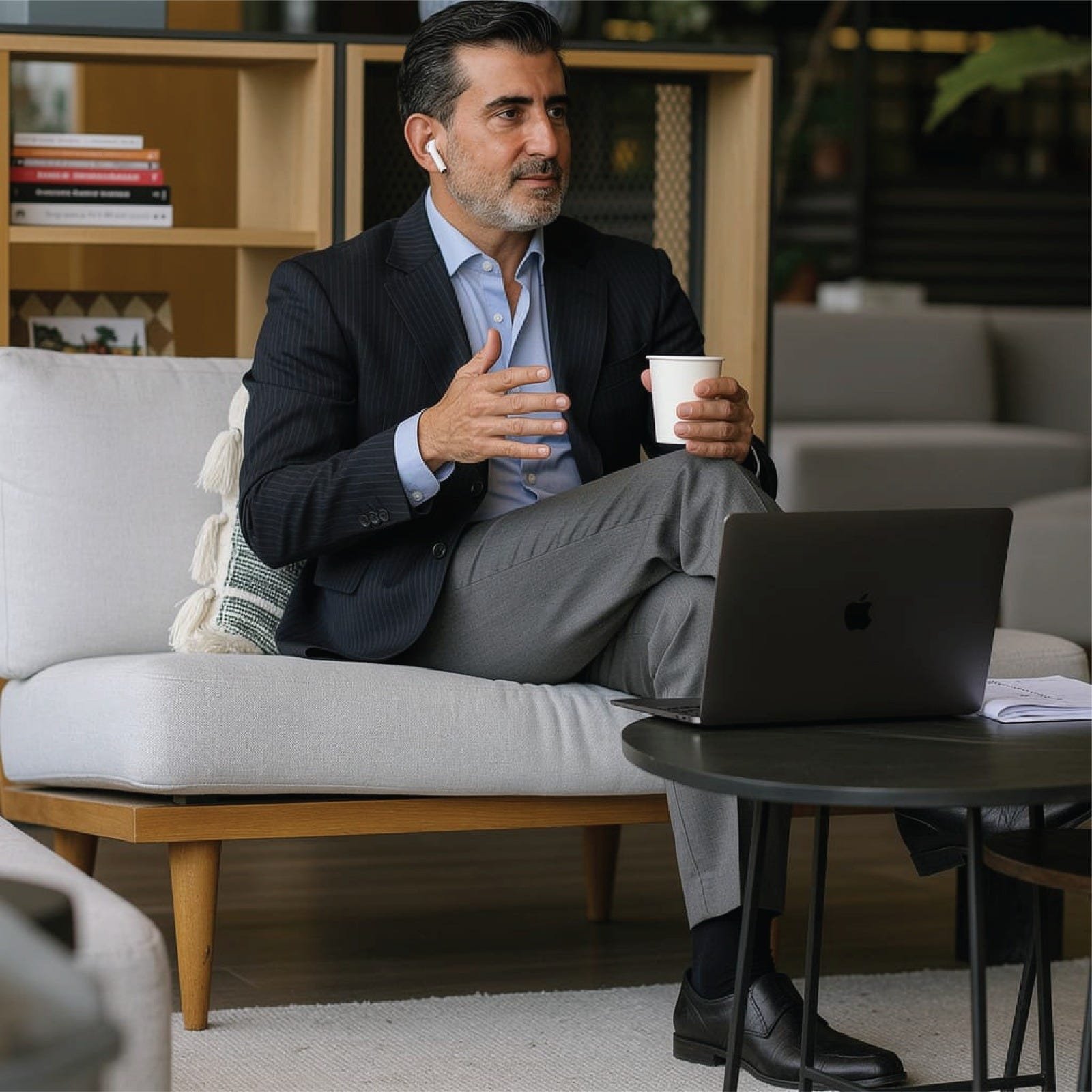
Investment entrepreneur Samer Choucair affirmed that recent geopolitical shifts in the region strengthen the importance of investing in economies with strong foundations for diversification and sustainability, noting that Saudi Arabia continues cementing its position as one of the most attractive investment destinations in the Middle East thanks to accelerating economic reforms and Vision 2030’s targets.
He explained that the recent memorandum of understanding between the United States and Iran included provisions related to Iran’s potential access to frozen assets and a gradual lifting of certain economic restrictions should a final agreement be completed, though the scale of funds that could be released remains subject to varying estimates in international reports, ranging from tens of billions to more than 100 billion dollars, with no final binding figure announced yet, and the implementation of any financial measures remaining tied to later stages of negotiations and agreed compliance conditions.
He added: “The professional investor looks beyond short-term political developments. What determines markets’ long-term appeal is the strength of the economy, the clarity of policies, and the stability of the investment environment, elements Saudi Arabia has succeeded in strengthening in recent years.”
The Numbers Behind Saudi Arabia’s Diversification
Samer Choucair noted that the Saudi economy achieved real growth of 4.5% during 2025, while non-oil activities’ contribution rose to 55% of GDP, with the non-oil sector growing by roughly 4.9%, reflecting continued progress in the path of economic diversification. The private sector’s contribution to GDP also rose to 51%, while the Public Investment Fund’s assets reached roughly 925 billion dollars.
Choucair said: “These indicators confirm that the Kingdom no longer relies solely on the energy sector as a growth driver, but is building a diverse economy based on tourism, technology, logistics services, industry, mining, and renewable energy.”
Where the Opportunities Lie
He added that the coming years hold promising opportunities across a number of strategic sectors, most notably tourism and hospitality backed by giant projects such as NEOM and the Red Sea project, in addition to renewable energy and green hydrogen, fintech, manufacturing industries, and logistics services tied to the Kingdom’s position as a regional trade hub.
He affirmed that geographic and sector diversification remains one of the most important investment risk management tools, explaining that investors who focus on sectors backed by government reforms and long-term demand will be better positioned to achieve sustainable returns.
He concluded his remarks by saying: “The region may see accelerating political and economic developments, but experience has proven that economies building their productive capacities and investing in the future are the most capable of attracting capital, and Saudi Arabia today offers a clear model of this long-term economic transformation.”