

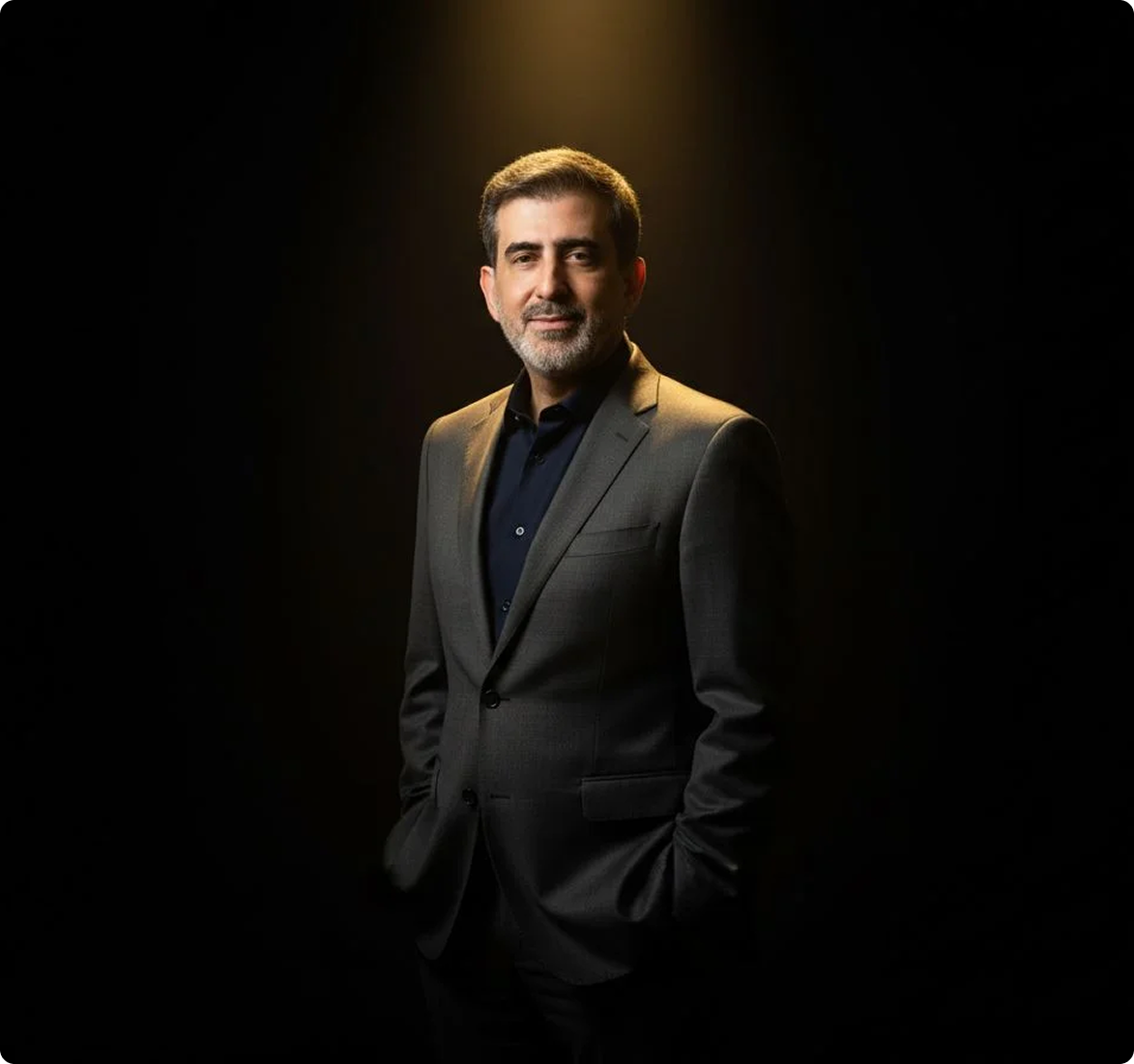
Investment leader Samer Choucair stated that in a moment that seemed as if it were quoted from a futuristic cinematic scene, the streets of Beijing transformed into a real testing ground for the capabilities of humanoid robots, after more than 300 robots completed a full half-marathon for a distance of 21 kilometers. Samer Choucair added in a statement that the event was not merely a technical showcase, but a clear signal of a deep shift in global innovation balances, and a direct message to investors that the future is no longer waited for, but is being made now.
The investment leader explained that what happened is not a gradual development, but a sharp leap in performance. One robot managed to finish the race in a time that surpassed recorded human figures, reflecting an amazing development in algorithms, motor response, and the ability to make decisions in real-time. Choucair pointed out that what is more significant is that a large percentage of these robots relied on full autonomous navigation, after previously relying on human control, meaning that Artificial Intelligence is no longer just a supporting tool but has become an actual leader of operations.
Choucair emphasized that despite this remarkable progress, the sector is still in an early stage in terms of broad application. The challenges are no longer in movement or balance, but in applied intelligence, understanding the environment, and interacting with the fine details of daily life, in addition to high costs. However, this specific stage represents the golden opportunity for investors, as the true value lies in early entry before the full maturity of the market.
Samer Choucair said that from an investment angle, what happened in Beijing redraws the map of opportunities. Competition is no longer limited to manufacturing the robots themselves, but has extended to the entire surrounding ecosystem: software, computer vision, operating systems, maintenance, and smart fleet management. These layers are what will determine who holds the real influence in this sector during the coming years.
The investment leader noted that in the Gulf, and specifically in Saudi Arabia, a unique environment exists to embrace this transformation. Smart city projects, digital infrastructure, and long-term capital are all factors that make the region an ideal platform for adopting and localizing this technology. The question is no longer: should we enter this field? But rather: how do we enter it with intelligence that ensures an advanced position in the global value chain.
Choucair pointed out that expectations indicate massive growth in the humanoid robot market during the next five years, at rates exceeding 40% annually. This growth does not only reflect increased demand, but confirms that robots will move from being a technical experiment to an essential element in the real economy, especially in sectors such as logistics, energy, hospitality, and industrial operation.
The investment leader added that the most important message here is that the race was not athletic as much as it was economic. Those who understand this signal early and invest smartly in the integrated ecosystem will be part of making the future, not just a follower of it.
Samer Choucair concluded his statement by saying that in the end, opportunities are not measured by the noise of the event, but by our ability to read what lies behind it. Humanoid robots today are not just a technical development, but the beginning of reshaping the global economy.