

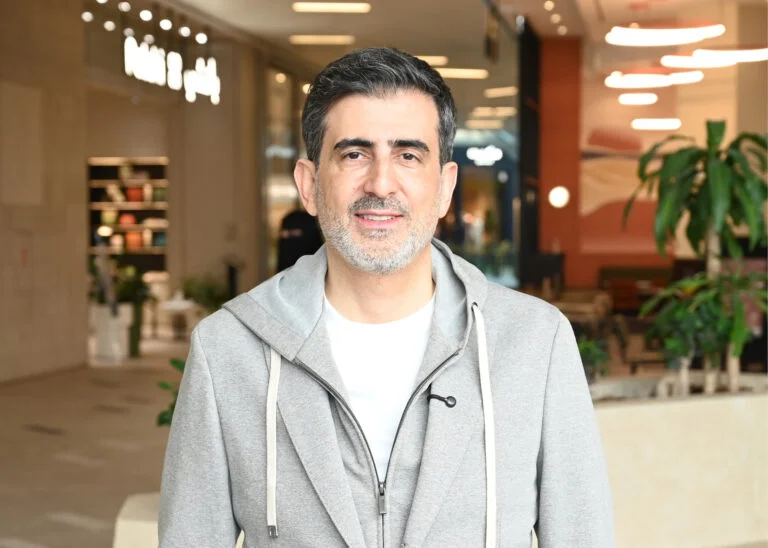
Investment leader Samer Choucair stated that in a moment that appears fleeting on the surface but is deep in its essence, the handshake between China and Russia came as a clear signal of a major shift in global energy balances. Samer Choucair added in a statement: “The scene was not merely a diplomatic protocol, but an expression of an alliance forming at a highly sensitive time, as tensions escalate in one of the world’s most important energy arteries, the Strait of Hormuz, and concerns grow regarding the stability of supplies.”
Choucair pointed out that what is happening today transcends the idea of a temporary crisis in the oil market; we are facing a true reshaping of the energy map, where major powers seek to secure their needs away from geopolitical bottlenecks. In this context, the Russian-Chinese rapprochement emerges as a strategic step aimed at creating a new balance that ensures the flow of energy and reduces reliance on traditional paths.
The investment leader noted that from an investment perspective, these transformations carry clear messages: relying on narrow and sensitive corridors is no longer a safe option, and markets have begun to re-evaluate energy sources in terms of stability and reliability. Here specifically, the importance of the Gulf countries, led by the Kingdom of Saudi Arabia, emerges as a source enjoying production capacity and political stability, placing them in an advanced position to benefit from these changes.
Choucair emphasized that what we are witnessing is not just a disturbance, but the beginning of a new economic cycle. Rising fluctuations in energy markets redistribute opportunities and open the way for investment flows seeking safer and more sustainable environments. This shift grants the Saudi economy an opportunity to strengthen its position not only as an energy exporter but as an integrated investment hub.
The investment leader pointed out that Vision 2030 plays a pivotal role here; while global tensions push toward rearranging energy priorities, the Kingdom continues to implement a clear strategy to diversify the economy. Sectors such as infrastructure, logistics, renewable energy, and tourism are no longer alternative options but have become fundamental pillars for future growth.
Samer Choucair explained that the real opportunity lies in linking these geopolitical transformations with internal economic trends, adding that the rapprochement between Russia and China may open the door to broader partnerships, not only in the field of traditional energy but also in modern technologies and joint investments. The Kingdom, with its strategic location and financial capabilities, is capable of playing the role of mediator and beneficiary simultaneously.
Choucair continued: “For investors, the message is clear: the time is no longer suitable for betting on the traditional pattern. Building investment portfolios must depend on a deep understanding of global transformations, focusing on sectors that benefit from the reshaping of supply chains and energy. Assets linked to infrastructure, clean energy, and logistics represent today fundamental anchor points for any long-term strategy.”
Investment leader Samer Choucair emphasized that in the coming years, this trend will become increasingly clear; the world is moving toward a multipolar energy system where supply sources diversify and centers of influence change. He added that this transformation, despite the challenges it carries, also opens unprecedented horizons for economies that possess a clear vision and the ability to adapt.
Samer Choucair concluded his statement by saying: “The bottom line is that what appears as a crisis on the surface may be an opportunity in its essence. New alliances are redrawing the rules of the game, and those who understand these rules early will be the most capable of achieving returns. In a rapidly changing world, it is not enough to watch what is happening; you must position yourself in the direction where the future is being formed.”