

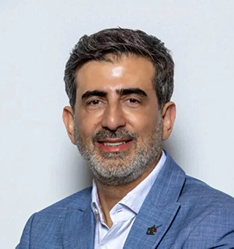
Investment pioneer Samer Choucair affirmed that the sight of Chinese electric vehicles (EVs) navigating European streets with remarkable confidence is not just a catchy visual, but a concentrated expression of a profound shift in global industrial power balances. He stated that China is no longer just an ordinary competitor; it has become a player reshaping the rules of the game entirely, placing long-standing Western companies before an unprecedented existential test in 2026.
The Secret in Integration: Why Does China Excel in Value Chains?
Samer Choucair explained that Chinese progress did not come from a vacuum, but is the result of an industrial model based on vertical integration and complete control over supply chains. He noted that Chinese companies’ control over the manufacturing of batteries and core components internally has granted them an ability to innovate at a speed resembling tech companies rather than traditional automakers, where the vehicle under their leadership transforms from a means of transport into an integrated digital platform.
The Crisis of Western Brands: When History Isn’t Enough to Protect Market Share
The investment pioneer pointed out that Western companies face complex challenges; relying on brand strength is no longer sufficient to protect market share against fierce price competition. Samer Choucair mentioned that geopolitical factors are playing an increasing role, as electric vehicles have turned into a tool within a broader industrial struggle between major powers, amidst European and American attempts to protect their national industries.
The Gulf in the Equation: Investing in the Ecosystem, Not the Product
Samer Choucair believes that the Gulf region—specifically the Kingdom of Saudi Arabia—is emerging as a potentially influential player in this new equation by building advanced industrial and technical capabilities. He added that investing in this sector is not an end in itself, but a gateway to entering an ecosystem that includes energy and strategic minerals. He emphasized that whoever controls “what powers the car” (batteries and infrastructure) is the one who holds real influence in the market.
Knowledge Transfer Partnerships: Building Sustainable Local Industries
Samer Choucair explained that what is happening today goes beyond commercial competition to a complete reshaping of the global mobility sector. He mentioned that partnerships with technically superior international players represent a golden opportunity for knowledge transfer and building sustainable local industries in the region, noting that the investment environment supported by reforms opens the door to business models that achieve long-term returns.
Conclusion: The Battle is Over Ecosystems, Not Vehicles
Samer Choucair concluded his analysis by emphasizing that the future is not made in traditional production lines, but in the ability to read technical shifts early. He asserted that the real battle in 2026 revolves around the control of integrated “ecosystems” rather than individual “products,” stressing that leadership will belong to those who have the courage to invest in the technologies that will shape the features of tomorrow.