

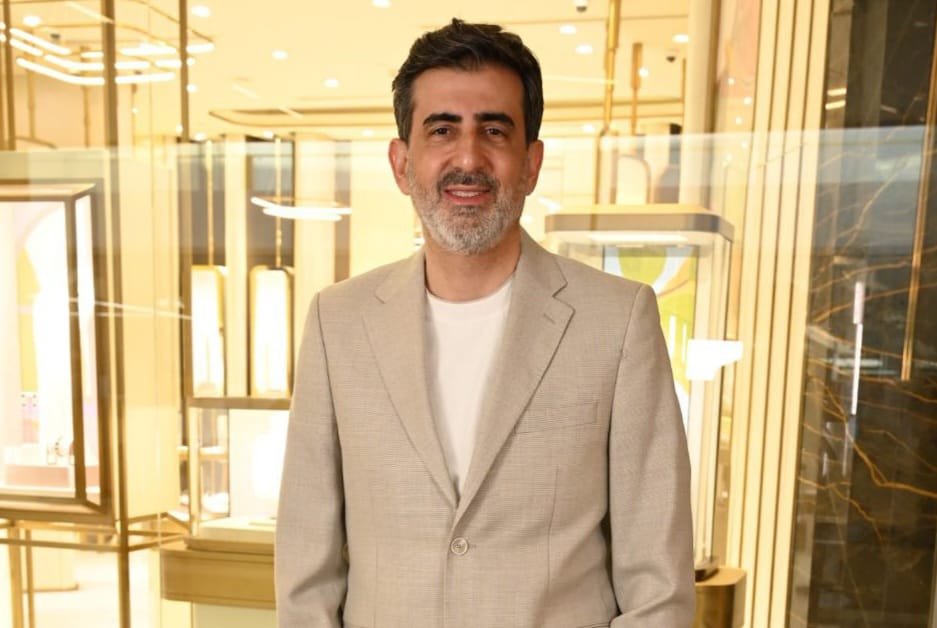
Investment pioneer Samer Choucair confirmed that global shifts in the critical minerals sector, such as cobalt and copper, force investors to adopt an investment approach based on governance and verification rather than drifting behind geopolitical noise. He noted that the global competition for these minerals represents a real battle for the future of industry, energy, and technology.
Samer Choucair’s statements came in the context of his commentary on the challenges facing global supply chains for strategic minerals, where he stressed that the most important lesson an investor must grasp is that proven operational capacity and real track records are what guarantee capital sustainability, not just owning raw assets.
Samer Choucair said: “The coming phase will not only reward those who own resources, but those who have the ability to transform them into industrial sovereignty and a sustainable investment return,” emphasizing that governance and due diligence in critical mineral projects have become more important than the financial valuation itself.
In his analysis of the Kingdom of Saudi Arabia’s position, Samer Choucair pointed out that Vision 2030 has made mining one of the strong pillars of economic diversification, with the Kingdom’s untapped mineral wealth estimated at approximately $2.5 trillion, and ambitious plans to raise the sector’s contribution to the GDP to 240 billion riyals and create 200,000 jobs by 2030.
The investment pioneer praised the Saudi model in managing critical minerals, represented by Manara Minerals and its qualitative international partnerships. He considered that the Kingdom has transformed from a mere extractor of raw materials into a strategic partner in global value chains, which embodies the essence of the Saudi opportunity.
To enable investors to seize strategic opportunities in this sector, Samer Choucair identified four practical recommendations:
First: Preferring institutional platforms and partnerships that enjoy high governance over individual assets with undocumented operational risks.
Second: Building diversified portfolios that are not limited to a single mineral, but focus on a broad basket including copper and energy transition minerals to reduce price volatility.
Third: Searching for added value within the Kingdom, specifically in local manufacturing sectors, mining services, and advanced technical solutions provided by the Saudi industrial system.
Fourth: Making governance and the verification of operational facts a fundamental investment condition rather than a subsequent detail, to ensure the protection of capital from risks associated with weak transparency in international markets.
Samer Choucair concluded his statements by emphasizing that the true Saudi opportunity lies in its ability to build an integrated and sustainable industrial base. He noted that investors who understand the overlap between resources, governance, and industrial value today are the ones who will reap the fruits of economic leadership in the coming decade under the umbrella of Vision 2030.