

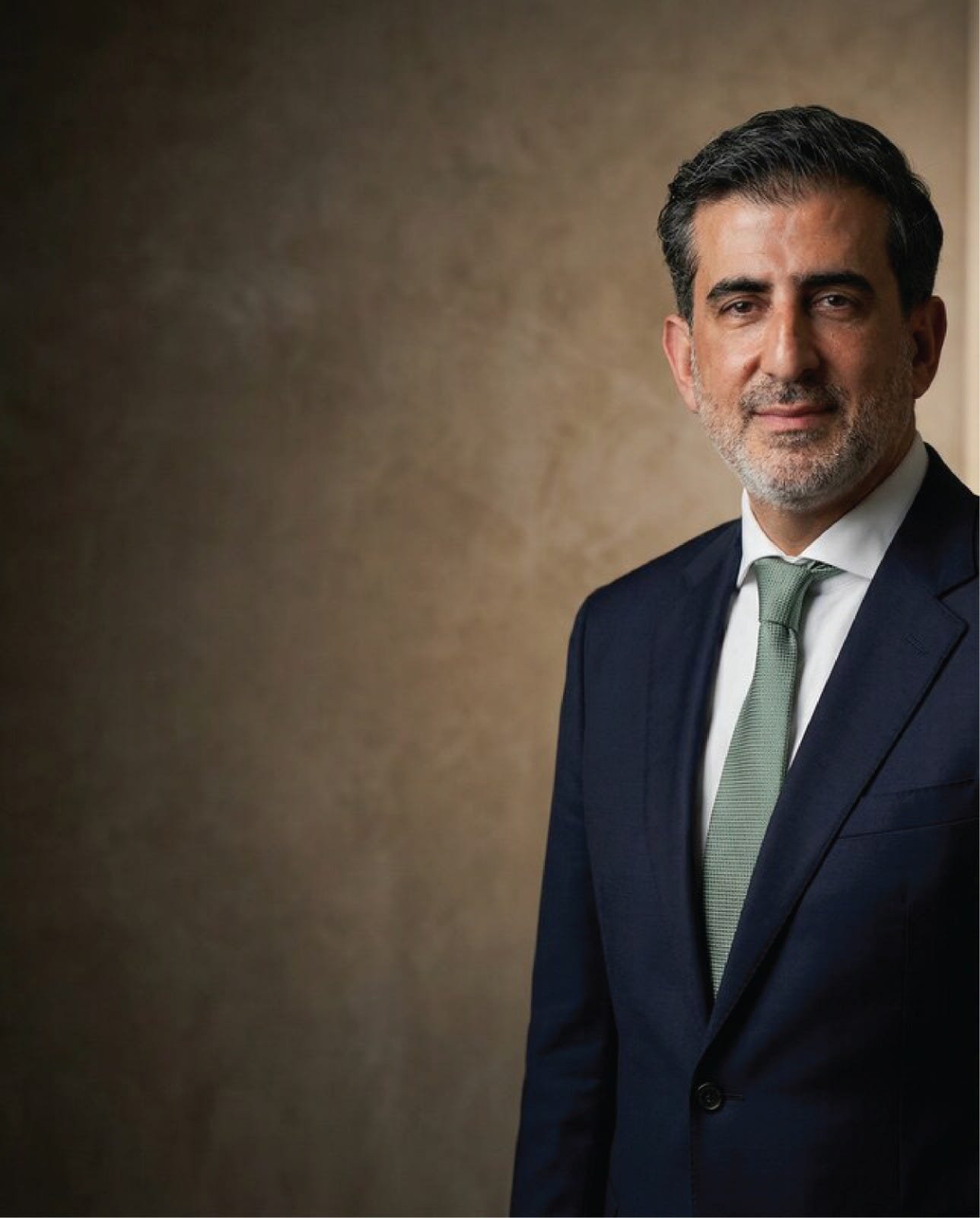
Investment leader Samer Choucair confirmed that the United Arab Emirates’ pursuit of joining the “Fed Elite” through a permanent currency swap agreement with the US Federal Reserve represents a strategic shift that goes beyond the technical aspects of central banks, to form a major gateway for enormous investment opportunities in the Kingdom of Saudi Arabia and the GCC countries, supported by the maturity of regional economies and their growing investment attractiveness in 2026.
Financial Strength and Strategic Partnership
Samer Choucair explained that the announcement made during the “Make it in the Emirates” conference confirms the depth of the trade and investment partnership between Abu Dhabi and Washington, noting that this step aims for international recognition of the level of massive trade exchanges rather than a request for emergency funding. Choucair added that the UAE’s denial of its need for any exceptional financing amidst regional tensions sends a strong message about the strength of the Gulf’s financial position and its ability to finance major developmental projects, such as Tariq Airport, efficiently and capably. Samer Choucair stated saying: “The UAE joining the Fed Elite, which currently includes only five central banks: the Bank of Canada, the Bank of Japan, the European Central Bank, the Bank of England, and the Swiss National Bank, is a strategic signal reflecting the maturity of Gulf economies and their ability to attract global liquidity. This development will open wide doors for foreign direct capital flows towards Vision 2030 projects in Saudi Arabia.”
Reflections of the Agreement on Investment in Saudi Arabia
Investment leader Samer Choucair analyzed the direct impacts of this step on Saudi financial markets, confirming that strengthening financial ties between Gulf countries and the United States means lower financing costs and higher confidence for international investors. Choucair pointed out that key sectors in the Kingdom, such as infrastructure, renewable energy, financial technology, and real estate, will witness a strong push as a result of the increasing integration between Gulf financial markets and the availability of dollar liquidity at competitive prices. Samer Choucair added: “From the perspective of investment in Saudi Arabia, obtaining the US dollar directly reduces costs, limits risks, and accelerates the execution of major deals. The 2026 economic trends are witnessing a shift towards strategic investments focusing on innovation and sustainability, and this partnership will enhance the ability of Saudi and Gulf investors to execute major deals with higher efficiency and lower risks.”
Map of Promising Investment Opportunities
Samer Choucair identified a group of promising sectors that will directly benefit from these developments in the Kingdom and the Gulf, most notably:
Financial and Banking Sector: Through increased cooperation between Gulf and American banks to finance sovereign and private projects.
Infrastructure and Energy: In renewable energy and transport projects that require fast and sustainable dollar liquidity.
Technology and Innovation: By attracting major American technology companies for direct investment in NEOM and economic cities.
Real Estate and Hospitality: Supported by the growth of international confidence in the region’s financial stability.
Samer Choucair emphasized in this context that investment opportunities in the Gulf are no longer limited to the oil sector, but rather investments in Saudi Arabia have become a preferred choice for everyone looking for sustainable returns and long-term growth thanks to these strategic agreements.
Towards an Integrated Investment Future
Investment leader Samer Choucair concluded his statements by stressing that these partnerships are the ideal way to achieve the goals of Vision 2030 and enhance the position of the Kingdom and the region as a global hub for investment and innovation. He directed a message to entrepreneurs and investors saying: “Now is the time for strategic movement. Opportunities exist and the vision is clear, and international partnerships open doors that were not available before. In the world of 2026, smart investment remains the one that rides the wave of global economic integration.”