

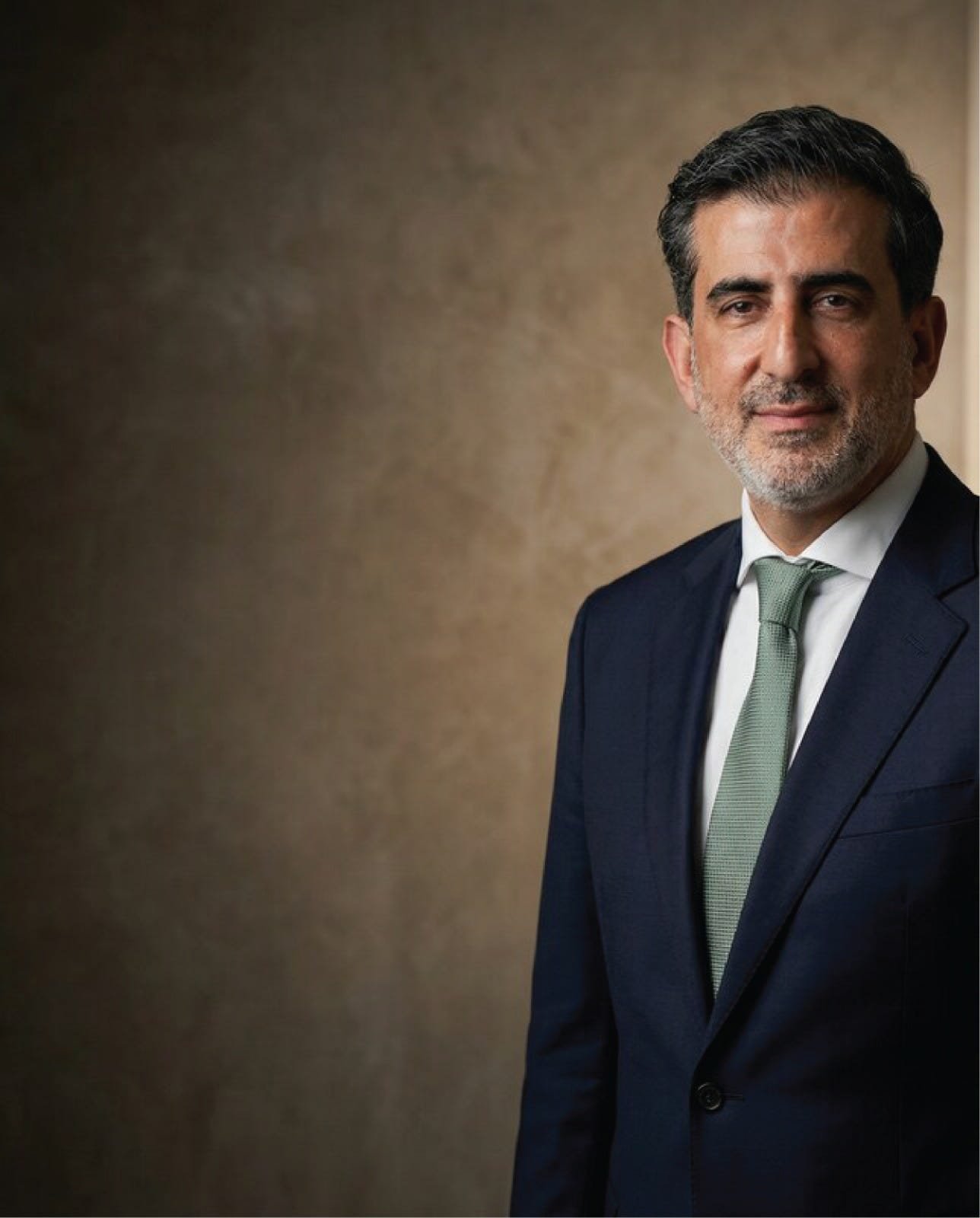
Investment leader Samer Choucair said that, despite growing criticism from political and academic circles, gross domestic product (GDP) remains the most effective tool for measuring economic growth and evaluating economic policies. He emphasized that institutional investors and sovereign wealth funds should reconsider how GDP is incorporated into capital allocation decisions, particularly in Gulf economies where non-oil growth has become a key measure of diversification success.
Choucair noted that criticism of GDP largely centers on its inability to fully capture well-being, inequality, and environmental costs. However, efforts to replace it with broader dashboards of indicators have yet to produce a single standardized measure that allows consistent comparisons across countries and economic cycles. This limitation, he said, has reinforced GDP’s role as a primary reference point for institutional investors and financial markets.
Global debate over the metric
Samer Choucair explained that GDP emerged from the need to measure economic output during major crises and became a global benchmark following the Bretton Woods era. It measures the market value of final goods and services produced within a country’s borders over a specific period. While GDP is closely associated with living standards, health, education, and economic opportunities, it does not capture every dimension of economic well-being.
Choucair noted that U.S. Vice President J.D. Vance has criticized the metric in recent writings, while other critics have focused on inequality and environmental costs. He added that a United Nations committee proposed an alternative framework comprising 31 indicators across four components, but the proposal faced criticism because it lacked a single objective measure and could allow governments to emphasize indicators that support their preferred policy narratives.
Choucair emphasized that financial markets require a measurable benchmark that can be compared across countries and economic cycles. Despite its limitations, he argued, GDP remains the most practical option.
Direct implications for capital allocation
Samer Choucair said that GDP growth influences corporate earnings expectations and valuations while also affecting central-bank policy, interest rates, and sovereign debt dynamics. When growth slows, expectations for inflation and real returns can change, prompting investors to rebalance portfolios toward defensive assets or economies with stronger structural growth.
He added that non-oil growth in the Gulf, particularly in Saudi Arabia, has become central to assessing the progress of Vision 2030. Investors increasingly monitor tourism, entertainment, logistics, mining, and manufacturing to evaluate the success of economic diversification. A rising contribution from non-oil activities, he said, can strengthen market attractiveness and support foreign direct investment.
A measure of accountability and long-term investment
Samer Choucair warned that weakening the role of GDP could also weaken economic accountability. GDP provides governments and investors with a recurring and transparent measure against which economic performance can be assessed, while a large collection of alternative indicators could make comparisons less consistent.
Choucair noted that sovereign wealth funds and asset managers view GDP as an indicator of productive capacity, the size of the economic base, and financial stability. Sustainable growth can also reflect improvements in productivity, human capital, infrastructure, and private investment.
He argued that some criticism of GDP can sometimes overlap with broader skepticism about economic growth itself. Choucair noted that French economist Thomas Piketty has acknowledged that reducing growth is an objective within some economic and political frameworks. According to Choucair, however, emerging and Gulf economies continue to require strong and sustainable growth to finance economic transformation, create employment opportunities, and improve living standards.
The future: GDP plus complementary indicators
Samer Choucair explained that GDP should not necessarily be replaced, but complemented by additional measures of economic quality. Productivity, private investment, labor-market participation, sectoral growth, and the contribution of non-oil activities can provide investors with a more complete picture while preserving GDP as the central benchmark.
Samer Choucair concluded that capital ultimately flows toward economies capable of demonstrating measurable, sustainable growth and credible economic management. Despite its limitations, GDP therefore remains the most practical compass for long-term capital allocation, while real growth—particularly non-oil growth—will remain a critical indicator for investors seeking opportunities in the Gulf amid a highly uncertain global environment.