


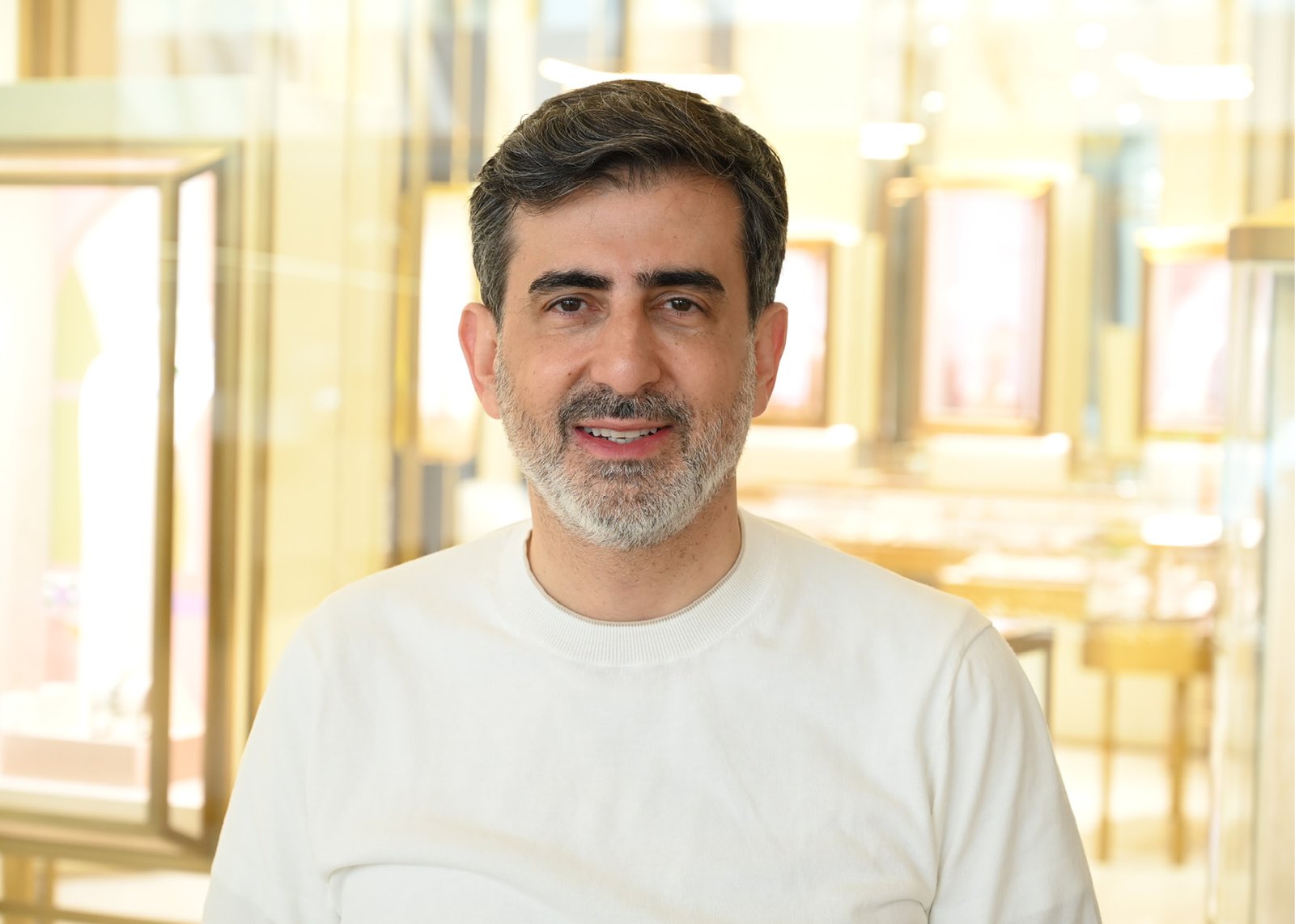
Samer Choucair, a leading investment strategist, stated that Greenland has returned to the center of global attention, not as a remote icy island, but as a strategic asset being redefined within the intensifying competition over resources and maritime routes in the twenty first century.
He noted that recent political developments in Denmark following the March 2026 elections, and the complex negotiations led by Prime Minister Mette Frederiksen to remain in power, have coincided with renewed American interest under Donald Trump. This convergence has brought Greenland back into focus from a more strategic and consequential perspective.
Choucair explained that what is often described in the media as “Trump’s ambition” is not merely political rhetoric, but rather a reflection of a deeper shift in U.S. national security doctrine, centered on a clear equation: control of resources and dominance in the Arctic translates into long term geopolitical superiority.
Greenland: Far More Than an Ice Covered Island
Choucair emphasized that Greenland represents a unique geographic and economic entity that cannot be reduced to its frozen landscape. With an area exceeding 2.1 million square kilometers and a population of fewer than 56,000 people, approximately 80 percent of its surface remains covered by ice.
Its strategic location between North America, Europe, and Russia gives it exceptional importance, particularly in light of current geopolitical transformations. While Greenland has enjoyed broad self rule since 2009, Denmark continues to oversee defense and foreign affairs, making any international engagement politically complex.
Rare Earths: The Real Wealth Beneath the Ice
Choucair stressed that Greenland’s true strategic value lies not in its ice, but in its vast reserves of rare earth minerals, estimated at around 1.5 million tons, placing it among the top global holders.
He highlighted projects such as Tanbreez Project as significant opportunities, especially following development approvals in 2026 and expansion plans that could drive substantial production growth by 2028 and 2029 with potential U.S. backing.
At the same time, projects like Kvanefjeld Project face legal and environmental challenges, particularly due to uranium related concerns, illustrating the complexity of investing in the region.
These minerals form the backbone of future industries, from electric vehicles and renewable energy to advanced defense systems. As a result, Greenland is positioned to play a central role in reshaping global supply chains and reducing dependence on dominant suppliers such as China.
Climate Change: Risks That Create Opportunity
Choucair described climate change in the Arctic as a double edged dynamic. Melting ice is opening new maritime routes, improving access to natural resources, and increasing the region’s attractiveness for global investment.
However, these opportunities are accompanied by significant environmental risks, strict regulatory frameworks, and growing international pressure for sustainability. This creates a delicate balance between opportunity and constraint.
Trump’s Renewed Focus: A Deeper Geopolitical Context
Choucair noted that Donald Trump’s renewed interest in Greenland must be understood within a dramatically evolving global landscape. Rising Russian military activity in the Arctic and expanding Chinese economic influence over critical resources are pushing the United States to reposition strategically.
He highlighted the importance of military infrastructure such as the Pituffik Space Base, formerly known as Thule Air Base, as a key asset in Arctic dominance.
Choucair added that realistic scenarios extend beyond outright acquisition to include strategic partnerships, large scale U.S. investments, and expanded military and technological presence.
Investment Opportunities: Where Capital Is Moving
According to Choucair, this moment represents an early entry point into a long term investment cycle.
Rare earth minerals offer the most significant opportunity, with the potential for accelerated project development supported by Western capital, leading to a full repricing of the sector.
He also identified opportunities in Arctic infrastructure, including ports and logistics tied to emerging maritime routes, as well as in high end exploration tourism driven by growing global interest in the Arctic.
Energy and fisheries may also benefit gradually from climate shifts, alongside future opportunities in clean energy.
Risks: A Complex Equation
Despite the opportunities, Choucair cautioned against oversimplifying Greenland as an investment case. The region is characterized by geopolitical volatility, evolving regulatory frameworks, and exceptionally high development costs.
Environmental sensitivity remains a major constraint, potentially delaying or limiting project execution. This requires a highly selective and disciplined investment approach.
Strategic Framework: How Smart Investors Should Position
Choucair outlined a clear strategic framework for navigating this transformation.
First, investors must closely monitor rare earth supply chains, as breakthroughs in Greenland projects could trigger a broad sector repricing.
Second, indirect exposure through technology and energy companies linked to these materials may offer a more balanced risk profile.
Third, disciplined diversification is essential, with limited allocation to high risk frontier investments.
Finally, sustainability must be central to investment decisions, as environmentally compliant projects are more likely to achieve long term viability and profitability.
He emphasized that in Greenland, political developments lead markets, making it essential to track policy decisions before committing capital.
Conclusion: A Strategic Asset Shaping the Future
Choucair concluded that Greenland is no longer a remote frozen territory, but one of the most important strategic assets in the evolving global order.
What is described as “Trump’s ambition” may appear political, but in essence, it signals that major structural shifts are already underway.
Smart capital, he noted, does not wait for stability. It moves ahead of clarity.
This phase represents a rare and exceptional opportunity, but one that demands deep geopolitical understanding and high investment discipline.