

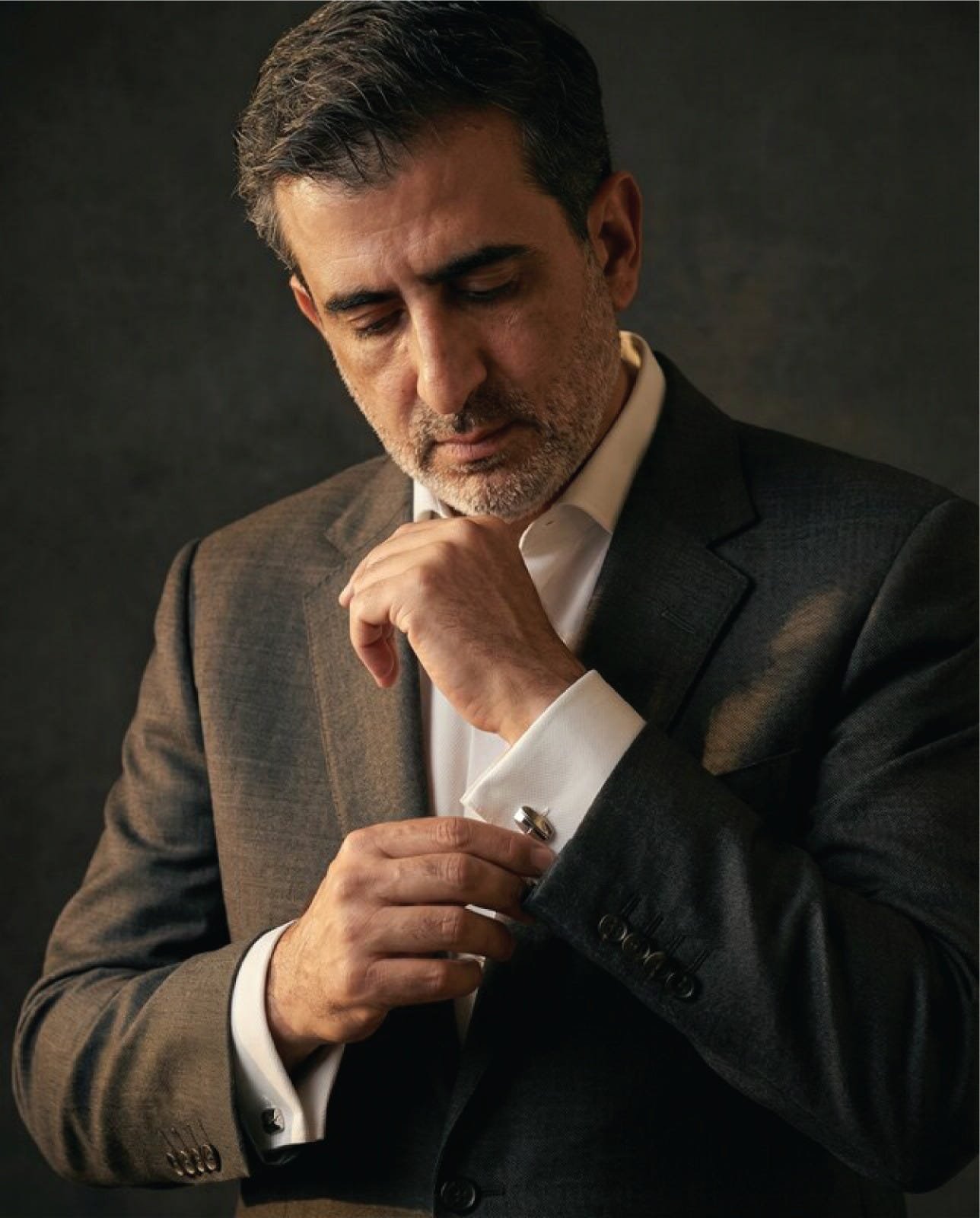
Investment pioneer Samer Choucair confirmed, in a recent strategic analysis, that intellectual property has transformed from being a secondary legal element into a core asset capable of valuation, financing, and exit. He stressed that it today represents a major driver for raising company value and attracting capital amidst the major economic transformations witnessed by the Kingdom of Saudi Arabia.
Samer Choucair explained that owning patents and trademarks contributes to raising the market value of companies by rates that may reach 65 percent, based on global trends confirming the superiority of companies that invest in their intangible assets in terms of profitability and valuation levels.
Choucair pointed out that this transformation changes the nature of companies from operational entities relying on direct revenues into investment assets possessing a partial monopoly and high scalability, making them more attractive to investors and faster in closing funding rounds.
Samer Choucair stated that intellectual property grants companies a competitive advantage that protects them from copying attempts and provides them with the ability to export their ideas through licensing models without the need for heavy physical assets, which embodies the essence of the 2030 economy’s trends focusing on smart and scalable growth. He added that an idea without protection is considered a temporary effort, while an idea protected by intellectual property transforms into wealth capable of sustainable growth.
In the context of linking with Saudi Vision 2030, Samer Choucair noted that the Kingdom is undergoing a restructuring process for the type of assets within the national economy, where there is a gradual transition from reliance on traditional physical assets to focusing on intangible assets such as intellectual property, data, and advanced technologies.
Choucair emphasized that companies that do not possess clear intellectual property will face a discount in their market valuation during the coming phase, especially with the trend of venture capital and sovereign funds toward projects that possess technical moats and innovative algorithms.
Samer Choucair called on entrepreneurs to adopt a corporate structure that separates intellectual assets from operational processes, with a focus on building licensable technologies in promising sectors such as artificial intelligence, biotechnology, clean energy, and the creative economy. He also pointed to the potential of merging intellectual property with modern tokenization technologies, which opens new horizons for creating liquidity for intellectual assets without relinquishing full control.
Samer Choucair concluded his statement by emphasizing that the market in 2026 does not only reward those who work harder, but rewards those who possess more knowledge assets. Choucair advised investors and entrepreneurs to make intellectual property the cornerstone of their strategies, stressing that the future belongs to companies that build real value through registered and protected innovation, and that this trend is the safest and strongest path to building long-term wealth under the umbrella of Saudi Vision 2030.
Samer Choucair: Lenovo’s Factory in Riyadh Represents a Sovereign Platform for Repositioning the Kingdom as a Global Hub for Technical Manufacturing
Investment pioneer Samer Choucair stated that Lenovo’s strong entry into the manufacturing sector in Riyadh, through its strategic partnership with “Alat” (owned by the Public Investment Fund), is not merely a traditional industrial expansion, but a strategic transformation that redraws the global value chain map and places the Kingdom of Saudi Arabia on an accelerated path to transition from a consumer market for technology to an advanced regional and global production hub.
Samer Choucair explained that the new facility, with investments reaching $2 billion and targeting the production of two million units annually, is one of Lenovo’s largest facilities outside China, embodying the confidence of global companies in the Saudi business environment.
Choucair pointed out that this project, covering an area of 200,000 square meters and including four integrated production lines for smartphones, laptops, desktops, and high-performance servers, represents a qualitative leap in the region’s operational model, as Riyadh now manages the company’s operations in more than 60 geographical markets covering the Middle East, Turkey, and Africa.
Samer Choucair emphasized that the partnership with “Alat” represents a practical application of what is known globally as advanced industrial policy, where the state’s role here goes beyond mere support to building an integrated ecosystem that merges sovereign finance, smart manufacturing, and AI infrastructure.
Choucair noted that the importance of this factory lies in it not being just an assembly line, but a platform that supports the infrastructure for cloud computing and data centers within the Kingdom, thereby enhancing digital sovereignty and reducing reliance on external supply chains.
In his analysis of the investment opportunities associated with this transformation, Samer Choucair pointed out that the real value of the project exceeds the final product to include the development of local supply chains, advanced logistics services, and programs for knowledge transfer and qualifying national cadres, creating promising opportunities in the electronic components and industrial AI sectors.
He stressed that the presence of the Public Investment Fund as a strategic partner reduces operational risks and ensures the project’s sustainability against global market fluctuations.
Samer Choucair concluded his statement by emphasizing that this project is a strong market signal confirming the repricing of the Kingdom as a high-level technical manufacturing center. He added that wealth in 2026 and beyond is not built in noisy markets that rely on speculation, but is built in the silent and deep infrastructure that will lead the economy for the coming decade, stressing that the Kingdom today proves its competitiveness as a strategic gateway connecting Asia, Africa, and Europe in the era of digital manufacturing, and that this trend is the primary pillar for achieving the goals of Saudi Vision 2030 in diversifying the economic base.