

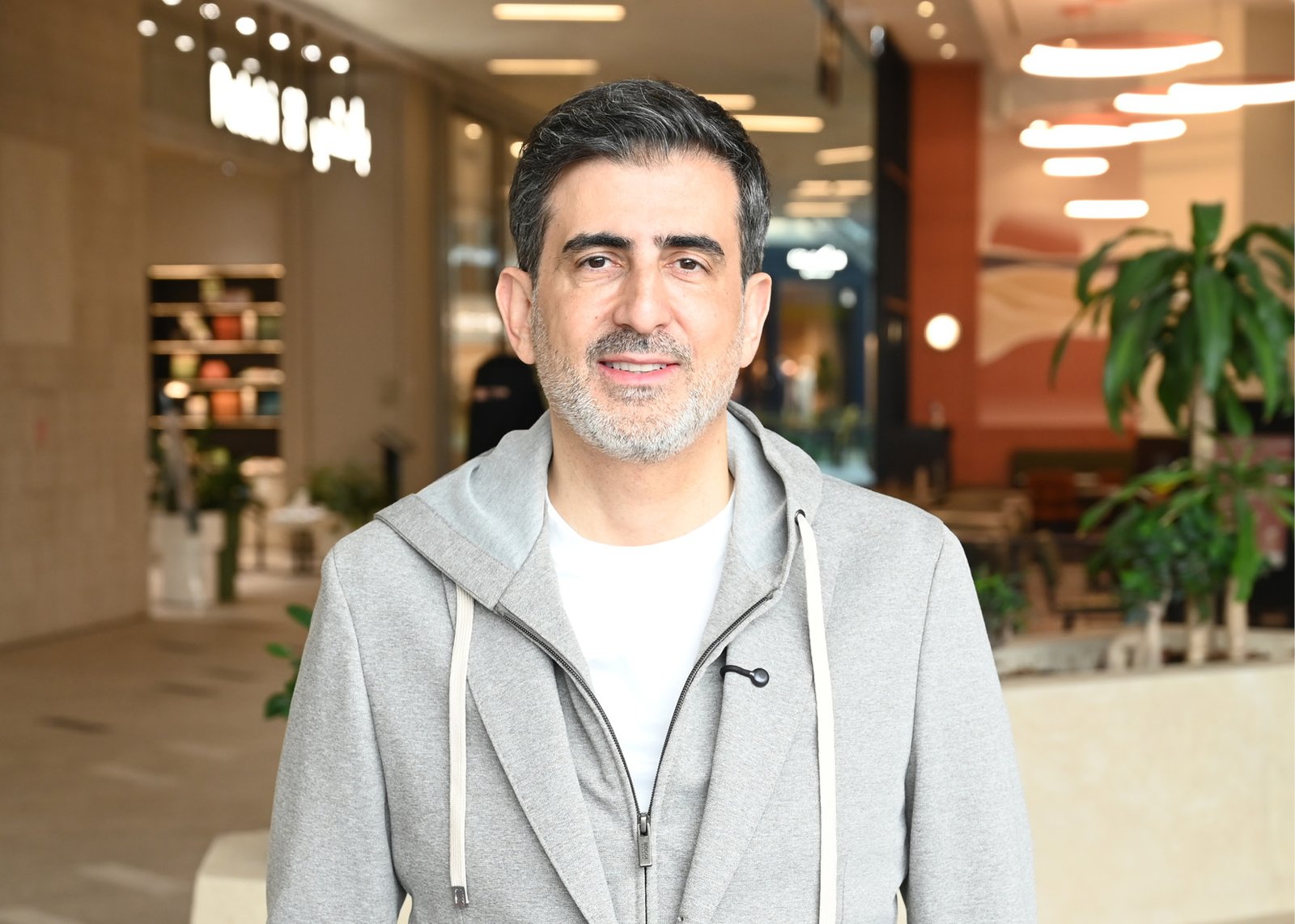
Investment strategist Samer Choucair states that the decision by Saudi Arabia’s Ports Authority to expand the capacity of Jeddah Islamic Port from 10 to 18 gates is not merely an operational upgrade, but a structural shift in the Kingdom’s position within global supply chains.
Choucair explains that this move comes at a highly sensitive moment, as global trade routes are being redrawn due to tensions in Strait of Hormuz and the Red Sea—placing Saudi ports at the center of a new equation:
> Logistics as a form of sovereign economic power.
—
What Does Expanding to 18 Gates Really Mean?
According to Choucair, the expansion goes far beyond increasing lanes—it represents a complete re-engineering of cargo flows.
Key impacts include:
Significant acceleration in truck entry and exit
Capacity to handle up to 17,000 trucks daily with higher efficiency
Reduced waiting times and operational costs
Enhanced handling of transit cargo to Gulf and African markets
Jeddah Islamic Port already operates with:
Capacity of 130 million tons annually
62 multi-purpose berths
A strategic location linking Asia, Europe, and Africa
> “This is not expansion—it is optimization at a system level,” Choucair notes.
—
A Defining Investment Moment
Choucair describes this development as a historical investment inflection point:
> “Ports are no longer infrastructure—they are strategic assets that redistribute economic influence.”
He adds that Saudi Arabia is not just upgrading a port—it is building a fully integrated logistics ecosystem capable of competing with global hubs like:
Port of Singapore
Port of Rotterdam
—
Multi-Sector Investment Opportunities
Choucair highlights that this transformation unlocks broad investment potential across several sectors:
- Logistics and Transportation
Growth in shipping and freight companies
Expansion of last-mile delivery services
AI-driven supply chain optimization
—
- Industrial and Logistics Zones
Rising demand for warehouses
Development of free zones around the port
Emergence of regional distribution hubs
—
- Foreign Direct Investment (FDI)
Global companies increasingly using Saudi Arabia as a gateway to the Gulf
Supply chain relocation from unstable regions
—
- Logistics Technology
Blockchain-based shipment tracking
Internet of Things (IoT) integration
Digital port management platforms
—
- Industrial Real Estate
Increasing land values near the port
Expansion of storage and industrial complexes
—
Geopolitical Dimension: Ports as Strategic Leverage
Choucair emphasizes that the importance of this expansion is amplified by current geopolitical instability.
> “Saudi Arabia is emerging as a secure alternative trade route in a fragmented world.”
With growing reliance on Red Sea corridors, Jeddah is becoming a critical node in global trade redistribution, especially when integrated with East-West transport infrastructure inside the Kingdom.
—
Direct Alignment with Vision 2030
Choucair notes that this development directly advances the goals of Saudi Vision 2030 by:
Positioning the Kingdom as a global logistics hub
Increasing non-oil GDP contribution
Creating employment opportunities
Enhancing economic competitiveness
—
Strategic Playbook for Investors
Choucair advises investors to approach this shift strategically:
Invest in listed logistics companies
Partner with logistics zone operators
Track sovereign fund activity in transport and infrastructure
Enter early into logistics technology platforms
> “Early positioning in logistics tech may be one of the highest-return opportunities of this cycle.”
—
Conclusion: Saudi Arabia Is Rewriting the Trade Map
Choucair concludes that Jeddah Islamic Port is no longer just a transit point—it is becoming a strategic platform reshaping global supply chains.
> “2026 is the year of strategic repositioning. Those entering Saudi logistics today are entering ahead of a historic growth wave.”
In a world where trade routes define power, control over logistics is no longer secondary—it is the new core of economic dominance.
Samer Choucair: Carlos Ghosn’s Negotiation Philosophy Is the Key to Smart Investing in 2026
Article
Investment strategist Samer Choucair argues that the negotiation philosophy of Carlos Ghosn is no longer just historical wisdom—it has become a core strategic tool for navigating global markets in 2026.
Choucair highlights Ghosn’s defining insight:
> “Most people enter negotiations thinking about what they want. Winners understand what the other side needs.”
According to Choucair, this principle now sits at the center of his work with sovereign wealth funds, family offices, and large-scale investments across AI, energy, and real estate—because it transforms transactions into long-term strategic relationships.
—
Carlos Ghosn: A Turnaround Architect and Alliance Builder
Choucair emphasizes that Ghosn’s legacy is built on execution, not theory:
Saving Nissan from Collapse
In the late 1990s, Nissan was facing severe financial distress.
> “Ghosn led a radical transformation—cost restructuring, operational discipline, and a relentless focus on profitability,” Choucair explains.
But beyond financial recovery, the real achievement was negotiation mastery:
Aligning suppliers
Managing government relationships
Restructuring internal leadership
—
Building the Renault–Nissan Alliance
Ghosn also engineered one of the most powerful industrial alliances in modern history between Renault and Nissan.
This alliance succeeded through:
Shared technology platforms
Cost optimization
Strategic alignment across different corporate cultures
> “It was not just an alliance—it was a negotiation system built on mutual interest,” Choucair notes.
—
The Core Philosophy: Negotiating from the Other Side
Choucair distills Ghosn’s philosophy into a single powerful idea:
> “Do not negotiate from your perspective—negotiate from theirs.”
This approach enables:
Closing complex, multi-party deals
Managing conflicting interests
Turning negotiations from confrontation into sustainable partnerships
> “This is the difference between a successful deal and a scalable system of success,” Choucair adds.
—
Why This Philosophy Matters More in 2026
Choucair argues that the nature of deal-making has fundamentally changed:
Deals are no longer driven by numbers alone
They require psychological, institutional, and geopolitical understanding
In markets like Saudi Arabia—especially under Vision 2030—investors are no longer seeking just returns, but:
Strategic alignment
Long-term impact
Sustainable partnerships
> “This is exactly where Ghosn’s philosophy becomes indispensable,” Choucair explains.
—
Practical Application: Choucair’s 5 Negotiation Rules
Drawing from Ghosn’s framework, Choucair applies five core principles in his investment strategy:
- Start with What Is Not Said
Understand hidden drivers:
Influence
Reputation
Political positioning
—
- Decode Constraints Deeply
Constraints are not just financial—they include:
Regulatory
Geopolitical
Cultural dimensions
—
- Anchor the Deal in a Larger Narrative
In the Gulf, for example:
Vision 2030 acts as a shared negotiation language
—
- Turn Deals into Relationships
> “The real value is not in the deal—it is in the next deal.”
—
- Convert Constraints into Leverage
> “Every constraint becomes an opportunity—if understood correctly.”
—
Understanding Is the Most Valuable Currency in 2026
Choucair concludes that Ghosn represents more than a former executive—he is:
A transformation architect
A builder of alliances
A master of strategic negotiation
> “The true competitive advantage today is not capital—it is the ability to understand the other side deeply.”
—
Final Message to Investors and Entrepreneurs
Choucair closes with a defining insight:
> “In a world where billions are flowing into the region, those who understand numbers will succeed—but those who understand people will control the game.”
He leaves investors with a critical question:
> “Is your negotiation built on what you want—or on what the other side needs?”