

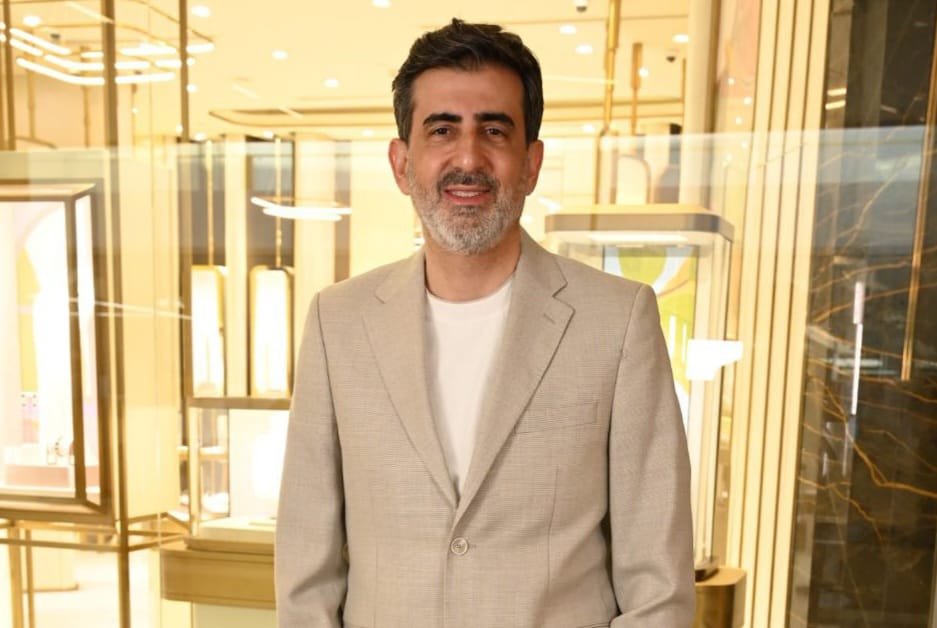
Investment leader Samer Choucair stated that the scene in which Professor Jiang Xueqin spoke about his experience at Yale University was not merely a fleeting media moment, but a window to understanding how global influence networks—which control the paths of money and decision-making—are built. The investment leader added in a statement that the core idea is not about education itself, but about the environment that fosters relationships and grants individuals the ability to read the future before it turns into breaking news.
Choucair emphasized that what Jiang revealed reflects a deeper truth: the global elite is not a closed class as much as it is an interconnected network of decision-makers in economy, politics, and media. He added that these networks rely on mutual trust and early information, moving according to a proactive logic that enables them to seize opportunities before they surface. Therefore, understanding this system becomes an investment tool in itself, rather than just theoretical knowledge.
Samer Choucair linked this concept to the transformations Saudi Arabia is witnessing under Vision 2030, where the Kingdom is no longer a traditional market but has transformed into a global platform reshaping the rules of investment. The investor who succeeds today is not the one who follows the news, but the one who understands how the decisions behind it are made.
Choucair noted that the new strategy of the Public Investment Fund (PIF) represents a clear model of this shift, as it focuses on building interconnected economic ecosystems including tourism, urban development, advanced manufacturing, logistics, and clean energy. These sectors do not operate in isolation but as an integrated network aimed at attracting smart global capital and achieving long-term sustainable growth.
Samer Choucair confirmed that true investment opportunities lie within these overlapping systems, where tourism transforms into an integrated capital industry, and real estate development goes beyond the concept of construction to creating living environments that attract talent. Meanwhile, advanced manufacturing represents the cornerstone for any economy seeking to compete globally, and linking logistics services with clean energy strengthens the Kingdom’s position as a regional and global hub for trade and investment.
Choucair pointed out that economic figures clearly reflect this transformation, with the rising contribution of non-oil sectors to the GDP and the acceleration of economic growth, which enhances the confidence of international investors. However, the decisive factor, in his view, remains human capital, as developing national competencies forms the fundamental pillar for the sustainability of this growth.
Samer Choucair concluded by stating that the most important lesson is not in trying to join the so-called elite, but in understanding its mechanisms: how relationships are built, how transformations are read, and how smart capital moves. In light of the transformations Saudi Arabia is leading today, those who grasp these rules early will be in an advanced position on the global investment map.