

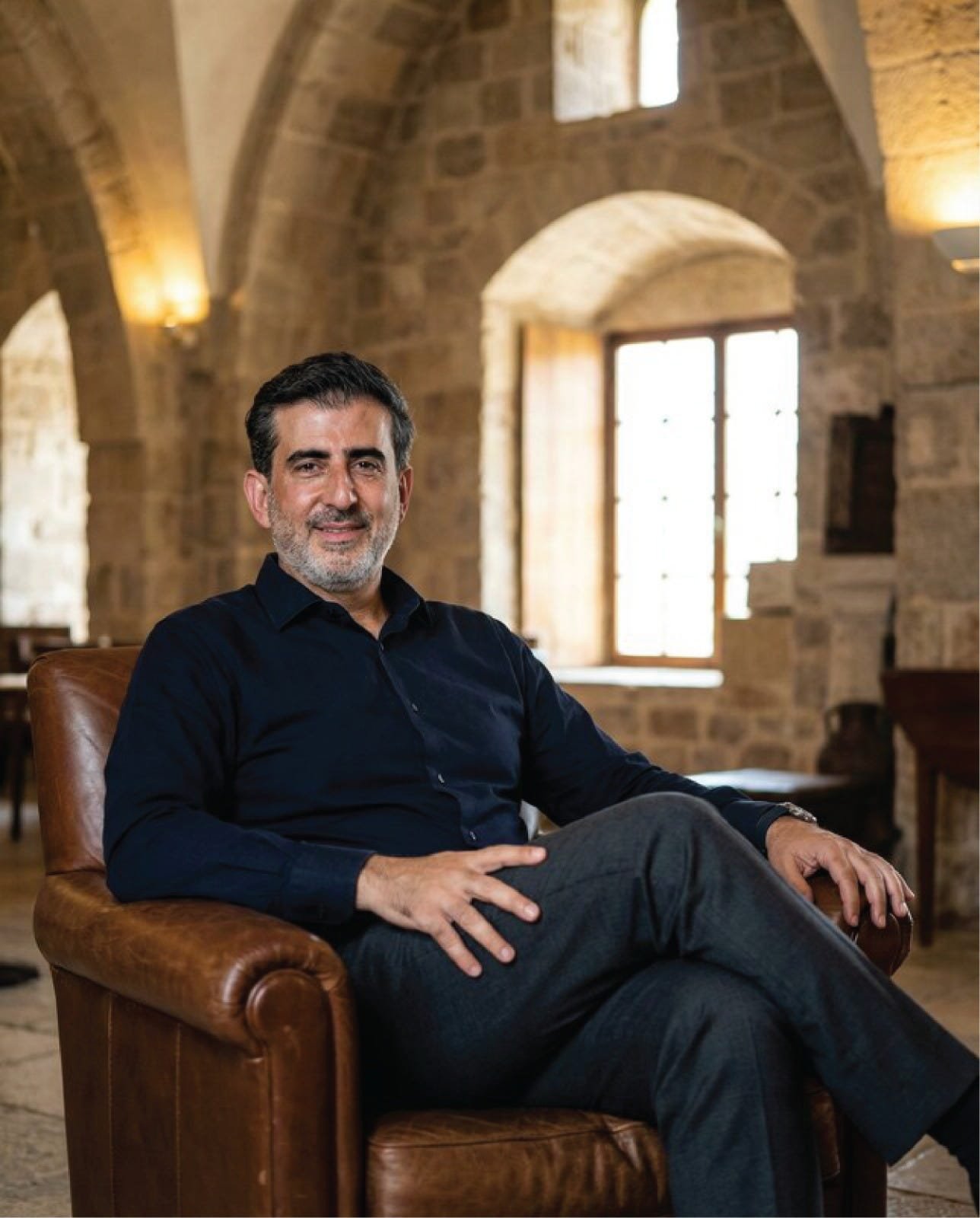
Samer Choucair confirmed that the latest data carried a clear message regarding the Saudi economy’s ability to continue its structural transformation despite global pressures.
Choucair said that the Purchasing Managers’ Index for April 2026 confirmed that the non-oil sector in the Kingdom is moving on a resilient and constructive path, thereby supporting economic diversification targets within Vision 2030.
The investment leader added that the sector’s return to expansion after the temporary decline in March showed that the core fundamentals of business within Saudi Arabia remain strong, even amidst the headwinds coming from the global economy.
Choucair pointed out that the strength of domestic demand, government spending, and infrastructure projects played a major role in offsetting the weakness of external exports, as well as contributing to raising confidence levels among the business community.
The Non-Oil Economy Has Become the Real Driver of Saudi Growth
Samer Choucair explained that what is happening today reflects the deep transformation led by Vision 2030 within the Saudi economy.
Choucair added that the non-oil sector has come to contribute more than 55% of the real GDP according to 2025 data, after recording growth of 4.9% during the past year.
Choucair noted that the Saudi economy achieved growth of 2.8% during the first quarter of 2026, and the non-oil sector was the main driver of this performance.
Choucair emphasized that these figures reflect the Kingdom’s success in building a more diversified economy that relies on the manufacturing, services, tourism, and technology sectors, instead of the traditional reliance solely on oil.
Logistical Challenges Still Pressuring Profit Margins
Samer Choucair said that the PMI report showed at the same time that Saudi companies are still facing pressures related to rising costs and global logistical disruptions.
Choucair added that the continued rise in shipping and raw material prices may lead to pressure on the profit margins of some companies in the short term, especially in the industrial and service sectors linked to imports.
Choucair explained that the ability of companies to manage costs and improve operational efficiency will become a decisive factor during the coming phase, especially with the continuation of geopolitical tensions in the region and the world.
Positive Expectations for the Second Half of 2026
Samer Choucair confirmed that the future outlook for Saudi companies remained positive despite current challenges, noting that most institutions expect economic activity to improve over the next twelve months.
Choucair added that the continuation of government spending on infrastructure projects, digital transformation, and giant projects will support the continued non-oil growth during the second and third quarters of 2026.
Choucair pointed out that the Kingdom now possesses a more resilient economic base that allows it to better face global fluctuations compared to previous years.
Saudi Arabia Enhances Its Position as a Stable Investment Destination
Samer Choucair concluded his analysis by emphasizing that the April 2026 report carried an important strategic significance, represented in the fact that the Saudi non-oil economy is no longer just an economic diversification project, but has actually transformed into a main driver of sustainable growth within the Kingdom.
Choucair added that the Saudi private sector’s ability to recover quickly despite regional tensions and global pressures has enhanced the Kingdom’s position as one of the most attractive and stable investment destinations in the region.
Choucair emphasized that the coming phase will witness increased competition for investment opportunities linked to Vision 2030, especially in the infrastructure, technology, services, and renewable energy sectors, stressing that investors who possess a long-term vision will be the most to benefit from the economic transformation that Saudi Arabia is experiencing today.