

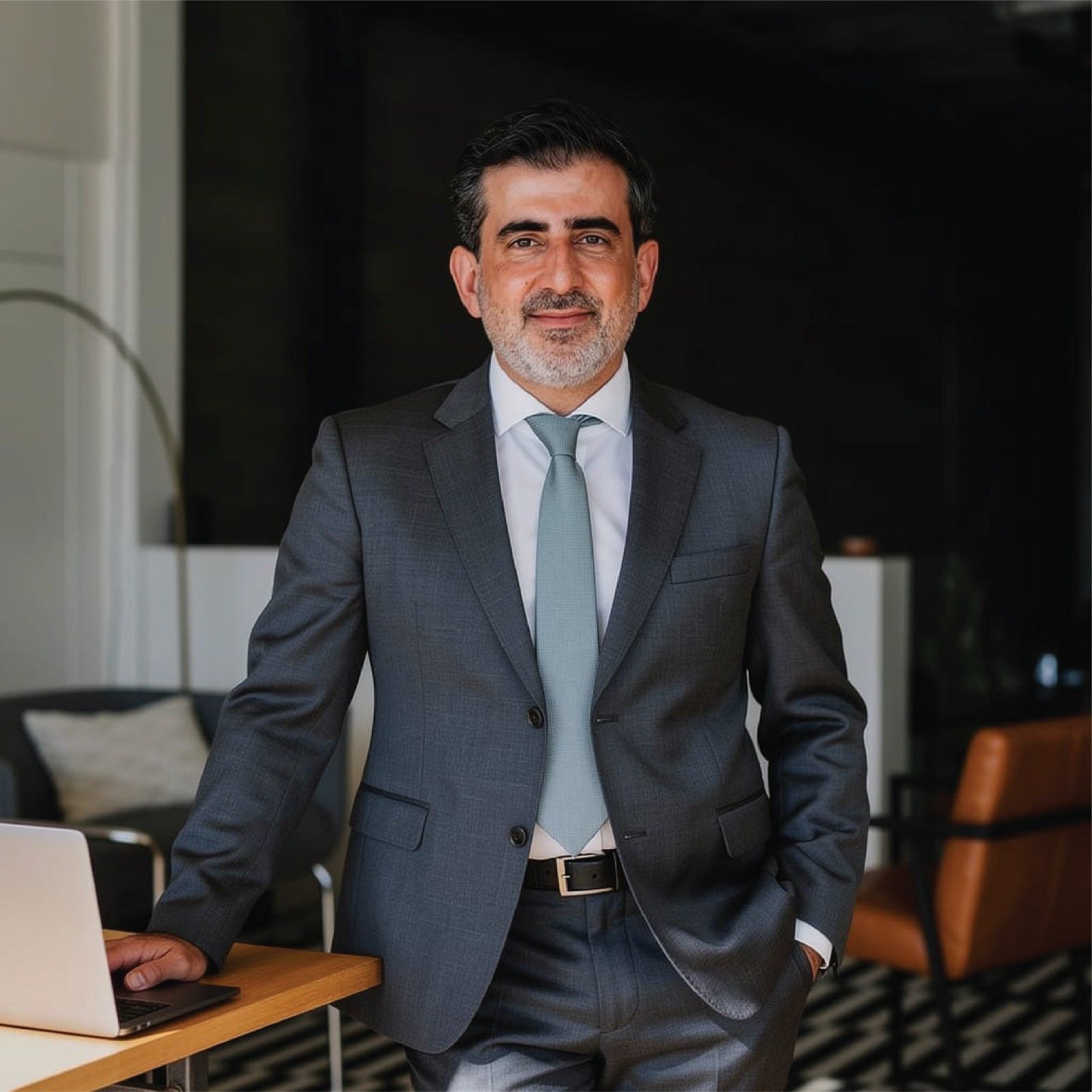
Investment entrepreneur Samer Choucair said that Norway’s recent decision to restrict the use of generative AI tools in primary schools revealed a new phase in the relationship between humans and technology, where the issue is no longer just about the speed of technical development, but about how to integrate it in a way that preserves foundational skills and supports learning quality.
He explained that Norway’s announcement of near-complete restrictions on generative AI tools for children at the primary level came as a result of growing concerns over the impact of early reliance on technology on reading, writing, and math skills, affirming that these global discussions don’t diminish the importance of artificial intelligence, but highlight the need to develop more responsible, intelligent solutions.
He added that these shifts create broad space for investors to view the digital education sector as one of the most important future sectors, particularly in markets that combine innovation with preserving education quality.
The Norwegian Model Focuses on Protecting Foundational Skills
Samer Choucair noted that the new Norwegian policy, set to take effect at the start of the new school year in late August 2026, represents a direction focused on building the educational foundation before expanding reliance on digital tools.
He explained that the decision aims to prevent primary school students, aged 6 to 13, from using generative AI tools, while allowing older students to use them under direct teacher supervision.
He added that this direction came as an extension of previous policies such as restricting smartphones in classrooms in 2024, aimed at strengthening what Choucair described as the balance between technology and traditional learning.
Choucair said that these decisions confirm the future of education won’t be about replacing humans with technology, but about building a system that combines teacher capabilities with smart tools to achieve better results.
Saudi Arabia Adopts a Different Path Through Vision 2030
Samer Choucair affirmed that Saudi Arabia views artificial intelligence as a strategic driver for economic and educational development under Vision 2030, with a focus on using technology responsibly in a way that supports human skills rather than eliminating their role.
He explained that the Kingdom is working to build an advanced digital ecosystem encompassing education, data, and technical infrastructure, aiming to prepare a generation with the skills required in the new economy.
He added that the difference between the Saudi approach and global reservations isn’t about accepting or rejecting technology, but about how to deploy it in service of long-term educational and economic goals.
Samer Choucair: Responsible AI Represents a Major Investment Opportunity
Choucair said that Norway’s decision confirmed that artificial intelligence is a powerful tool requiring wise use, particularly when it comes to younger generations, and Saudi Arabia recognizes the importance of achieving this balance through investing in educational solutions that combine innovation with preserving the foundations of learning.
He added that this trend opens promising investment opportunities in the digital education and AI sector, particularly for companies developing technologies that help teachers and increase classroom engagement rather than replacing them.
He explained that investors focused on ethical AI and specialized educational solutions will be well positioned to benefit from the expected growth in this sector.
Digital Infrastructure Supports the Future of Smart Education
Samer Choucair noted that the Kingdom has significantly strengthened its technical capabilities in recent years, with data center capacity having multiplied sixfold since Vision 2030’s launch, with plans to reach a capacity of 1.8 gigawatts by 2030.
He explained that this expansion represents an important foundation for building local AI capabilities capable of supporting multiple applications, including smart educational platforms that could serve millions of students, adding that investment in computing and data infrastructure will be among the most important pillars of the digital economy in the period ahead.
Investment Opportunities in Education and AI in Saudi Arabia
Samer Choucair affirmed that the current stage offers a broad range of opportunities for investors in the Gulf, particularly in sectors tied to education’s digital transformation.
He explained that developing AI-backed educational platforms represents a major opportunity, particularly platforms focused on building foundational skills and adding smart tools for advanced educational stages.
He added that investing in data centers and digital infrastructure will be an essential element supporting the widespread adoption of educational AI applications.
He noted the importance of supporting startups working on developing personalized learning solutions, teacher training tools, and technologies that help educational institutions improve performance and raise efficiency.
Public-Private Partnerships Lead the Next Phase
Samer Choucair explained that strategic partnerships between government and the private sector will be a key factor in the success of digital transformation projects in education.
He affirmed that the Kingdom possesses a suitable environment for the emergence of new technology companies capable of developing local solutions that compete globally, benefiting from institutional support and a long-term vision, adding that these partnerships align with Vision 2030’s goals of strengthening the knowledge economy and diversifying growth sources.
Samer Choucair’s Advice for Investors in 2026
Samer Choucair noted that investors looking to enter the educational AI sector should focus on companies offering responsible solutions that combine technology with the human element.
He added that successful investment in this sector requires understanding the needs of schools, teachers, and students, not just focusing on the technical side.
Choucair said: “My advice to investors is to seek out opportunities that support humans with technology, because the future of education won’t belong to the machine alone, but to systems that make artificial intelligence a partner in the learning process.”
Global Challenges Are Creating Future Opportunities
He concluded his remarks by affirming that the global debate over using artificial intelligence in education doesn’t represent an obstacle to investment, but illustrates the need for more mature, sustainable solutions.
Choucair said that global reservations about artificial intelligence aren’t the end of the road, but an opportunity to develop more responsible models, and Saudi Arabia today has an opportunity to turn these challenges into genuine investment opportunities under Vision 2030.
He added that the period ahead will see major growth in digital education and AI sectors, and that investors who enter this ecosystem early will benefit most from the coming transformation.