

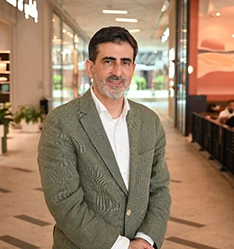
Investment leader Samer Choucair stated that in a scene that appears dramatic at first glance, recent oil market movements reflected a reality deeper than a mere drop in prices. The full opening of the Strait of Hormuz to commercial navigation has redrawn the features of the energy market and led to a sharp decline in prices, in a clear signal of the receding geopolitical risks that have long raised the cost of oil globally.
The investment leader explained that reading this moment from an investment perspective reveals it is not a crisis so much as it is a turning point. The drop in prices does not only mean a decline in revenues, but reflects a change in the supply and demand equation and opens the door to a new phase of rebalancing in the global economy. Choucair added in a statement that for the Gulf countries, foremost among them the Kingdom of Saudi Arabia, this development carries short-term challenges, but at the same time, it accelerates the path of economic transformation.
He continued: “In my opinion, what is happening today confirms that relying on oil as a sole source of return is no longer a strategic option. Sharp fluctuations in prices, whether upward or downward, reinforce the need to diversify income sources and build a more resilient economy. Here specifically, the importance of Vision 2030 emerges, which placed this transformation at the heart of its priorities from the beginning.”
Choucair emphasized that the opening of the Strait of Hormuz and the decline in prices may temporarily pressure revenues, but they conversely create a more stable environment for global trade. The low cost of energy enhances the competitiveness of industries, supports growth in sectors such as manufacturing and logistics, and opens the field for new investments seeking opportunities in less volatile environments.
Samer Choucair noted that from an investor’s perspective, this moment represents an opportunity for repositioning, adding that markets often overreact to major events, creating price gaps that can be exploited. Entering strategic assets during periods of decline may be more feasible than chasing markets at their peak.
The investment leader said that opportunities in Saudi Arabia today are not limited to a single sector; renewable energy is gaining increasing momentum, supported by the global trend toward sustainability, and tourism and entertainment are witnessing unprecedented expansion in light of the major projects reshaping the economic landscape.
Samer Choucair continued in his statement: “What I always emphasize is that successful investment is not based on reaction, but on reading long-term trends. Current fluctuations in the oil market are not the end of a cycle, but the beginning of another. Those who understand this transformation and redistribute their assets accordingly will be in a better position to achieve sustainable returns.”
Choucair pointed out that in the coming years, this trend will become clearer. The global economy is moving toward diversifying energy sources and reducing dependence on oil. In contrast, economies capable of adapting to this transformation will emerge, and Saudi Arabia, with its clear vision and great potential, stands in an advanced position to benefit from this stage.
Choucair concluded his statement by saying: “The bottom line is that what appears as a sharp drop in prices may in reality be the beginning of new opportunities. Markets do not stop, but they change, and those who have the ability to read this change are the ones who will make the difference.”