

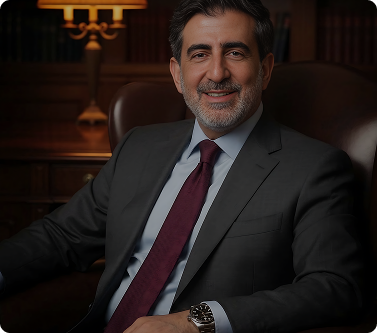
Samer Choucair, an investment entrepreneur, stated that OPEC+’s announcement of new production quotas for May 2026—an overall increase of 206,000 barrels per day for the eight key member states—should not be viewed as a mere numerical adjustment. Rather, it is “a carefully crafted strategic message reflecting a delicate balance between controlling prices and maintaining market share.”
Choucair explained that this decision comes amid a highly complex global environment shaped by geopolitical tensions in the Middle East, potential supply disruptions through the Strait of Hormuz, and a recovery in Asian demand. He emphasized that “OPEC+ is acting with a market management mindset, not merely reacting to it.”
—
Production Map: A Saudi-Russian Alliance Leads the Market
Choucair pointed out that the new production map highlights the continued concentration of oil power within the Gulf–Russia axis. Saudi Arabia leads with production of 10.228 million barrels per day, followed by Russia at 9.699 million barrels per day.
He added that the remaining key countries maintained relatively stable quotas: Iraq at 4.326 million barrels per day, the UAE at 3.447 million, Kuwait at 2.612 million, Kazakhstan at 1.589 million, Algeria at 0.983 million, and Oman at 0.821 million barrels per day.
Choucair stressed that the total increase of 206,000 barrels per day reflects a cautious approach while preserving the alliance’s ability to directly influence the global price curve.
—
Critical Timing: Why Did OPEC+ Act Now?
Providing deeper insight into the timing, Choucair stated that the decision cannot be separated from the tense geopolitical context, particularly ongoing conflicts threatening one of the world’s most critical energy arteries—the Strait of Hormuz.
He explained that several key factors drove this move, including potential global supply disruptions due to regional tensions, strong recovery in Asian demand—especially from China and India—and political pressure on producing countries to increase supply.
Choucair added that the alliance’s intention to gradually regain market share after previous voluntary cuts totaling 1.65 million barrels per day also played a major role.
He emphasized that “the clear message from OPEC+ is to avoid price shocks and pursue intelligently managed stability.”
—
Oil Prices: Three Scenarios Shaping the Outlook
Choucair expects oil prices in the coming period to move according to three main scenarios:
Base case (most likely): Brent crude stabilizes between $70 and $80 per barrel, supported by strong Asian demand and limited, controlled production increases.
Bullish scenario: Escalating geopolitical tensions, especially disruptions in the Strait of Hormuz, could push prices to $85–$90 per barrel.
Bearish scenario: A slowdown in the global economy combined with higher-than-expected production could drive prices down to the $60–$65 range.
—
Global Markets: Mixed Reactions to OPEC+ Decisions
Choucair noted that OPEC+ decisions impact global economies differently. The United States, despite not being part of the alliance, remains a key player through shale oil.
He added that “any price increase above $80 in 2026 could trigger rapid expansion in U.S. production,” similar to 2022 when output surged by more than 1.5 million barrels per day.
Regarding China, Choucair said it would benefit from stable prices by building large strategic reserves to support economic growth. Europe, meanwhile, is expected to accelerate its transition toward renewable energy and liquefied natural gas.
As for India, he described it as a “smart player,” benefiting from discounted Russian oil in recent years, and likely to continue this strategy to support its strong economic growth.
—
Investment Opportunities: Where Does the Real Value Lie?
Choucair emphasized that 2026 presents strong investment opportunities in the energy sector. Major Gulf oil companies such as Saudi Aramco and ADNOC remain among the primary beneficiaries, thanks to strong profits and attractive dividend distributions under stable price conditions.
He added that energy exchange-traded funds (ETFs) such as the United States Oil Fund and the Energy Select Sector SPDR provide direct exposure to oil prices with high liquidity, making them suitable options for investors.
He also highlighted the attractiveness of Gulf sovereign bonds, particularly in countries such as the UAE, Kuwait, and Oman, due to their financial stability and consistent returns, supported by large-scale economic diversification projects.
In addition, Choucair stressed the importance of investing in renewable energy as a hedge, citing companies such as ACWA Power, and noting that “the energy transition is accelerating with strong government support, especially in Saudi Arabia.”
—
Strategic Vision: Oil as a Tool of Global Influence
In his strategic assessment, Choucair stated that oil is no longer just a traditional commodity but has become a geopolitical tool and a strategic investment asset.
He emphasized that “OPEC+ now resembles a central bank for oil, controlling supply and, consequently, prices and market direction.”
—
What Should Investors Do?
Choucair concluded by emphasizing that the current opportunity in energy markets is clear, urging investors to rebalance their portfolios toward the energy sector, with a focus on the Gulf region as a key future growth hub.
He added that monitoring indicators such as Brent crude, West Texas Intermediate (WTI), and Asian demand levels has become essential for investors, noting that entering the market strategically during the current period of stability could precede a potential upward trend in the second half of 2026.
He concluded:
“OPEC+ production quotas for May 2026 are not simply numbers—they are a strong signal that the market remains under control, but through cautious and intelligent management that opens wide doors for investment opportunities.”