


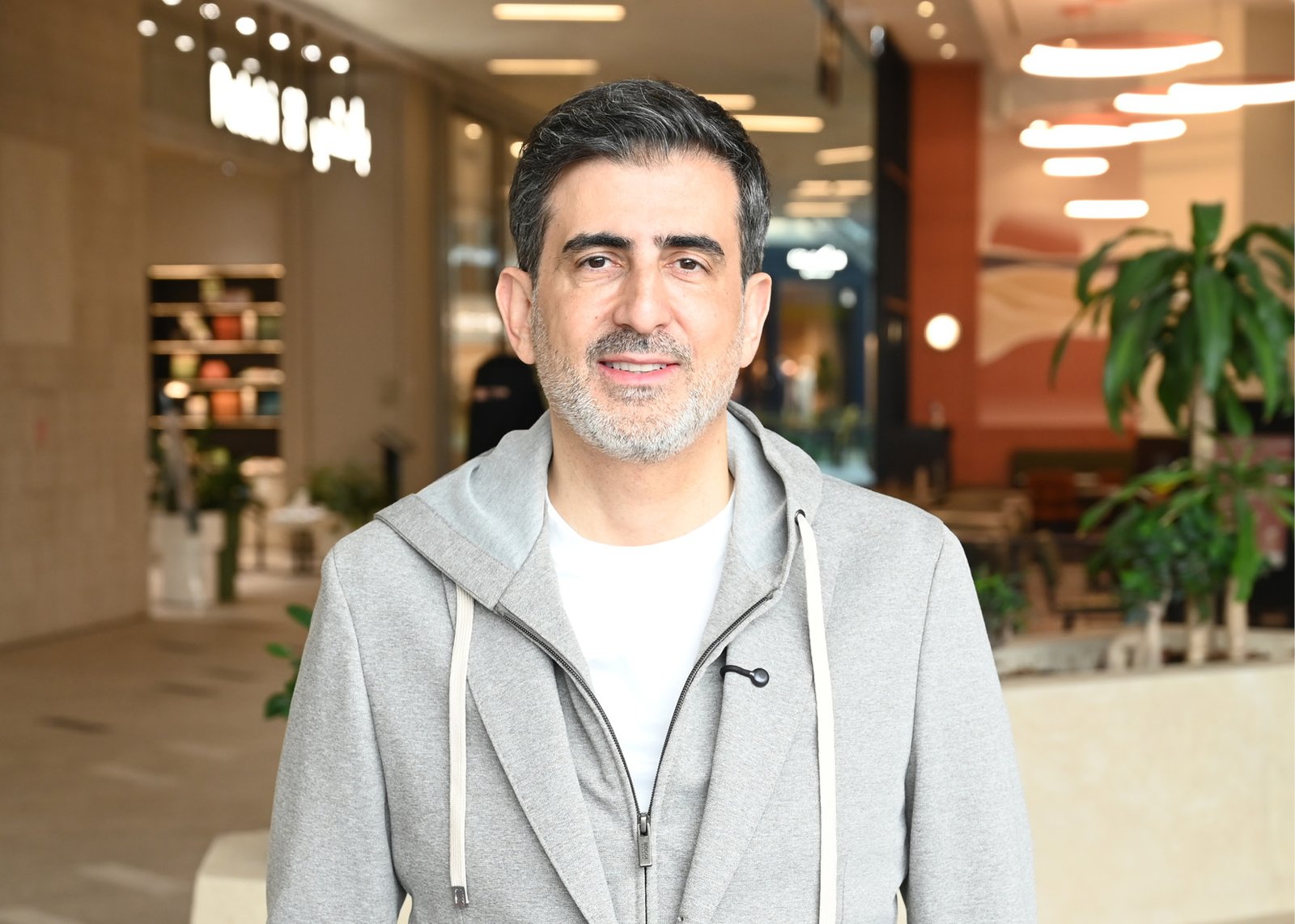
Investment strategist Samer Choucair asserts that artificial intelligence has evolved far beyond a data analysis tool. In 2026, it has become a financial architect capable of repricing natural phenomena and transforming fleeting moments into high-precision investment assets.
In his latest strategic analysis, Choucair highlights Japan’s remarkable model in forecasting the cherry blossom (sakura) season—an ecosystem now worth over $9 billion annually—as a defining example of this transformation.
—
From Uncertainty to Demand Engineering: The Sakura Model
Choucair explains that Japan’s shift from traditional estimation to algorithmic orchestration is powered by:
Machine learning models
Decades of climate data
Thousands of crowdsourced images
This allows forecasting down to the level of a single tree’s bloom cycle, fundamentally reshaping how demand is managed.
> “The market has moved from chasing tourists to designing their flow in advance,” Choucair notes.
This transformation enhances profitability across multiple dimensions:
Yield Optimization: Maximizing hotel occupancy and reducing misaligned bookings
Dynamic Pricing: Increasing per-tourist spending through real-time predictive signals
Operational Efficiency: Aligning supply chains and services with near-perfect timing
—
A Blueprint for the Predictive Economy—and the Gulf Opportunity
Choucair describes Japan’s success as a “blueprint for the predictive economy”, one of the most important investment themes of 2026.
He emphasizes that this model is highly transferable—particularly to the Gulf region under Vision 2030.
> “What Japan is doing with sakura can be replicated at scale in the Gulf,” Choucair explains.
Potential applications include:
Predicting pilgrimage flows (Hajj and Umrah)
Optimizing peak demand during large-scale events
Managing eco-tourism in projects like NEOM
These applications go beyond operational efficiency—they represent a complete reengineering of economic returns, driven by predictive intelligence and sovereign-scale investment through entities like the Public Investment Fund (PIF).
—
Investment Roadmap: Where the Opportunities Are in 2026
Choucair identifies four high-potential sectors for investors seeking exposure to the “intelligence layer” above traditional assets:
1. Predictive AI Companies
Firms specializing in:
Behavioral analytics
Climate and environmental modeling
Demand forecasting
—
2. Digital Infrastructure
The backbone of predictive systems, including:
Cloud computing
Big data platforms
Internet of Things (IoT) sensors
—
3. Smart Tourism Platforms
Applications enabling:
Real-time booking optimization
Dynamic, AI-driven pricing systems
—
4. Hybrid Asset Models
Investments in:
Hotels
Tourism real estate
…that integrate predictive analytics into their core operations.
—
Strategic Allocation: Positioning for the Predictive Era
Choucair advises investors to allocate 15–20% of their portfolios to applied AI technologies, particularly those embedded in real-world economic systems.
> “Do not invest in tourism as a static sector—invest in the technology that allows you to anticipate demand before it happens.”
—
Conclusion: Data, Time, and Behavior Are the New Drivers of Profit
Choucair concludes that predictive AI is not just enhancing industries—it is redefining how value is created.
> “The investors who understand how to convert time, data, and human behavior into predictive models will hold the keys to the next wave of multi-billion-dollar opportunities.”
In 2026, the competitive edge no longer belongs to those who react fastest—but to those who see demand before it exists—and position ahead of it.
Samer Choucair: Energy Security Has Become the Core Investment Priority in 2026
Article
Investment strategist Samer Choucair states that recent remarks from BlackRock are not merely commentary on Middle East tensions, but a clear strategic signal that global capital is shifting decisively toward energy security and independence.
Choucair highlights that when BlackRock’s global chief investment strategist emphasized that geopolitical conflict is accelerating investment in energy security, it reflects a structural, long-term transformation—not a temporary market reaction.
> “We are not witnessing a short-term repositioning,” Choucair explains. “We are witnessing a reallocation of global capital based on a new definition of risk and stability.”
—
BlackRock: The Institution That Shapes Global Capital Flows
Choucair underscores that the significance of BlackRock’s positioning lies in its scale and influence.
With over $13 trillion in assets under management by the end of 2025, BlackRock is not simply an investor—it is a system-level allocator of capital.
> “When BlackRock moves, it doesn’t just invest—it redirects the global financial system,” Choucair notes.
Its portfolio spans:
Technology
Energy
Infrastructure
Real estate
Meaning any strategic shift within BlackRock reverberates across the entire global economy.
—
The Big Shift: From Public Markets to Private Capital
According to Choucair, the most important transformation is not just the size of BlackRock’s capital—but where it is being deployed.
The firm has aggressively expanded into private markets through major acquisitions:
Global Infrastructure Partners (2024)
HPS Investment Partners (2025)
Preqin ($3.2B acquisition in 2025)
Total deal value has exceeded $24 billion, positioning BlackRock among the world’s top alternative investment platforms.
Under Larry Fink, the firm aims to raise $400 billion in private market capital by 2030.
—
BlackRock’s 2026 Strategy: The Three Pillars of Dominance
Choucair outlines BlackRock’s strategy as a three-layered framework:
1. Artificial Intelligence – the primary engine of growth
2. Fixed Income – navigating a shifting interest rate environment
3. Private Markets – deep diversification through alternative assets
However, Choucair emphasizes a crucial insight:
> “The hidden link across all three pillars is energy and infrastructure.”
Without reliable energy, neither AI expansion nor industrial growth can sustain itself.
—
From Crisis to Compound Opportunity
Choucair explains that markets are not reacting to events in isolation, but to second- and third-order effects.
Geopolitical conflict → higher risk premiums
Higher risk → elevated energy prices
Elevated prices → record profits for energy producers
Profits → reinvestment into infrastructure
Infrastructure → foundation for a long-term energy cycle
> “What looks like a crisis is, in reality, the beginning of a multi-cycle investment opportunity.”
—
The Hidden Drivers of Today’s Market
Choucair identifies three key forces currently shaping global markets:
1. Geopolitical Risk Premium
Energy pricing now includes:
Insurance costs
Supply route security
Strategic chokepoints like the Strait of Hormuz and Bab el-Mandeb
—
2. Fragmentation of Global Energy Markets
The world is shifting from a single global energy system to regional energy blocs, where nations prioritize:
Control
Reliability
Sovereignty
—
3. Pragmatic Energy Mix
The future is not ideological—it is hybrid:
Oil and gas
Nuclear energy
Renewables
—
Global Case Studies: Structural Energy Realignment
Choucair highlights recent global examples:
Europe (2022–2024): Germany invested over €200B in energy security, rapidly building LNG terminals
Japan: Secured long-term LNG contracts with Gulf countries and restarted nuclear reactors
Saudi Arabia: Under Vision 2030, building a hybrid model combining oil expansion, renewables, hydrogen, and alternative logistics routes
United States: Became the world’s largest oil producer while expanding LNG exports
> “Energy is no longer an input—it is a geopolitical instrument.”
—
The Golden Investment Themes (2026–2030)
Choucair identifies four key opportunity zones:
Traditional energy: Strong cash flows and near-term profitability
Energy infrastructure: Long-term stability and institutional demand
LNG and supply chains: Backbone of global trade
Renewables and hydrogen: High-growth, long-duration bets
—
Choucair’s Strategic Allocation Framework
Choucair advises investors not to wait for clarity:
> “By the time the crisis ends, the market will have already moved.”
Instead, he recommends a layered approach:
Immediate exposure to traditional energy
Core allocation to infrastructure assets
Long-term positioning in renewables and hydrogen
Select exposure to emerging technologies like energy storage
—
Conclusion: Energy Is Rewriting the Global Wealth Map
Choucair concludes that what is unfolding in the Middle East is not just geopolitical tension—it is a global redistribution of wealth through energy systems.
> “BlackRock’s signals are not forecasts—they are a roadmap for trillions of dollars over the next decade.”
He emphasizes that:
Winners will be those who own real energy assets
Losers will be those who rely on markets without strategy
> “When an institution of this scale moves, it doesn’t predict the future—it shapes it.”
The defining question for investors now is clear:
> Will you remain outside this historic capital cycle—or position yourself before the opportunity closes?