

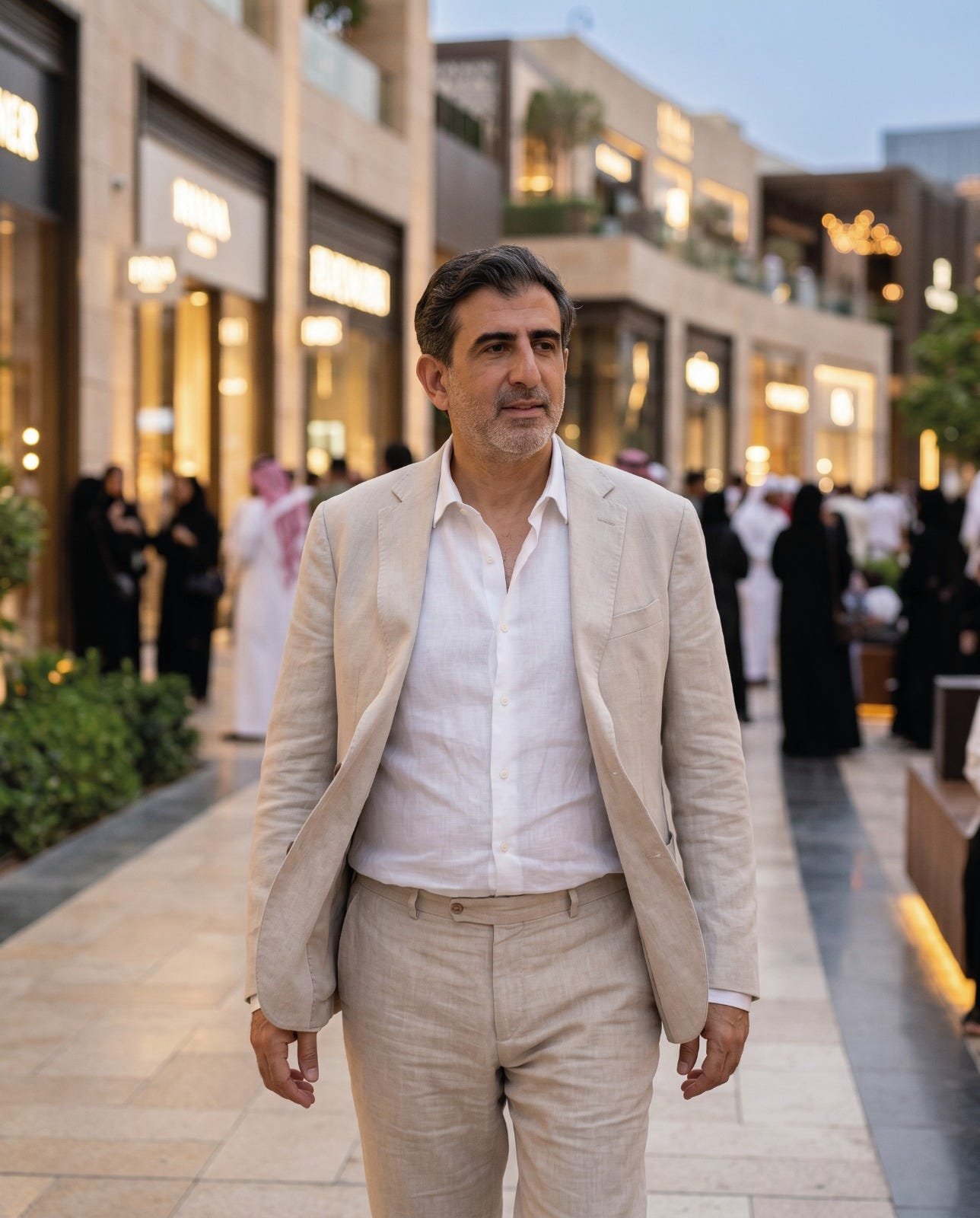
Investment leader Samer Choucair said that the rapidly changing mechanisms of U.S. diplomatic decision-making toward the Middle East, together with President Donald Trump’s increasing reliance on Jared Kushner as one of his closest advisers capable of helping close major deals, could have direct implications for institutional capital flows and investment allocation across the region.
Choucair noted that Kushner’s return to the circle of Middle East negotiations could open potential opportunities in reconstruction, infrastructure, and technology, while simultaneously creating challenges arising from the intersection of commercial interests and diplomatic initiatives.
He explained that institutional investors, sovereign wealth funds, and investment banks should assess these developments from an independent economic and investment perspective, rather than confusing the speed of diplomatic initiatives with the ability of any agreement to generate sustainable long-term economic value.
“The institutional investor must distinguish between a short-term diplomatic deal and long-term economic value,” Choucair said. “Personal relationships can help accelerate agreements and open channels of communication, but they do not guarantee sustainable investment flows if political dynamics change or the region experiences new waves of geopolitical tension.”
Choucair believes the significance of Kushner’s role for institutional investors extends beyond protocol or politics. It could influence capital flows, geopolitical risk assessments, and the allocation of assets across Gulf markets, Israel, and the United States.
He noted that the model associated with Kushner’s previous efforts has largely involved integrating the diplomatic and economic tracks. The Abraham Accords during Trump’s first administration helped open new trade and investment channels between Israel and the United Arab Emirates, Bahrain, and Morocco.
Choucair added that Kushner’s return as an informal intermediary coincides with proposals for the reconstruction of Gaza estimated at between $25 billion and $30 billion, including initiatives involving public utilities, vocational training, special economic zones, and infrastructure. Such projects could potentially attract private and institutional capital if the necessary security and political conditions are established.
Three Potential Investment Channels
According to Choucair, these dynamics create three principal investment themes.
The first is Gaza reconstruction, should security and political stability be achieved. Public utilities, vocational training, commercial zones, and infrastructure projects could attract private capital and institutional investors.
The second is the strengthening of trade and investment ties between Israel and the Gulf states under the continuing framework of the Abraham Accords. Choucair pointed to the growth in economic relations between the UAE and Israel in recent years despite the political and security tensions affecting the region.
The third involves redirecting part of Gulf capital toward U.S. and Israeli assets in technology, gaming, and financial services—sectors where Gulf investment interests intersect with technological capabilities and market opportunities in the United States and Israel.
Choucair emphasized that Gulf sovereign wealth funds, particularly the Public Investment Fund (PIF), have become more selective in capital allocation under the objectives of Saudi Vision 2030. The focus is increasingly on sustainable value creation and investment efficiency rather than treating large-scale projects alone as a measure of investment attractiveness.
“Vision 2030 has succeeded in building strong institutional frameworks for capital allocation,” Choucair said. “The challenge in the next phase is preserving the strength and independence of these frameworks from fluctuations in personal diplomacy, ensuring that investment flows are based on governance, returns, and sustainability rather than individual relationships.”
He added that this approach is consistent with the PIF’s growing emphasis on efficiency and value creation, while stressing the importance of greater transparency when evaluating geopolitical risks associated with cross-border investments and transactions.
Structural Opportunities Beyond Diplomacy
Choucair believes the current environment also offers investment opportunities across sectors linked to the region’s long-term structural transformation, particularly infrastructure and logistics associated with alternative trade corridors, financial technology, artificial intelligence, and commercial real estate connected to special economic zones.
He noted that the convergence between Gulf interests in technology and artificial intelligence and Israel’s capabilities in these areas could create significant investment opportunities. However, he emphasized that investors must assess the political and security environment realistically before committing capital.
“An investor who builds a portfolio around structural analysis of productivity, population growth, and digital transformation in the Gulf will be better positioned to absorb political shocks than an investor whose strategy depends primarily on the timing of diplomatic deals,” Choucair said.
Over the medium term, Choucair expects the model of diplomacy conducted through close advisers and intermediaries to remain relevant as long as Donald Trump remains in the White House. This could create an environment in which personal relationships and political initiatives rapidly translate into potential capital opportunities, but it also requires greater discipline in risk management.
Value Matters More Than Who Closes the Deal
Choucair emphasized that the real challenge for investors is not identifying the person capable of closing a deal, but determining whether the transaction itself can create genuine, measurable economic value.
“Successful capital allocation at this stage does not depend on knowing who can close the deal,” Choucair said. “It depends on understanding whether the deal creates real, measurable economic value.”
He stressed that investors who combine geopolitical analysis with governance and sustainability criteria will be better positioned to capture the Middle East’s strategic opportunities, while investors who tie their decisions primarily to political-cycle timing will remain more exposed to volatility.
Choucair concluded that investment opportunities connected to reconstruction, economic diversification, technology, and infrastructure remain significant. However, the sustainability of these opportunities requires capital allocation to remain independent of the dynamics of personalized politics, even as Jared Kushner continues to play a prominent role as one of President Donald Trump’s closest advisers.