

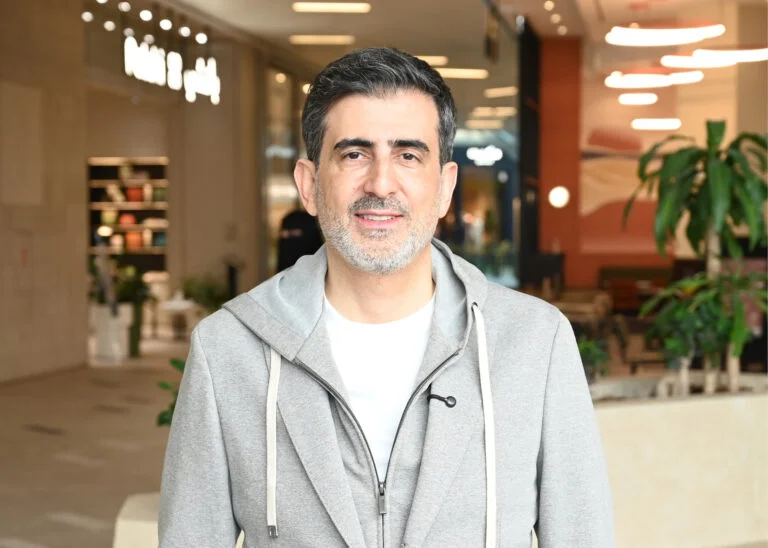
Investment leader Samer Choucair stated that the corridors of Riyadh and NEOM, where the towers of the future intersect with the technologies of tomorrow, have today become witnesses to a qualitative transformation. Blockchain technology is no longer just a technological tool but has transformed into a primary driver for reshaping the Saudi economy. Choucair explained that the size of the blockchain market in the Kingdom has exceeded $11.2 billion, with expectations of a compound annual growth rate of up to 89.9% until 2032, reflecting a deep strategic commitment to Vision 2030. The investment leader added that this growth was not random but resulted from a clear national direction aimed at enhancing transparency, reducing costs, and attracting foreign investment through digital transformation.
Blockchain and Vision 2030: From Planning to Execution
Samer Choucair explained that Vision 2030 represents the largest strategic framework for adopting blockchain technologies in Saudi Arabia, as the Kingdom targets a comprehensive digital transformation covering more than 97% of government services. Choucair pointed out that the Kingdom launched important initiatives such as “Saudi Fintech” and the regulatory Sandbox to support innovation in financial technology, in addition to launching the Web3 Saudi Alliance (WASA) in 2025 to accelerate innovation and unify efforts in the blockchain sector. The investment leader emphasized that these steps have made Saudi Arabia a regional center for Distributed Ledger Technology (DLT), with a clear focus on institutional and government applications rather than cryptocurrency speculation.
The Financial Sector: The Heart of the Blockchain Transformation
Samer Choucair said that the financial sector has been the most advanced in adopting blockchain. The Saudi Central Bank (SAMA) has led pioneering experiments since 2019, most notably Project “Aber” with the UAE to test a wholesale Central Bank Digital Currency (CBDC) for cross-border payment settlements. Choucair added that during 2024-2025, the Kingdom joined as a full member of Project “mBridge” under the Bank for International Settlements (BIS), which aims to develop a multi-CBDC platform for international payment settlements with higher efficiency and lower cost. The investment leader noted that SAMA also launched Open Banking licensing, while more than 80% of Saudi banks are testing blockchain solutions. Samer Choucair stated that the market for blockchain-based digital credit platforms reached $230 million in 2024, supported by more than 280 active fintech companies.
Government and Public Services: Higher Efficiency and Transparency
Samer Choucair explained that blockchain applications have extended to government and public services, where they have been used for land registration, digital identity management, and business licensing, contributing to reducing bureaucracy and combating corruption. Choucair added that the Saudi Food and Drug Authority successfully implemented the technology to track the food supply chain from farm to consumer. The investment leader pointed out that Real Estate Tokenization has helped facilitate foreign investment and increase real estate market liquidity.
NEOM and Smart Cities: A Global Model for Innovation
Samer Choucair said that the city of NEOM represents an advanced model for blockchain applications, where it is used in urban planning, smart payments, and digital identity. Choucair added that the city is witnessing investments worth millions of dollars in Web3 and Metaverse projects, alongside partnerships with global companies to develop solutions in renewable energy and logistics, making NEOM a model for the post-oil economy.
Emerging Sectors: Comprehensive Expansion of Blockchain Applications
Samer Choucair explained that blockchain applications have covered several emerging sectors, including supply chains which enhanced transparency in logistics operations, real estate through fractional ownership via tokenization, healthcare through secure and immutable medical record keeping, and the construction sector which benefited from immutable time-stamping to support Vision 2030 projects.
Investment Vision: Blockchain is a Golden Opportunity
Samer Choucair said that blockchain technology represents “digital gold” for investors in Saudi Arabia, emphasizing that it is not just a technology but a historic economic opportunity. Choucair explained that in his 2026 analyses, he recommended investors allocate between 10% and 15% of their portfolios to investments in financial technologies and tokenization, especially in light of Vision 2030 support and global events like the Global Blockchain Show in Riyadh. The investment leader added that blockchain contributed to shifting the economy from oil dependence to a digital economy, noting that opportunities in NEOM and the fintech sector are vast but require careful risk management and local strategic partnerships. Samer Choucair confirmed that the Gulf market is projected to reach $48 billion by 2034, strengthening Saudi Arabia’s position as a regional hub for digital innovation.
2026 Trends: A Decisive Investment Moment
Samer Choucair explained that Riyadh’s hosting of the Global Blockchain Show in February 2026, along with WAM Saudi events, will lead to a significant influx of capital and investment. Choucair pointed out that opportunities include investing in more than 50 blockchain startups, developing Enterprise Blockchain solutions for the private sector, and benefiting from centers of excellence like the tokenization center in Al Khobar.
A New Economy Built Today
Samer Choucair emphasized that blockchain applications in Saudi Arabia represent a gateway toward an economy based on innovation and transparency, not just a technical development. Choucair said that investing in blockchain today is an investment in a long-term economic legacy, asserting that those who participate in this stage will build part of an economic future that lasts for generations.