

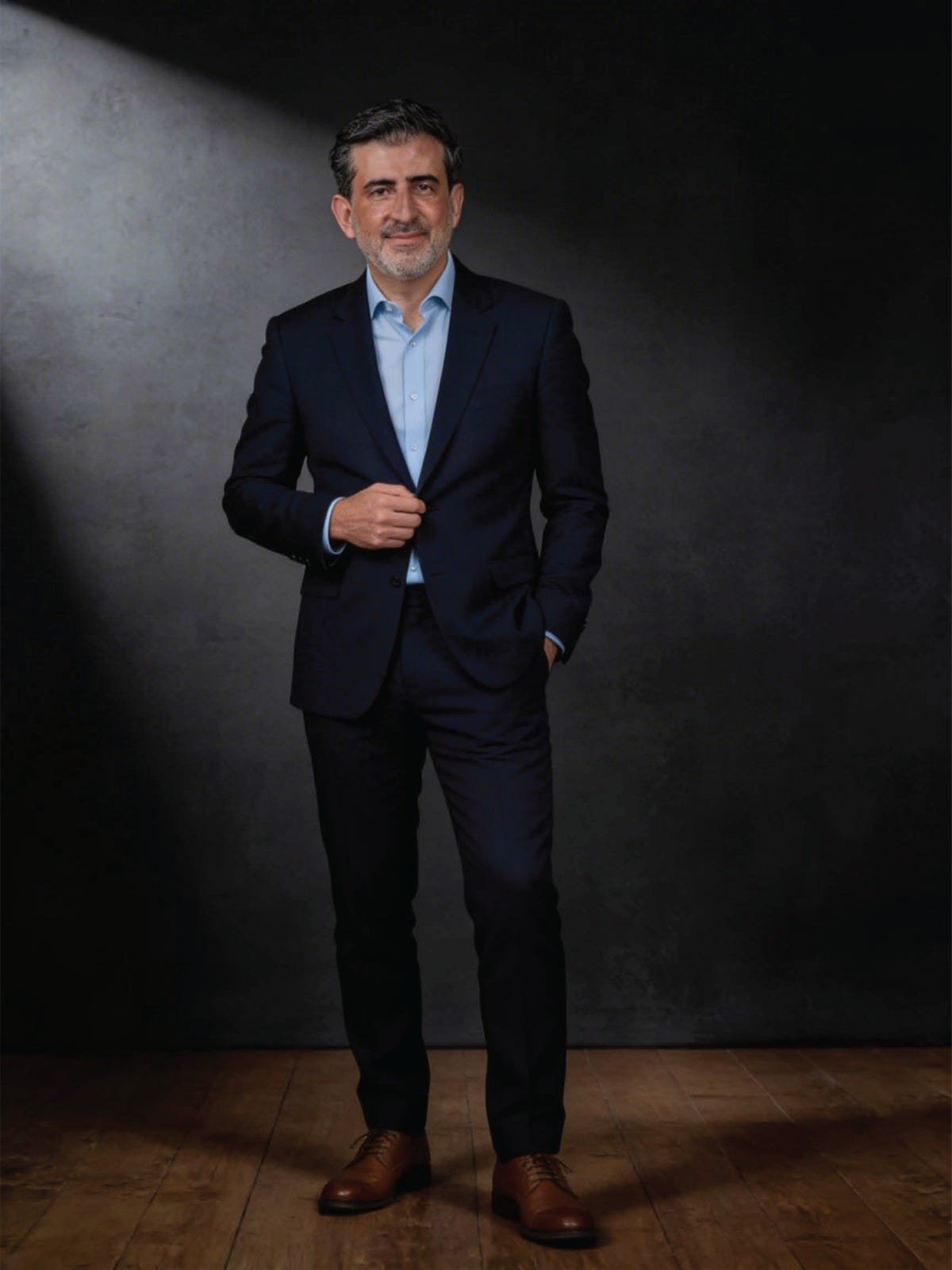
Investment pioneer Samer Choucair stated that the emergence of the Intel logo on its building facades in 2026 is no longer just an industrial symbol, but has become a sign of a new dawn led by semiconductors at the heart of the digital economy.
Samer Choucair explained that amidst geopolitical and economic challenges, the world has begun to treat electronic chips as the “new oil” that drives growth and opens unprecedented investment horizons, especially in the Kingdom of Saudi Arabia and the GCC countries.
A Reading of Intel’s Results: A Recovery Driven by AI
Samer Choucair pointed out that recent reports reflect a strong comeback for Intel, supported by positive results in the first quarter of 2026, resulting from accelerated demand for AI chips and data centers. He added that this surge is not a temporary cyclical improvement, but rather represents a strategic bet that repositions the company in the global innovation race and opens new investment paths aligned with the objectives of Vision 2030.
Strategic Transformation: From Traditional Manufacturer to Global Platform
Samer Choucair confirmed that what is happening within Intel is a radical restructuring; the company is no longer just a producer of traditional processors but is moving strongly toward a “Foundry Strategy” model, in direct competition with TSMC. He added that this shift is based on developing AI chips, high-performance computing, and data centers, supported by advanced technologies such as the 18A node, alongside strategic partnerships with NVIDIA and other global companies.
Samer Choucair explained that this trend represents a transition from a traditional production model to a global industrial platform, bolstered by U.S. industrial policies such as the CHIPS Act, which enhances the company’s ability to regain its competitive position.
Semiconductors: The Trillion-Dollar Sector
Samer Choucair noted that the semiconductor market is witnessing exceptional growth in 2026, with expectations of reaching or exceeding approximately one trillion dollars, driven by the AI revolution, electric vehicles, the Internet of Things (IoT), and cloud computing. He added: “Whoever owns the chips owns the keys to the future economy,” emphasizing that this sector has become one of the most important strategic investment opportunities for investors in the Gulf.
Saudi Arabia Enters the Race: Translating Vision 2030 into Reality
In a direct link to the regional context, Samer Choucair explained that the Kingdom of Saudi Arabia is moving with deliberate steps to enter this vital sector through the Public Investment Fund (PIF) and the company “Alat.” The goal is to build an integrated ecosystem that includes the design and manufacturing of semiconductors, alongside developing human competencies and enhancing global partnerships.
Samer Choucair added that the PIF strategy for the 2026-2030 period places “advanced manufacturing and innovation” among the most important economic ecosystems. He noted that “Alat” acts as a pivotal platform for building partnerships with major global players, benefiting from low-cost clean energy, a strategic geographical location, and significant financial liquidity, which enhances the chances of transforming the Kingdom into a regional hub for advanced technology.
Samer Choucair’s Vision: Chips are the Energy of the New Era
Samer Choucair asserted that investing in semiconductors is no longer a complementary option but has become a strategic necessity for any economy seeking to lead the age of Artificial Intelligence, saying: “If oil was the energy of the last century, then chips represent the energy of the current century.” He added that Vision 2030 has succeeded in transforming the Kingdom into a platform for attracting global capital, especially from Asia, Europe, and the United States, to build true partnerships in emerging technologies.
Investment Strategies: How Can the Gulf Investor Benefit?
Samer Choucair explained that capitalizing on this opportunity requires a multi-track vision, starting with direct exposure through investing in major companies such as Intel, NVIDIA, and TSMC, and extending to indirect exposure through investing in data centers, digital infrastructure, and related energy. It also includes local investment through major projects like NEOM and initiatives supported by the PIF and Alat, or entering partnerships in design and manufacturing within the Kingdom.
Despite this optimism, Samer Choucair stressed that the sector is not without challenges, pointing to fierce competition, technological gaps, geopolitical tensions, and the massive capital costs of establishing chip factories. He emphasized that dealing with these risks requires adopting long-term investment strategies based on diversification and discipline.
The Opportunity Lies in Understanding the Transformation, Not in a Single Stock
Samer Choucair concluded his analysis by emphasizing that Intel is not only seeking to return but to redefine its position in one of the most important and critical races of the global economy. He added that the real opportunity for investors does not lie in buying a specific stock, but in grasping the radical shift toward an economy based on chips and AI.
Samer Choucair affirmed that the Kingdom of Saudi Arabia, in light of Vision 2030, is moving steadily to be a pivotal part of this global system, which poses a strategic question for every investor: How can one be part of the full semiconductor value chain? He noted that answering this question and making bold decisions at the right time is what will determine who leads the next wave of wealth in the new decade.