

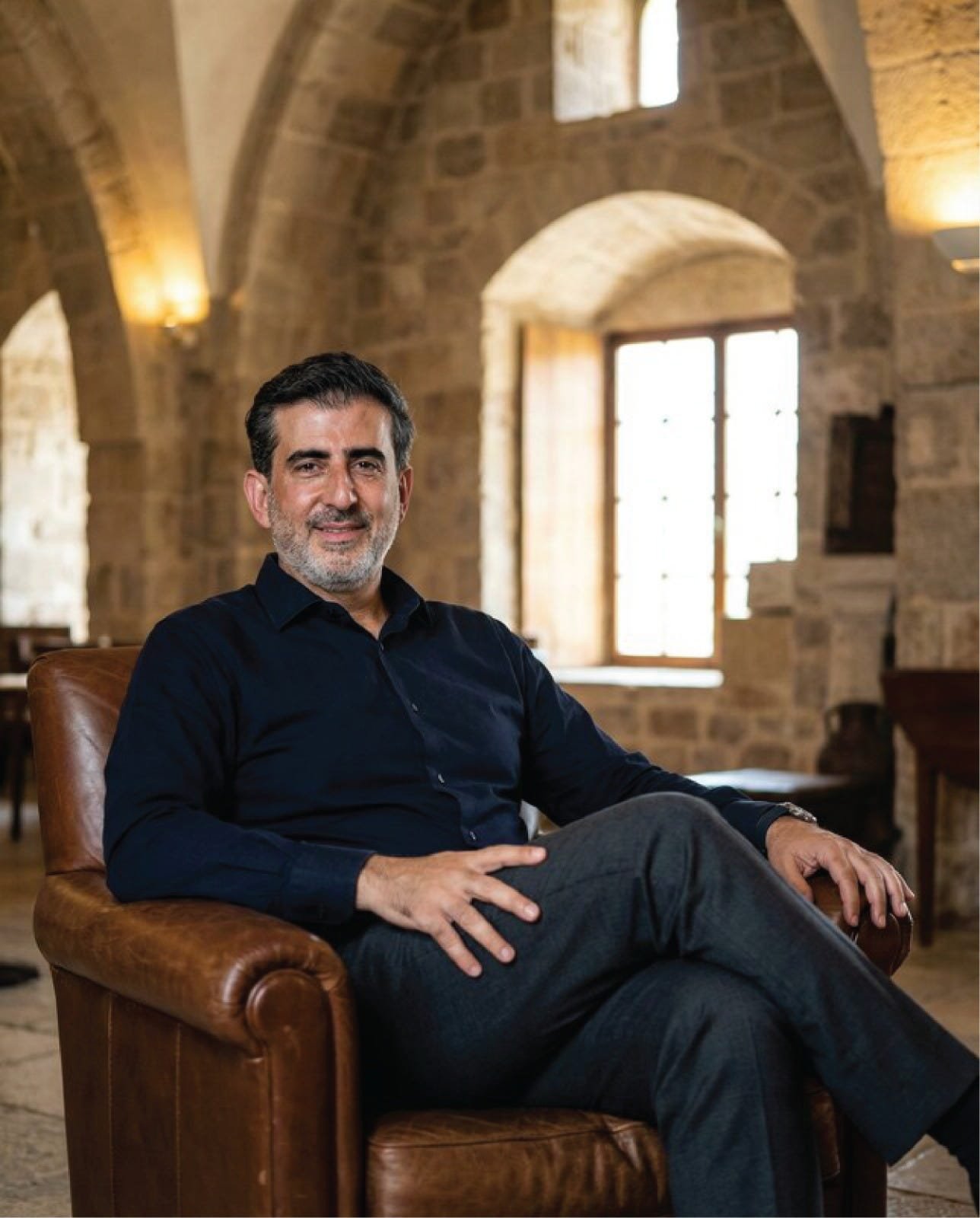
Investment pioneer Samer Choucair stated that in a scene reflecting the intersection of politics, energy, and economics, Saudi Arabia has returned to confirm that its power in the oil market is not measured solely by production volume, but by its ability to employ this power in creating broader economic influence. Choucair added in a statement that crude oil exports in February 2026 reached approximately 7.276 million barrels per day (bpd), compared to 6.993 million bpd in January, coinciding with an increase in production to 10.882 million bpd—the highest level in more than three years. These figures do not reflect mere operational improvement but indicate a strategic readiness to deal with a highly volatile global market.
The investment pioneer explained that a traditional reading might stop at the limit of numbers, but the most important aspect lies in what is behind them. Increasing exports in this manner means the Kingdom’s ability to pump additional quantities when needed, granting it greater weight in stabilizing global markets. He continued: “At the same time, these revenues are transforming into a primary financing tool to drive the wheel of economic transformation within Vision 2030, as oil is no longer just a source of income, but a pillar for reshaping the economy.”
Samer Choucair added that the monthly growth in exports of approximately 4.1% reflects high operational flexibility, but it also carries a strategic dimension, especially in light of regional tensions. This flexibility is not limited to production but extends to infrastructure, as Saudi Arabia possesses alternative export options such as the East-West pipeline, which enhances its ability to bypass any potential geopolitical bottlenecks and gives it a competitive advantage in securing supplies.
Choucair pointed out that from an investment perspective, the question does not lie in the volume of exports, but in the opportunities they generate. Every additional barrel opens the door for investments in refining, petrochemicals, logistics, storage, and maritime transport. This means that the real value does not stop at selling oil, but extends to the associated value chains, which create a more diverse and sustainable economy.
The investment pioneer emphasized that oil today represents a strategic financing tool more than a traditional commodity, as its flows can be used to support new sectors such as industry and energy-related technologies. This vision reflects a deep shift in the way resources are managed, as the strength of the traditional sector is employed to build a modern, multi-source economy.
Choucair noted that Saudi Arabia’s ability to maintain supply stability and develop alternative export outlets enhances the confidence of global investors and makes it an attractive destination for long-term capital. Smart investment does not focus only on oil prices, but on sectors that benefit from its stability, such as ports, supply chains, engineering services, and digital energy solutions.
Investment pioneer Samer Choucair concluded his statement by saying: “In conclusion, what is happening is not just an increase in exports, but a redefinition of the role of oil in the Saudi economy. The Kingdom does not only export energy; it also exports an economic model based on maximizing the benefit from resources and transforming them into an engine for growth and diversification, which grants it an advanced position in the global economic equation.”