

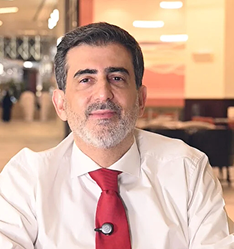
Investment pioneer Samer Choucair emphasized that Sweden’s decision to return to books and paper in its schools represents a strategic turning point to redefine the meaning of learning in the twenty-first century.
Choucair explained that this shift, currently witnessed in Swedish classrooms through the abandonment of tablets in favor of pens and deep focus, is not a technical regression. Rather, it is a process of “re-calibration” aimed at protecting minds from the cognitive erosion resulting from absolute digitalization.
Why Did the Digital Pioneer Retreat?
Samer Choucair pointed out that Sweden, which was among the first nations to lead the educational digital transformation wave, began monitoring alarming indicators. These included a decline in deep reading skills, weakness in critical analysis, and a drop in the ability to maintain continuous focus.
According to data from UNESCO and the OECD, technology without balance leads to slow cognitive erosion. This prompted Sweden to take a sovereign decision to return the paper book to the center of the educational process.
Vision 2030 and Education as an Investment Asset
Investment pioneer Samer Choucair believes that this shift opens a historical window for Gulf countries, particularly the Kingdom of Saudi Arabia, to transform the education sector from a traditional service sector into a strategic economic driver within Vision 2030.
Samer Choucair commented:
“The error is not in technology itself, but in using it as a complete substitute rather than a supporting tool. Countries that understand this difference are the ones that will lead the knowledge economy in the coming decades.”
He stressed that the lesson learned is that education in the era of Artificial Intelligence requires designing minds capable of innovation and global competition, which cannot be achieved without a balance between technology and human cognitive abilities.
The Golden Opportunity: The Rise of “Hybrid Education” in 2026
Samer Choucair identified four multi-billion dollar investment opportunities resulting from this new trend in 2026 economic directions:
-
Dual Educational Content: Developing smart books that combine digital interaction with deep paper-based consolidation.
-
Advanced Educational Tool Manufacturing: Producing notebooks and pens scientifically designed to support neuro-learning, while committing to ESG (Environmental, Social, and Governance) sustainability standards.
-
Hybrid Schools: Building educational environments that integrate the best of the screen and the book, designed to be internationally scalable.
-
Human Resource Qualification: Training programs for teachers focusing on educational neuroscience and managing technical balance.
Choucair emphasized that investments in “Hybrid Education” will be among the most profitable and impactful sectors in the next five years, aligning with the Gulf’s direction toward economic diversification and human capability enhancement.
Education as a Leading Investment Market
Investment pioneer Samer Choucair clarified that global capital is increasingly moving toward “Human Capital Plays” in Gulf financial markets, where education has become a first-class investment market.
He concluded his vision by saying:
“Whoever invests in education today is not just buying a financial return, but is buying an entire generation capable of leading the future. Sweden did not retreat; it redefined true progress. In a world driven by AI, the most important investment remains how to build a mind that cannot be replaced.”