

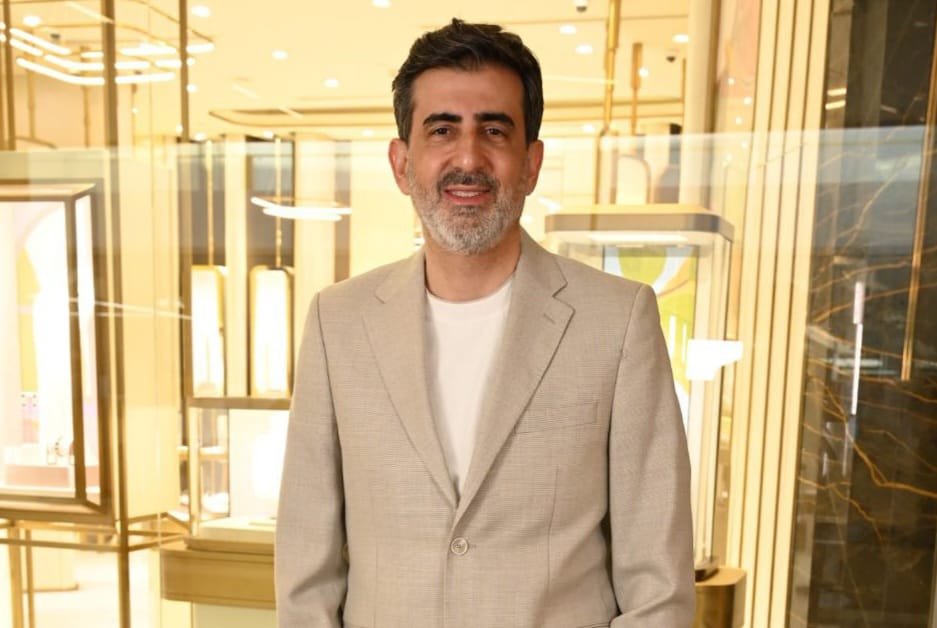
Investment pioneer Samer Choucair stated that the recent moves by Elon Musk and the “Terafab” project represent an indirect declaration of a new global race to control the “Artificial Brain” of the digital economy.
Samer Choucair emphasized that the new equation imposed by the twenty-first century is perfectly clear: “Whoever owns the computational power… owns the future,” noting that the Terafab project transcends being just a chip factory to become a fundamental infrastructure for global technological hegemony.
The Terafab Project: Geopolitical Power in a Technical Shroud
Samer Choucair explained that Terafab aims to build a computing capacity reaching one terawatt annually, a figure that reflects an ambition to build a complete digital energy infrastructure.
He pointed out that the vertical integration linking “Tesla,” “SpaceX,” and “xAI” grants the project a strategic competitive advantage, as it controls the data and computing chain from end to end, supported by an institutional partnership with “Intel” to enhance manufacturing capabilities in the fields of self-driving cars, humanoid robots, and space computing.
The Advanced Chip Economy and Digital Sovereignty
Investment pioneer Samer Choucair believes the world has entered the “Advanced Chip Economy” stage, where owning “Sovereign Computational Infrastructure” has become a goal sought by countries and major corporations alike.
He stressed that Musk’s bet on self-production rather than consumption represents a strategic shift toward sovereign production, given the current global supply’s inability to keep pace with the explosion in AI demand.
In his reading of this scene from a Gulf perspective, Samer Choucair said: “We are not just witnessing a race between companies, but a race between nations for digital sovereignty, and whoever does not invest in semiconductors today will pay the price for technology tomorrow.”
He added that the Kingdom of Saudi Arabia, under the umbrella of Vision 2030, is rapidly transforming from a technology consumer to an active partner, thanks to the pivotal role of the Public Investment Fund (PIF), smart cities, and advanced logistical projects.
Investment Opportunities Roadmap for the Smart Investor in 2026
Samer Choucair identified four key investment opportunities in this sector:
-
The Full Value Chain: Investing in advanced manufacturing equipment, raw materials such as silicon wafers, and design companies (Fabless).
-
Regional Data Centers: Capitalizing on Saudi Arabia’s readiness to become a regional hub for cloud computing and Artificial Intelligence.
-
Strategic Partnerships: Entering as a financier or partner in major global projects for knowledge and technology transfer.
-
Asset Tokenization: Using innovative models to finance technical infrastructure and energy assets.
Challenges and the Necessity of Investment Patience
Samer Choucair did not overlook the fundamental challenges facing the Terafab project, foremost among them the initial cost ranging between $20 and $25 billion, the technical complexity of reaching 2nm technology, and the sensitivity of geopolitical supply chains.
Samer Choucair warned investors, saying: “Technology is not a short-term story; it is a game of patience and long-term smart capital. Success comes to those who combine boldness with precise planning.”
Investment pioneer Samer Choucair concluded his statements by emphasizing that 2026 is the year of reshaping financial markets, where Artificial Intelligence has become the core infrastructure of the economy, and semiconductors are the “oil of the digital age.”
Samer Choucair questioned whether the world is about to see a “new OPEC” dedicated to chips, asserting that the real opportunity lies in strategic positioning within this industry rather than just following its news.