

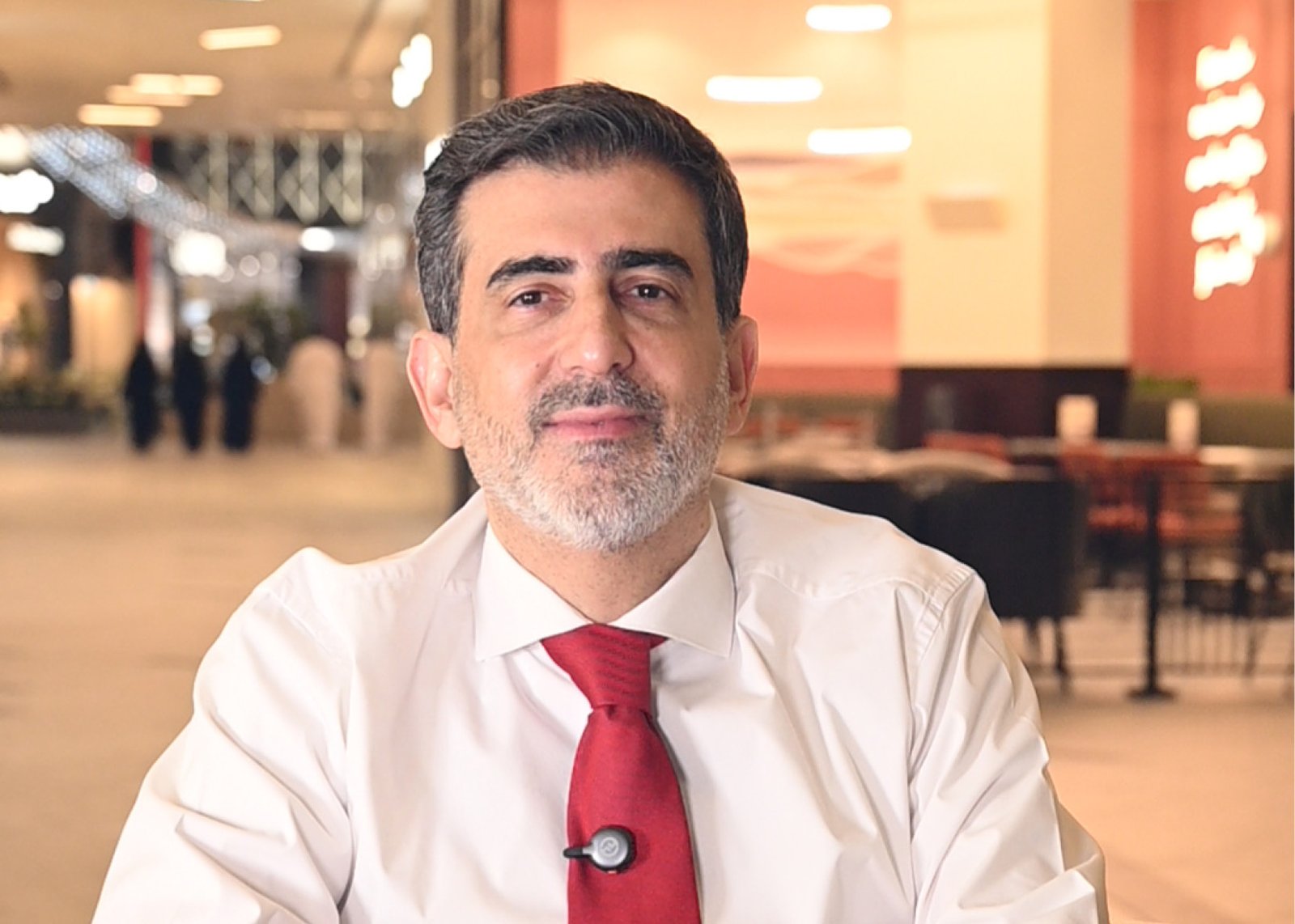
Investment strategist Samer Choucair asserted that the announced ceasefire between the United States and Iran failed to restore normal operations in the Strait of Hormuz immediately upon declaration. Instead, the reality revealed a far more complex situation—one that extends beyond political agreements. The strait continues to operate at significantly reduced capacity, with a sharp decline in tanker traffic, reflecting a deep erosion of confidence in maritime operating conditions rather than a temporary pause in activity.
—
The Strait: Theoretical Reopening vs. Practical Disruption
Choucair explained that the core issue lies in the absence of effective control and credible safety guarantees. Persistent warnings about potential naval mines and the imposition of restricted navigation routes have prompted shipping and insurance companies to adopt a wait-and-see approach. As a result, vessels remain queued, awaiting clearer signals, rendering the strait technically open yet functionally constrained.
—
A Stress Test of Fragility: How One Chokepoint Disrupts the World
He emphasized that the crisis has evolved into a real-time stress test of the global energy system’s vulnerability. Any disruption in this critical corridor immediately reverberates across energy prices, inflation rates, and global transportation costs. What has become evident, Choucair noted, is how a single geographic chokepoint can destabilize the entire global market and impose a strained economic reality.
—
Legal Ambiguity and the Risks of Exceptional Transit Conditions
Choucair warned that the most concerning dimension is not the partial closure itself, but the uncertainty surrounding the framework for reopening. Discussions of unconventional arrangements or exceptional transit conditions introduce long-term legal and commercial risks. These atypical constraints prolong investor hesitation and prevent a swift return to operational stability.
—
Risk Premiums Persist: Markets Do Not Trade on Political Statements
He further noted that maritime markets have not interpreted the ceasefire as a definitive resolution, but rather as a temporary and reversible phase. Consequently, prices have remained elevated and volatile, while risk premiums in shipping and insurance continue to persist. Although political de-escalation may reduce the likelihood of direct conflict, it has not restored the operational confidence required for normalized flows.
—
Reshaping the Energy Map: Medium- and Long-Term Transformation Opportunities
Choucair concluded that this crisis is accelerating a global shift toward restructuring energy supply chains—including diversification of sources, increased investment in renewable and nuclear energy, and the development of alternative infrastructure. He stressed that investors should focus on defensive assets and hedging strategies, recognizing that true stability is not measured by political declarations, but by the restoration of uninterrupted flows and systemic trust.
—
In closing, Choucair underscored that the Strait of Hormuz remains one of the most sensitive barometers of the global economy. Any shift in its status will have immediate implications for energy markets, inflation dynamics, and investment trends. As the world monitors unfolding developments, one fundamental truth remains: lasting stability is defined not by announcements, but by the return of normal flows and the full restoration of confidence in the global economic system.
—
Keywords:
Strait of Hormuz, Energy Markets, Supply Security, Geopolitical Risk, Maritime Shipping